Piers Morgan Gets Bounced From The CNN Bar.

by: Chris Warren.

How deliciously gratifying it is that Piers Morgan finally got whacked from his low rated CNN talk show. Normally I would take no delight in seeing someone lose their job, but in Morgan’s case not only am I shamelessly gloating, I sincerely hope that his career, or what he passes off as a career, descends further into obscurity. Very rarely is there such a blatant example of someone getting exactly what they deserve. On that point, Piers Morgan delivers.

CNN signed Morgan on despite his having a thin television resume and little name recognition; since then the British native has gone from nowhere to nowhere via his stuffy moralizing about American culture, particularly gun issues. One would think that early on CNN would have taken the hint and throttled him back or at least given him a crash course in American sensibilities in the hopes of saving their investment. For whatever the reason, they dragged him along for three years. On some nights Morgan attracted only 50,000 viewers. There are public radio stations doing better than that.

The reasons for CNN’s bad judgement and Morgan’s wasting hundreds of hours of valuable prime time bandwidth will be parsed in college journalism courses for years, but it’s really not that complicated: Piers Morgan thought he did not need to understand his audience; he believed his audience needed to understand him. Morgan personifies the predicate that liberals know what’s best. We should stop asking so many questions and gratefully accept their superior intellect. What colossal failure of due diligence led CNN to conclude that a British carpetbagger with no credibility other than giving him access to a TV camera would be taken seriously by a farmer in Nebraska? Or an iron worker in New York City? Or a retiree in Florida? What was CNN thinking?

Morgan still thinks he’s relevant even in the midst of complete failure. In what might be fate mocking him, getting kicked to the curb has given him more attention than he ever received doing what he was hired for. He’s certainly making the best of what may be his first and last fifteen minutes of fame. Morgan continued to milk the same anti-gun canard that was a major player in his plug being pulled when he took another cheap shot at American culture in his tweet, “I wouldn’t get too excited @NRA -I’m not done with you yet”, the NRA of course being the National Rifle Association. The humor in this tweet is that Morgan persumes he was a credible threat to the NRA in the first place.

The schizophrenia of Piers Morgan gets deeper. In a New York Times piece about his new unemployment, he candidly admits, “’I’m in danger of being the guy down at the end of the bar who is always going on about the same thing,’” he said. He added that he was sure there were plenty of people in the heartland angry ‘about this British guy telling them how to lead their lives and what they should do with their guns.’” The guy who thought he was going to become a media titan by hectoring us thickheaded Yanks doesn’t even listen to his own psychoanalysis: He admits being “the guy down at the end of the bar” who won’t shut up, yet he still keeps running, or tweeting, his mouth.

Morgan is not “in danger” of becoming the blubbering drunk at the end of the bar. He already is the blubbering drunk at the end of the bar, and has been for years. But at least over served bar regulars can blame it on the booze after they sober up and return to their senses. Morgan has no such out. Go home, Piers. You’re drunk on yourself.

Solar Energy Gives Us The Power To Feel Good.

by: Chris Warren

A longstanding tactic used to sell the public on renewable energy has been to portray it in positive, almost loving, terms that no one would disagree with. All of the glowing claims are true to a degree, but universally ignore the reality that everything has a down side and no energy is truly free or clean. The political left wants everyone to believe that renewable energy is a magic pill with no side effects, and the political right dismisses it out of hand as some feel good hippy trip with no practical application. They are both wrong. And it bothers me a lot.

My solar power enlightenment began when I looked into the feasibility of installing solar panels on my house. While I do appreciate the ecological aspect of solar and it did factor into my goals, my main intention was to achieve some level of independence from the commercial power grid. We live in a savage world held back by a thin, fragile veneer of civilization which I believe is going to crack very soon. With it will go the public utilities that “always” work without anyone really noticing until they are gone. Violent societal chaos will escalate from there. I don’t plan on being the first man down.

As I researched further the allure of electricity made from sunlight started to pull me in, which is a very unusual trajectory of thought for my normally practical manner. It is a good thing, isn’t it, that we can power our homes with pollution free renewable energy? Of course it is. But here’s the but: While sunlight may be free, all the hardware and support equipment needed to turn it into useful electrons is very expensive and complex, and the production of the equipment can be environmentally messy. From a purely financial basis, there is no possible talking point around solar power’s very low “bang for the buck.”

Green energy supporters/the political left are famous for defaulting to the emotional: “We will stop pollution.” “We will create jobs.” And of course the famous catch-all excuse, “It’s for the children.” Yadda yadda. The emotional default is not totally without merit. My dire predictions of civil disorder notwithstanding, solar panels are in part a personal statement. I have a sense I’m doing something that matters, even if it’s a small thing. I can have it both ways: Agree with tree-huggers up to a point while keeping myself grounded in the reality that solar energy has a lot of drawbacks and, for the foreseeable future, will not be a major player in keeping the world’s lights on and factories humming.

I will confess to being something of an oddball in the solar power realm. It’s not very often you come across a conservative guy who thinks renewable energy is not only worth doing, he walks the talk and actually does it himself. Yet here I am, living a lifestyle powered in large part by the sun. To be clear, I absolutely do not endorse taxpayer handouts, subsidies, or special favors for implementing green technology. If solar power is truly worth it, then it should be pursued for its own virtue and not in response to a government body’s bribes or threats. Conservatives are not against the concept of green energy; they are against policy where the government pays for or mandates its use.

The power plant that I designed and built all by myself gives me a sense of pride and accomplishment and I do not apologize for my emotional default in regards to it. I have often derided people who seem to look at everything in sappy and emotional terms and think that’s a good enough reason to do something that on any other level makes no sense at all. This time I will hold my fire. Is it really so bad to feel good about renewable energy, provided one is actually using it themselves, and does not smugly expect (or force) everyone else to do the same? Is that enough to make it a conservative-approved “live and let live” arrangement?

One morning last summer I was up on my roof performing some basic maintenance. I noticed the sun was full across my panels and it was at that instant I felt like I was truly making a difference. I paused my work for a moment and just sat there and took it all in. From the roof I admired the trees and the birds and the huge cloudless blue sky. There was a conspicuous absence of man made noises. The message was clear: Yes, what I am doing matters. Mankind has been given clean sources of energy that do not harm the environment and will never run out; we owe it to ourselves and our Creator to make the best of it. I marvel at how from over ninety million miles away, God’s bountiful light of life showers down on my teeny little roof, pushing subatomic electrons through a wire to be turned into real energy that I can use everyday.


Get A Hobby And Fire Your Therapist.

by: Chris Warren

Is it possible to be happy by doing only what is needed? We show up at our jobs, do housework, go shopping, take care of kids, eat, sleep, and so on, day after day. These activities are not by default a drudgery. Many people enjoy doing them, and there is a satisfaction in a job well done. Still, pitiful is the man who is busy only when he needs to be; who has nothing to do when there’s nothing to do.

I was in grade school when I built my first crystal radio. It never worked, but I had many hours of fun experimenting. My friends thought I was some sort of science wizard, even though I didn’t really know what I was doing. When my dad revived an old shortwave receiver that had originally belonged to my grandfather, I immediately took over the set. With a simple wire antenna, I was often up until dawn pulling in signals from all around the world. I was glued to the thing, completely absorbed by the idea of worldwide communication. This was well before anyone knew what the internet was.

By time I hit my early teens I was into CB radio. It was a big fad at the time, and I was happy to go along. Our local area had numerous “regulars” with cute CB names like “Old Grey Mare” and “Lamplighter”. The discussion was civilized, and if the adults resented us kids hanging around “their” channel, they didn’t show it. We acted like gentlemen and they let us be. Within a year or two the CB craze fizzed out and some of my friends moved to ham radio. That’s where the real action was. I had to jump in. Instead of listening to faraway places, I could talk to them too. As much as my parents would have preferred not having their house peppered with antennas and cabling all over the roof, they saw how much I loved my radios and how positive it was for me. Decades later, the roof on my own house is laden with antennas. I still have a radio operator’s license and enjoy the hobby every day.

The purpose of a hobby is not only to fill idle time, but to make idle time meaningful. It’s an odd contradiction that as technology gives us more free time, we don’t seem to be having much fun with it. Some will suggest that people are just lazy…they would rather passively plop in front of a screen than do anything that requires thought. I don’t buy into this idea. I think that after a long commute to and from work, dealing with family needs, shuttling kids around, and taking care of ordinary household tasks, most people are just too damn tired.

It’s been clearly documented that participating in hobbies and activities stimulates the mind and helps the body rest. Painting pictures, attending church, working out, or belonging to a club do indeed require time and effort most of us might rather spend doing something mindless. But there is a net-plus to our psyche when we get off the couch and do something. After an evening of messing with my radios or working on an electronics project, I feel like it was time well spent. Never once after shutting down my station for the night have I ever told myself, “That was boring. I should have watched TV instead.

I can’t prove a correlation, but some of the most depressed, unhappiest people I know have no active pastimes. They trod through their daily existence and never seem to have much fun, even when given the opportunity. Many of them spend thousands of dollars on counseling and antidepressant drugs but can’t bring themselves to take piano lessons or buy a health club membership. If they could just cut loose, try one positive activity that interests them, it’s possible that the moment will come when they realize a fulfillment that cannot come from medication or paid therapy. 

Gun Control: So Shallow, A Flea Couldn’t Drown In It.

by: Chris Warren

The validity of statements made in the past can and should be measured by how well they hold up against the test of the future. Unless and until the big guesses evolve into tangible reality, they are usually at the same level as overdramatic hucksters on late night infomercials telling us they have the secret to all our heart’s desires.

The apparent death of the Second Amendment as we know it and the subsequent rise of the gun ban movement over the vanquished National Rifle Association was glowingly foretold by liberals since before 2008 when Barack Obama won the Presidential election. In his first term he bailed on his promise to come down on the “bitter clingers,” but that was not enough of a buzzkill to keep his patsies from reelecting him. My rearview mirror wisdom now confirms what I presumed in the first place: The gun ban movement is indeed a collection of overdramatic hucksters, with Barack Obama and Michael Bloomberg getting top billing. Note: I refuse to use the term “gun control” in the context it is employed by the political left because those claiming to want “common sense gun laws” are either liars or fools (see also, useful idiot). Their ultimate end game is the complete and total abolition of all private civilian firearm ownership. I will not take the bait and be a party to their overt bullshit, even if it is rhetorical hair splitting.

The “gun lobby” is not as much a lobby as it is a genuine, people-centric movement. The NRA has around five million members, each paying (give or take) about thirty-five bucks a year. Many if not most of those members donate over and above the yearly dues and are also members of state NRA affiliates. Then factor in sales of NRA-branded clothes and gear, raffles, cash donations collected at gun shows, and yes, the occasional corporate sponsorship. But there is more to it than just a big pile of money. Gun enthusiasts are active participants every single day. They know it’s not enough to “like” a Facebook meme or slap a sticker on the back of their car or write a $35 check once a year.

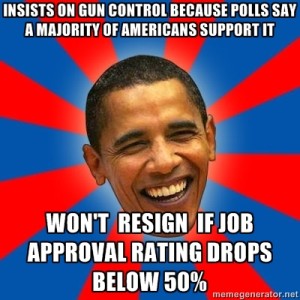
Most of the time, being engaged is not very exciting. It’s a daily grind of staying informed and reacting when needed. As one NRA member put it, “Thanks for emailing your U.S. Senator, but you have to also write a letter or send a hand written postcard. No one ever tripped on a bag of email.” Even buying a gun or a box of ammo is a statement. A common taking point dragged around by gun banners is that firearms ownership is on the decline; the recent dazzling increase in gun sales is due to the same core group of “gun nuts” panic buying multiple firearms. The theory only works if you ignore the thousands of new gun carry permits issued every year and that very few gun owners will respond to a survey by admitting they own guns. I know I would not. And I personally know dozens of gun owners who would not. Even my own family does not know exactly how many and what type of guns I have. Liberals in general and Obama in particular are in a tizzy because their claim that fewer and fewer Americans want to keep guns cannot be validated against gun sales, carry permit figures, and registration in training classes, all of which are easily quantifiable facts. Gun owners are sophisticated enough to know that any data collected on firearms ownership will ultimately be used against them. As a result, Second Amendment supporters’ default setting is to be recalcitrant towards the media and the pollsters who work for them. To put it more simply, many if not most gun owners deliberately lie on polls and surveys.
36937366

Pro-gun citizens have the advantage of a common thing (guns) that serves as a base for organizing. They gather at gun shops, ranges, gun shows and shooting competitions, all of which serve a secondary purpose as a friendly venue where ideas are exchanged and information is passed along. As amazing as the internet may be, there is no substitute for a face to face discussion where everyone can shake hands and look each other in the eye. The gun banners have no such common platform. They organize marches and rallies which are are limited in duration and headlined by professional victims along the lines of Jesse Jackson or Micheal Pflager. There is no natural interaction, no opportunity for small random meetings. Everyone stands around and cheers for a speech, lights a few candles, then goes home.

The left are accomplished experts at getting people to sign an online petition or answer a poll question, but their “point and click” activism is a mile wide and an inch deep. When it really counts, the claimed support is mere gentle vapor drifting to invisibility, at least on the gun issue. This is why Obama got elected with such vigor only to see his fan base go back to playing Xbox. They are thinking, “Hey, we voted. What else do you want?”  Progressives then turn up the spin and gooey sentimentality because they can’t make a case with facts and and follow through, nor do they have genuine long-haul support for their gun ban goals. It’s not too hard to figure out why many progressive causes never seem to materialize into active policy even when the polls say it should be an easy win.

The goodwill and kinship felt among gun people transcends anything the left can put up. When gun banners gather, it’s to share their disgust for those of us who disagree. When gun enthusiasts gather, it’s to express appreciation for Constitutional freedom. There is no acrimony toward anyone. Celebrating freedom does not require hating anyone. But gun banners have to hate guns and gun owners, otherwise their cause has no reason to exist.

My analysis should not be taken to mean that firearms freedom supporters and the NRA have nothing to fear from Barack Obama and his army of useful idiots, led by Michael Bloomberg. On the contrary, as soon as one Second Amendment abuse is beaten back, it’s not long before another pops up. The gun banners, knowing nothing will get done at the national level, have recently shifted focus to state and local efforts. To their credit, this tactic will probably be more successful than trying to get any big federal rules through Congress. They have indeed managed to get some very heavy-handed anti-gun legislation passed in a few states and cities. The gun enthusiasts have likewise benefitted from several laws expanding Second Amendment freedom. Which side is ahead is a matter of semantics, but it’s generally accepted that the pro-gun side has the upper hand. For the purpose of fundraising and stirring up their respective bases, each side will claim the other is winning.

In my relatively short career as a firearms owner, I’ve discovered that “gun people” are some of the most harmless folks you’ll ever find. They would prefer not to involve themselves with controversy, and they would rather spend their time pursuing their Second Amendment freedoms instead of defending them. Gun people do not see themselves as the reason for criminal gun violence (they are correct). As long as the left demonizes us, blows off the true cause of the problem to pursue a power trip, and pushes to take away not just a Constitutional freedom but a natural, God-given right, Second Amendment supporters will have no choice but to jump reluctantly off the diving board into the cesspool of politics. President Obama and Michael Bloomberg don’t care enough to understand that all gun people really want is to live in their freedom and be left alone.


The United States of Not Like Me.

by: Chris Warren

It is a natural tendency to associate with people similar to ourselves. We embrace the familiar, and that’s why big cities have Chinatowns and Greektowns, Jewish and Polish neighborhoods, and a gathering of pretty much every nationality and faith. As a practical matter, it makes perfect sense. People from the same culture can be a true community, speak their own language, eat their own foods, and observe their holidays and traditions. It feels warm and belonging.

Practicalities aside, gravitating towards those similar to ourselves to the exclusion of all others cuts us off from viewpoints and insights that cannot be gained from confinement in a homogenous group. There is a benefit to stepping outside of our cultural comfort zones. In some cases, it’s not voluntary. Going to school or work, we don’t always get to pick who we hang around with. Nothing forces one to learn something about interpersonal relations like sharing a classroom or work space with someone who is totally different than you. There are a small number of inquisitive adventurers who consciously seek relationships with people outside their own demographic. Most of the rest of us go for the default of keeping company with our own kind whenever possible.

I have a lot of friends who are Not Like Me. I hate to use the word “diverse” because of its political correctness implications, but in my case the adjective fits. For context, I am a generic American white guy. Of the six people I consider my true close friends, only two of them are also American-born white guys. The rest include one from Vietnam, one from the Philippines, one from India; and one American-born, first-generation hispanic who spent a good chunk of his childhood living in Mexico. I’m not fishing for compliments about how open minded I am since I did not purposely go looking for these people. It just organically happened: I meet someone, the personalities click, and it takes off from there. If I appear enlightened about my eclectic circle of friends, it’s because they inspired me to reach out, not because I have a built-in curiosity about others.

Perhaps more than anything else, these Not Like Me friends have given me an understanding of how good it really is here in the USA. I know patriotism can be a overplayed sentiment, but there is no ignoring that the blessing of life in America became a lot more meaningful when I developed a close friendship with a guy who as a young boy was driven out of his native Vietnam by communism and the brutal violence that always comes with it. Or the hispanic kid from economically depressed Aurora, Illinois who, in spite of being just as much a “real American” as anyone on Mount Rushmore, did not have the same opportunities as kids in the upscale town a few miles away. Still, he respects himself and is not just scratching by, but is thriving and growing in the midst of a daily existence that would put the average suburban white boy into full hissy fit meltdown mode.

Anyone who has never witnessed in person a United States citizenship swearing in ceremony is missing an amazingly moving experience. I’ve attended two, in support of friends. There were old men, young men, mothers holding babies, entire families, flowers, flags, and an ocean of joyful tears. Most of the new citizens endured years, possibly decades, of difficulties and hardships to arrive at point I had attained merely by being born in the right place. I may have never seen it that way but for having friends Not Like Me.

Avoiding different people by design does not automatically make one a xenophobe; it does needlessly limit our world view and opportunity to experience others. It’s like having pizza for lunch every single day: There is nothing wrong with it, but every day we have pizza is a day we deny ourselves the chance to try something else. Applying this concept to relationships, the answer is not to dump our “pizza friends,” but complement them with friends of a flavor we may have never considered before. 

Very few people purposely set themselves up with a group of buddies who look like they came out of a United Nations meeting. Through a string of crazy coincidences and genuine blessings, that’s exactly what happened to me. Cultural differences are only as much of a problem as you allow them to be. By the way, none of this should be taken as a snub to my generic American white guy friends as they are a big deal to me too. But being pushed beyond the similar, even by accident, has kept me from falling into a “pizza every day” rut. Friends are important and enriching, and it’s just fine if they’re Not Like Me. 

If You Love Something, Let It Freeze?


“I drive by the homeless sleeping on a cold dark street

Like bodies in an open grave

Underneath the broken old neon sign

That used to read ‘Jesus Saves’”

–Brett Michaels, Something To Believe In.


By: Chris Warren

Last summer on a weekend trip to Chicago, my friend took me to Michigan Avenue. For the unfamiliar, Michigan Avenue is the place to shop in Chicago and is a huge tourist spot. It was a warm summer night; the weather was stunningly beautiful. Prior to this outing, people who know me well might (correctly) say I would rank visiting Michigan Avenue slightly higher than a nine hour flight sitting next to a screeching baby. My buddy had to do some nagging and arm twisting to get me down there. I must say, once I arrived, I had a great time. Keeping in mind it’s not as much about what you do as it is who you do it with, I knew I was there with the right guy. I still had no interest in shopping. But the the whole experience of being there and soaking in the vibe wasn’t just ok. It was a total blast.

As a first-timer, I quickly picked up that it is a place where money flows. All the shops are upscale. There are no Walmarts or dollar stores on Michigan Avenue. The food, the parking, everything, is priced for the conspicuously self indulgent. Anyone who would buy a purse that costs more than the average Walmart shopper’s monthly rent does not think too much of laying out $15.00 for a cheeseburger or $35.00 to park for a few hours.

The other thing that was glaringly noticeable was poverty. Lots of it. Right there in the middle of bling-dripping Michigan Avenue. Up and down both sides of the Magnificent Mile, there were panhandlers looking to snap up a buck or two. Even if 90% of them are lying hustlers, that still left a lot of legitimately hurting people. Being around them is the classic trope of an angel on one shoulder and a devil on the other: If I walk past a beggar and give them nothing, can I feel ok with that because they are probably scamming anyway? What if they are the real deal and sincerely do need a hand? Many of them brought small kids along, or had pictures of their kids. My slightly naïve non-city background inclines me to believe that only someone who was truly out of options would drag their kids with to beg on the street. Yet, I wasn’t born last night and know that, yes, people really do use their (or someone’s) children as props for cash. So if I give the shabby old lady sitting in a doorway few bucks, am I a dupe or a disciple? If I stare straight ahead and walk right past her, am I street smart or self absorbed?

My religious and moral background clearly insists without any wiggle room that I am obligated to help the poor. If the recipient of my kindness is deceitful about their need, then I still did the godly thing and the wrongdoing is on them. The Lord will mete out justice for everyone’s sin at a future time and place. Still, I am a practical guy and I’m not going to give away my hard earned cash unless I have pretty good assurance that it will be used for its intended purpose. The Creator of the universe may ultimately own everything, but us ordinary carbon-based life forms have a finite number of dollars to give away. I want some bang for my mortal buck.

I obeyed my faith and gave a lady some money. A half hour later on the other side of the street, we came across another woman dressed in similar cultural attire with a similar sign explaining her tale of woe. Within another block or so, we passed yet another. It was obvious they were a cartel. I looked at my buddy and said, “I think I’ve been played.” I would have rather not known at all. A tiny spark of unconfirmed hope that I actually did make a small difference would have meant something to me. I felt cheated out of more than just an amount of money I could afford to lose anyway. It was a three-way sin against God, a deserving stranger, and myself. My friend, who had a similar religious upbringing as me, sensed that I felt like a fool for trying to be kind and assured me that I did the right thing. When I got home, I sent donations to the Salvation Army and a local homeless shelter. My spirit is not broken and I still believe in helping the poor, but from here on out I’ll leave it to the professionals to figure out who’s authentically needy and who is a very convincing street performer.

Now it’s deep in the winter of January and warm summer nights on Michigan Avenue are just wishful thinking. It’s not likely that anyone who was mooching tourists for cash last August has since hit the jackpot and doesn’t need to beg on the streets anymore. The frigid weather chases the crowds away and the few brave shoppers who happen by are in too much of a hurry to get out of the cold to notice the panhandlers, who themselves are few in number. Where do the poor go in the “off season”? They still have needs. They still have to live. They still have kids. They are still people. They are still out there, somewhere, probably not warm and cozy, looking for a way to scratch by in harsh weather that is an inconvenience for most of us but a very serious problem for them. Few seem to care when these lost souls put themselves on display on a very public street with nice weather and thick crowds; how much less are the poor thought about, cared about, prayed for, in the middle of winter when the streets are empty and poverty is out of sight?


The Schadenfreudeification of Justin Bieber.

by: Chris Warren

Is anyone shocked that Justin Bieber finally got arrested for something? In a few short years he has evolved from cute singing kid to the mugshot heard ’round the world. And there was a lot of mischief in between. For his virgin arrest he did it up good: A nice fat felony. If we accept that hardly anyone gets busted the first time they do something, it’s safe to say he’s been headed in the wrong direction for most of his teenaged life.

Making fun of young Justin will without a doubt be the flavor of the week on Saturday Night Live and the late night comedy shows. Living large off young girls’ birthday and babysitting money lends itself well to mockery, even without the arrest. In my January 11 blog post I discussed at length the consequences of young men who grow up with no direction. Bieber has all these handlers looking out for his money but not for him as an individual. No one was concerned about the personal issues that led to the serious and growing legal issues; you can bet someone will start caring now that the cash flow is at stake. Where were these responsible adults four or five years ago when Justin was just some kid they found on YouTube? Even his mother, whom he is apparently close to, seems to be missing from all this.

Why is it so funny that a young person is arrested for a felony, particularly a kid with so much going for him? If one wants to lampoon Justin Bieber for his talent, or lack of it, ok cool. There’s no room for him on my iPod either, so I can totally understand that. But celebrating the decline of a young life is more abrasive to my sensibilities than the hysterical screams of teen aged girls in the front row of one of his concerts.


Grandma Was a Survivalist Nutjob.

by Chris Warren

Recently my area received about fourteen inches of snow, with high winds, drifting, and below zero temperatures. That kind of weather does not go unnoticed around here, but it’s not considered world-stopping either, or at least it should not be.

Local news reporting about the weather invariably includes “man on the street” interviews of people digging their cars out and boasting about how hardy we are in the northern Midwest. Yes, we’re real badasses up here: We put our boots on and dig out with a smile. We fill outdoor NFL stadiums on sub-zero wind chill days. Even the pizza delivery guys keep truckin’, although don’t expect thirty minutes from order to doorbell. Facebook is full of swagger about how we denizens of the North brave the winter while mocking places like Atlanta because they close the schools over a quarter inch of snow. There is a certain proud vibe, a cool factor, about living in a place that gets hard weather.

One would think that people who talk big about their ability to live in the Land of the Frozen Chosen would be a little more circumspect, anticipating heavy weather and preparing themselves for the likelihood that at least for the short term they will be on their own. But the freak-out that unfolds at the grocery store every time Old Man Winter craps on us would make the Atlanta folks look like Eagle Scouts.

I stopped at the store, not as a would be participant in any hoarding party, but to simply go about my usual business and pick up the same items I normally do. The cars in the parking lot were not lined up in neat rows. The snow obscured the painted parking spaces so everyone made their best guess. The guesses were mostly wrong; had the cars not been nice, newer models, the place could have been mistaken for a junkyard of vehicles dumped at random. This was foretelling of what was inside.

It was easier to discern the situation by what was not there than by what was. The bread and milk sections were thin, as they always are when bad weather hits. What is it about snow storms that makes everyone have a craving for milk and bread? Almost all the other stock was visibly run down, especially the canned soups and other heat-and-eat foods. The deli was so crowded people were standing in line to take a number. The supermarket was not totally bare, but it was obvious the place needed to reload. The evil twin of just in time inventory is stores having almost nothing more than what is on the shelves. The weakness is usually invisible to consumers, until delivery trucks are delayed or everyone suddenly decides at once they need milk and bread and canned soup.

All this chaos was triggered by one weekend snow storm that by Midwestern standards was fairly common. The irony of those who freely boast about their mettle yet become unglued when faced with the possibility of not being able to go out for a day or two is both amusing and unsettling. The unwashed truth is that there are a lot of people who themselves practice a form of personal “just in time” restocking: They keep very little at home and don’t buy anything until it’s needed.

Knowing I live amongst people who are one roll of toilet paper away from a second career as zombies when “shit hits the fan” is nothing to take lightly. As recent history has repeatedly shown (Hurricanes Katrina & Sandy, public water outage in West Virginia, banking collapses in Greece, Cyprus, and Venezuela), interruptions in the supply chain or the banking system turns otherwise sensible, law-abiding citizens into desperate criminals. This is not tin foil hat pining. I personally know folks who do not have even one working flashlight in their house. Their idea of “preparing” is to change the batteries in the smoke detector…after it’s been chirping for a week. Am I supposed to believe that when the last ramen noodle is gone they are going to sit quietly in their houses and wait for the government to save them?

Popular TV shows about those getting ready for doomsday go out of their way to feature people who are on the edge of the bell curve because, of course, it’s TV. The “preppers” may be over the top themselves but the root idea of what they are doing and why they are doing it make perfect down to earth sense. I get it that not everyone has a hundred acres in the woods and their own well. Is it out of reach for the average suburbanite to have enough food, fuel, and firearms to hold out for at minimum a week or two?

Guns are a touchy subject only to those with an irrational phobia of inanimate objects. Get over it while you still have the chance. Thugs will be totally comfortable with killing your children over a can of Spaghetti-Os. How comfortable are you with stopping them? As the saying goes, “when seconds count, the police are minutes away.” And in a widespread emergency, they might be hours or days away, or never come at all. The biggest barrier to getting prepared is coming to the very nervous admission that civilization could go poof in the first place, and that by default means you will have to provide for most if not all of your own needs, including security. If you cannot get that concept firmly planted in your brain, then you wasted your time reading this far.

Our grandmothers used to maintain a full pantry not only for lean times but also because back in the day it wasn’t easy to run to the store three times a week. In just one generation, being prepared has gone from a sensible, normal lifestyle to television spectacle. I can’t speak for everyone’s elders, but my grandma would probably keep a gentle outward countenance while chuckling inside at people who, when faced with any modest threat, will run out and grab up all the milk and bread, then cuddle in a warm blanket at home and deride television preppers who are not too crazy to see that grandmother was right the whole time.


Boy Hates World

by: Chris Warren

Violent crime has become so common that it barely rates a mention on the news unless it’s something horrifically over the top. The politicians, mental health professionals, law enforcement, television pundits, and pretty much everyone else will weigh in. Only a few of the ideas offered are legitimate. Most of the “experts” are merely grandstanding, or have ulterior motives. The tragedy ultimately fades into the news cycle. Repeat as needed. Given that violent crime is the almost exclusive franchise of young males, there are two hypotheses that override every other explanation.

Too many, and according to what study you believe, most, boys grow up to be men with no positive male role models in their life. Call it a cliché if it pleases you; it does not negate what will certainly be the perpetuation of destroyed lives. Lack of male leadership is like an otherwise correct algebraic expression with one element removed: Without it, the entire equation is wrong, even if the individual parts are true.

The dangerous constant in the expression is that if a kid gets mixed up with people who value crime and sociopathic behavior, he will almost certainly go along and end up in trouble. Young guys are very impressionable. They seek approval, and thugs are just as capable of giving approval as anyone. Wherever there is a vacuum of positive influence, gangs are ready and very eager to fill the void.

One of the few things that will keep a boy in line is the fear of being called out by a superior, usually older male the younger one respects. In a perfect world, that would be the father, but we aren’t in a perfect world and the kids who need a dad the most seldom have one. A coach, scout leader, uncle, or church pastor can also fill the role if they aren’t already worn out from trying to mitigate the damage done by the baby daddy messes dumped on them. Many guys are launched into adulthood having absolutely no idea how to be a man of honor because they’ve never met one they could emulate. This is why so many young men have a felony record before they reach voting age.

My dad is a US Marine (note: There is no past tense in regard to membership in the Marines), and as kind and devoted as he was and still is, while I was growing up the message was unequivocally clear: “Son, I love you. But step out of line, and I’ll put your ass into orbit.” Dad held me accountable. I cared about what he thought of me, and being dressed down by him was something to be avoided at any cost. The “cost” was good grades and gentlemanly behavior. Skipping to the present, me and my siblings are now decent, productive adult citizens with solid jobs and no criminal record. Even now, the guy still has the capability to intimidate the hell out of me. There’s no deep psychology here. Males respond to threats & consequences.

The second barrier boys must face is more controversial, but nonetheless just as simple: The world hates them. They are conditioned early into thinking their normal instincts are deviant. They aren’t allowed to play aggressive games such as dodgeball. They can’t play “cops and robbers”. They can’t keep score. There can’t be any winners because that means there would also be losers, and we can’t hurt anyone’s delicate feelings by letting them lose. They are kicked out of school over drawings of guns. They are drugged into sitting still. Natural, healthy male competitiveness is not only discouraged, it’s forbidden except under a few very controlled conditions. Boys are punished simply for being…boys.

Boys need less prescription drugs and counseling and long lists of do’s and don’ts that go against everything they feel is inherent to who they are, and more freedom to figure out among themselves who can run the fastest or jump the highest or be the strongest. They need to invite some buddies over and take turns kicking the shit out of a punching bag in the basement. They need to fart loudly, make goofy noises, take stuff apart, and occasionally crack a tasteless joke. They need to feel what it’s like to win, and to lose. And most importantly, they need assurance that there is at least one guiding male in their life who completes the equation; someone who will teach them what it’s like to be a principled, responsible man. When the games are over and the injuries have been treated, boys need to know there is an older, respected male who loves and cares about them, is watching their every move, and will send their ass into orbit if they drift off course.


Play Fair, Unless You’re An Adult.

by: Chris Warren

There was a time in our young lives when the playground was the place where all was right in the world. Rules were simple and disputes passed without too much drama, even if it involved an occasional “do over”. Everybody (usually) had fun; all discord was resolved by the end of recess and everyone went back to class feeling that, for the most part, they got a fair deal.

Post-playgound life is not nearly that simple. There are laws, regulations, and rules, all for the greater goal of making things “fair”. More laws are proposed and passed every year, presumably because the bazillion laws we already have are not enough to achieve a perfect state of fairness. Activists and political factions from the right, left, and upside down fight each other to claim first and loudest that we ordinary citizens are being hustled. Each side will claim the other is lying. Each side has a vested interest in keeping the concept of fairness as blurry as possible. All we need to do is vote for them, or give them money, or sign their petition, and they will fight the injustice and make sure we get a deal that is “fair”.

I have a buddy who was laid off from a good salaried job at a company he had given over fifteen years of his very best efforts to. After a long period of unemployment, he landed a new position that pays about half of what he previously earned and is only slightly better than the job he had as a college student. Professionally and financially, he was set back to the beginning of his career. The bonus kick in the nuts was that a coworker at his old employer, who had the same job title and by any objective measure was about as useful as mudflaps on a canoe, was initially spared the layoff axe and managed to keep his position for another four years before he too was whacked. Four years!

Predictably, the company insists both employees were treated fairly. Every day all across the business world, good employees are dumped at the curb while the professional cockroaches inexplicably survive. My friend’s dignity remains intact but his idea of “fair” will never be the same; the way he was treated is so far removed from the playground justice of his childhood that he’s no longer even in the same galaxy.

Anyone who has watched more than three seconds of network news lately knows that were it not for all the real and perceived unfairness in the world, the networks would have nothing to talk about. Whether it’s business, politics, or sports coverage, there is one common denominator to every single story: People who feel they have been ripped off in one form or another, and what they want done to settle the score. Most of these grievances are legitimate to a degree but the proposed fix often goes way beyond the scope of the original problem. What else explains the thought process of someone who spills hot coffee on themselves and believes in their heart of hearts that several million dollars is a fair settlement for the coffee vendor’s “negligence”?

Grown ups are well aware that the world beyond the playground isn’t so straightforward. Grade school justice works only up to a point. Complex lives require complex rules, although there is a lot of room for arguing about how complex the rules should be and how many of them we need. But for most of us, our sense of what’s right has a pedigree that goes straight back to the playground. There is a nuanced but very real sense of sorrow that the spirit of the playground is lost in the mix of modern adulthood. We need to come back into the galaxy. It should not be so hard to figure out what’s “fair”.