Category Archives: COMMENTARY

carl sandburg

Carl Sandburg Speaks Across a Century.

by Chris Warren

A century ago sounds like yesterday.

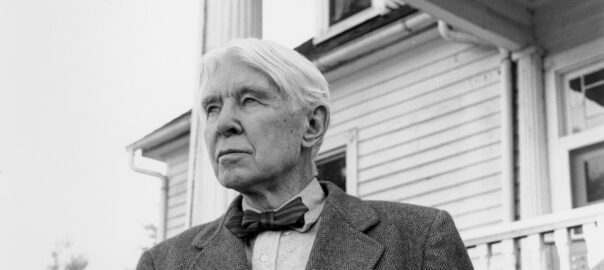
Carl Sandburg (1878–1967) is one of the best-known American poets and, at least in my day as a young Gen-Xer, was a staple in high school and college literature courses. There are good reasons for this, not the least of which is that his words often sound like they were written much more recently and still speak to ordinary people. Carl Sandburg’s poem Chicago has remained relevant for more than a century. One could read it and be excused for thinking it was composed only recently:

Chicago

Hog Butcher for the World,
Tool Maker, Stacker of Wheat,
Player with Railroads and the Nation’s Freight Handler;
Stormy, husky, brawling,
City of the Big Shoulders:

They tell me you are wicked and I believe them, for I
have seen your painted women under the gas lamps
luring the farm boys.
And they tell me you are crooked and I answer: Yes, it
is true I have seen the gunman kill and go free to
kill again.
And they tell me you are brutal and my reply is: On the
faces of women and children I have seen the marks
of wanton hunger.
And having answered so I turn once more to those who
sneer at this my city, and I give them back the sneer
and say to them:
Come and show me another city with lifted head singing
so proud to be alive and coarse and strong and cunning.
Flinging magnetic curses amid the toil of piling job on
job, here is a tall bold slugger set vivid against the
little soft cities;

Fierce as a dog with tongue lapping for action, cunning
as a savage pitted against the wilderness,

Bareheaded,
Shoveling,
Wrecking,
Planning,
Building, breaking, rebuilding,

Under the smoke, dust all over his mouth, laughing with
white teeth,
Under the terrible burden of destiny laughing as a young
man laughs,
Laughing even as an ignorant fighter laughs who has
never lost a battle,
Bragging and laughing that under his wrist is the pulse,
and under his ribs the heart of the people,

Laughing!

Laughing the stormy, husky, brawling laughter of
Youth, half-naked, sweating, proud to be Hog
Butcher, Tool Maker, Stacker of Wheat, Player with
Railroads and Freight Handler to the Nation.


Then vs. now?

They don’t butcher too many hogs in Chicago these days, nor is it any longer known for making tools or stacking wheat. If “painted women” is a thinly veiled reference to prostitution, then yeah, they’ve got plenty of that, but I’m pretty sure the clientele seldom includes any actual farm boys.

But that’s beside the point. Carl Sandburg’s work is one of subtraction: Even if we discard everything that is no longer factually true about Chicago the city, Chicago the poem remains robust and touches many contemporary issues. Although descriptions can be subjective, adjectives like “wicked,” “crooked,” and “brutal” could apply to Chicago or any big city, whether a century ago or now.

What are they, them, and those?

Sandburg never clarifies what he means by “they” when the poem repeats the phrase They tell me… three times. Nor are we told to what the author is referring when he says those who sneer… and …I give them back the sneer…. It’s really not important. These pronouns are vague on purpose. They may not even refer to an actual person, but rather, to an attitude.

Sandburg presents as a regular guy who doesn’t trade in soothing words or become soft when faced with ugly realities. He’d never get elected mayor talking like that. Or perhaps he would. Perhaps the faceless masses who usually suffer the most from urban ills would appreciate the honesty and vote for Sandburg.

Whatever or whomever they, them, and those refer to, Sandburg bristles at the accusations while also acknowledging their validity. There’s no naiveté or rationalizing here. Carl Sandburg openly embraces the epithets, but as we are about to see, he does not agree that they define his city.

The barroom poet.

Sandburg continues to speak in the voice of a regular citizen. He sounds like a guy sitting in a neighborhood bar having a civil argument with someone. Immediately after affirming that the social ills are serious and legitimate, he dares his critics: …show me another city with lifted head singing so proud to be alive… and even makes a subtle dig: …the little soft cities;…

The rest of this poem really does sound like a barroom rebuttal. There’s no gratuitously elevated or overwrought language, no slippery vocabulary. To be sure, Sandburg uses numerous literary devices in Chicago. It certainly is the work of a master. But one does not need an English literature degree to understand and appreciate it.

Chicago is the kind of stuff one might hear in an everyday conversation between ordinary people. This is the zone where Carl Sandburg is most relatable.

Politicians and academics don’t talk like this. Some people, possibly for political or business reasons, are obligated to speak well of their respective cities. They’ll seldom say anything negative because, after all, they’re supposed to solve problems and act as goodwill ambassadors. When they do go off message and say something negative, it’s usually couched in gentle euphemisms. Carl Sandburg does not talk like them, nor is he talking to them.

Sandburg makes a case that could apply to any big city and is hard to refute: yes, there are a lot of troubles. But the city has many positive attributes too; the people are strong and can rise above the shortcomings. He isn’t saying the accusations are wrong; he’s saying the accusations don’t tell the full story.

The city is greater than.

Sandburg emphatically insists that the vitality of a city and its citizens is greater than the evils of crime and urban decay, and these evils do not define the city or its inhabitants. His faith in the people’s ability to overcome social problems is a blue-collar sermon: Bragging and laughing that under his wrist is the pulse, and under his ribs the heart of the people…. In Sandburg’s world, a city is defined by both the good and the bad. The bad should not get all the attention.

He’s one of us, standing firmly with regular folk and their unheard voices. The folks who make tools and stack wheat are the heroes of this story. Those Sandburg describes as Bareheaded, Shoveling, Wrecking, Planning, Building, breaking, rebuilding, still exist today. They are the ordinary people who work honest jobs and contribute to the success of a city. The strong action verbs are not carelessly chosen. They are about the everyman no matter what year it is.

Today’s problems, yesterday.

What gives Chicago its strongest resonance with contemporary society is that the same problems still exist. Prostitution still exists. Crime still exists. Hunger and poverty still exist. It’s over a hundred years later and we’re still talking about it. The pessimist will say “See? We’ve made no progress.” The optimist will say “We are stronger and better than our problems.”  Or, in Carl Sandburg’s vernacular, Fierce as a dog with tongue lapping for action, cunning as a savage pitted against the wilderness…. 

Life in Chicago in 1914 was arguably a lot harder than it is now. Yet Sandburg remained an optimist, albeit a defiant one, even though he had ample reasons to be sour. We can and should learn something from that. Sandburg’s sentiments could be lifted straight out of that 1914 poem and dropped into 2026 and they’d fit almost perfectly.

How many of Sandburg’s observations might apply to any large city today?  On some level, probably all of them. If he were sitting next to you in a bar making these statements, would you see legitimacy in his words, even if you didn’t necessarily agree? Or would you think he’s just some ranting overserved crackpot? As a “regular guy” myself, I’m going with the former.

Hometown pride.

Sandburg’s response to the accusations is classically American: defiant, proud, and resolute. Any sensible person will admit the troubles are real. Cultural and sports events, holidays, public festivals, parades, and even people simply going about their ordinary business help lift a community above social ills.

But difficult issues are not solved solely by the daily grind or having a good time. Communities often come together and confront serious problems. Whether it’s volunteers running a food bank or a church providing shelter for the night, these efforts matter because they address a real, tangible problem and are an outward sign of civic identity. Culture and social action both show the world what a city values.

It’s not that calling out negativity is unacceptable. It’s that cherry-picking negativity while deliberately overlooking the positive is unacceptable, and in Sandburg’s mind, blatantly unfair to both the people and their city. So many things, good and bad, define a community. This idea could extend to anywhere in the United States.

Chicago ends the same way it began: with a positive affirmation of strength and honor. The work ethic and character of the people at the beginning were lost in the criticism, only for them to be vindicated and rightfully recognized at the end. How many of us living today feel that same pride in our communities—fully clear-eyed about the glaring problems—yet find it difficult to be taken seriously amid the pessimism? Carl Sandburg heard the common man over a hundred years ago…and he still “gets” it.

AM RADIO

For Those Who Lived It, the Phantom’s Signal Never Fades.

by Chris Warren

A lost culture.

When something that is so ingrained into our lives that we hardly even thought about it transforms into an unrecognizable phantom, the loss is hard to explain. It was not an abrupt conversion. We just didn’t notice, until one day, suddenly, we did. It takes one by surprise, but it shouldn’t have. The decline of AM radio has cultural and social implications that are not yet fully realized, but the direction has been clear for at least thirty years. For generations, AM radio was a ubiquitous component of the American experience. Today it is on the cusp of becoming nostalgia.

The radio reminds me of my home far away…

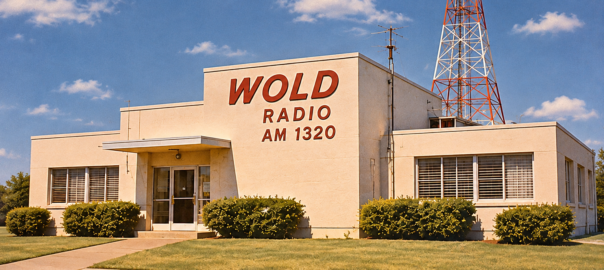
When I was a kid, my family would often spend summer vacations in Hayward, Wisconsin. The resort we stayed at was a day’s drive from our home in Illinois. We did not have smartphones or game systems or anything like that. We didn’t even have FM radio or cassettes! My dad’s 1972 Chevrolet Kingswood station wagon had a basic AM radio, with the mechanical push-button presets. Dad would have to search for a new station every ten or twenty miles because, rolling through rural Wisconsin, that’s all the podunk town little AM radio stations were good for. Each station was staffed by live announcers and had its own unique sound.

Country music was the predominant format. We didn’t care. We didn’t even care when the AM signal was scratchy and static-y. It didn’t matter when the signal completely dropped out every time we drove under a bridge. That was part of the charm. The clarity of modern digital music is certainly a technical improvement, but it is almost too clean. A few imperfections remind us that we’re still human.

There was a tabletop AM radio in our cabin at the lake. There was one, maybe two stations we could pull in. And yes, it was country music. To this day, every time I hear a Charley Pride or Ronnie Milsap or John Denver song, I think of those fun childhood times in Hayward. Something about the impurity of the audio, the friendly chatter of the announcer, who was a real person located not too far away, made it a memorable experience. I don’t believe the memory would be the same had we simply streamed the same songs to a Bluetooth speaker. I might not have remembered it at all.

Part of the family.

The radio on top of the refrigerator in my parents’ house was always on WLS AM-890. Every morning they had a feature called Animal Stories. It was a short eight- or ten-minute bit that related funny and outrageous true stories about pets and wildlife. Right after Animal Stories, Mom would shoo us off to school. Animal Stories became something of a ritual in our house, and even as we kids got older, we didn’t outgrow it. Animal Stories was so legendary that years later, long after it left the airwaves, WLS released the entire series on compact discs. I bought the set and my family got a lot of laughs revisiting an old favorite. You can still find Animal Stories on YouTube.

Even better than Animal Stories was school closing due to snow. It excited high school seniors all the way down to kindergarteners. Back then, snow closings were quite rare because we were not coddled little sissies, so when school was cancelled it was truly a treat! We had to sit patiently and listen to WBBM AM-780 while announcers read school closings one by one. As soon as our district came up there were cheers and smiles all around. Well, from the kids anyway. The parents felt otherwise.

Today it seems school districts will cancel classes for the flimsiest of reasons, and of course no one waits beside a radio for snow day announcements. Closings come via text message and the internet. The anxiety and anticipation building up to that joyful moment are gone, replaced by a sterile, efficient data stream. No kid today stares at a cellphone screen waiting with angst the way we clung to the radio.

Rock and roll rescue, via the transistor.

In the mid-1950s home television use accelerated and most of the radio dramas and comedies common up to then transitioned to TV.  A shift like that might have made AM radio irrelevant, but two new developments around the same time as television, one cultural and one technological, may have “rescued” AM radio: Rock and roll music and the transistor.

Rock and roll was a huge sensation with teenagers. But record players were stationary, and while portable vacuum tube radios existed, they were “portable” in name only and had limited usefulness. Then the transistor came along. This revolutionary device replaced physically delicate and power-hungry tubes, making radios smaller, lighter, and much more energy efficient. By the 1960s, engineering advances brought the cost of transistor radios down to a point where even teenagers were running around with them. Transistor radios were truly the “smartphone” of their day: they were trendy, cool, actually portable, and everybody wanted one.

Transistor radios allowed young people to detach from their home and parents and take rock and roll with them. Much like the automobile, the transistor radio represented a pathway to freedom and independence.

For the first time ever, no kid had to be tied down at home to a radio that was essentially furniture and consumed a lot of power. Many radio personalities became celebrities; when they made personal appearances, hundreds and sometimes thousands of teenaged fans would attend. Kids brought their radios to friends’ houses or the beach; teens would gather on weekends for impromptu dance parties. It culminated in excitement and music and fun, melded together by AM radio and crammed into a little box of electronics one could carry anywhere. It’s hard to see how all this would happen without rock and roll, AM radio, and the transistor.

AM RADIO
AI IMAGE
Lost to time, but still in our hearts.

In its heyday, AM radio stations, especially in small towns, were often locally owned family businesses that fostered a sense of community. They broadcast birth, death, and marriage announcements, crop and farm reports, high school sports, civic events, church services, and more. In between, they played popular music. The announcers were local citizens, your neighbors, people you might personally know. AM radio was woven into the vibe of the town. That all changed with the Telecommunications Act of 1996, when large media conglomerates started buying up stations. Local programming was replaced with homogeneous, corporatized content produced in a distant place.

Today, one can tune around the AM dial and hear the same program on several frequencies. Listen long enough, and you’ll notice there are few if any references to local people, places, or events. A handful of big city stations still have locally produced programming, but the most common format elsewhere is just canned content. Many AM radio stations have zero –zero!– programs originating from the areas they serve.

The days of singing along to Ronnie Milsap on a scratchy AM radio signal are long behind me. While I certainly enjoy streaming whatever clear digital content I want anytime I want it, I’m not hopeful future generations will know the simple joy of listening to a crackling signal where a live, local announcer talks about familiar and relatable things.

AM radio is on a well-worn path toward being a historical curiosity much like steam locomotives and sailing ships are now. My generation is probably the last to experience that sometimes-fuzzy analog voice reaching out to make a personal connection and participate in our everyday lives, a warm feeling media conglomerates and the internet can’t seem to replicate. Some of us remember what that “phantom” used to be.

serving others

The Shoe Box Epiphany

by Chris Warren.

What comes around goes around.

Serving others by definition requires effort or sacrifice. But what happens when the tables are turned? What happens when the server unintentionally becomes the served? The server comes away from the experience with an unplanned and unexpected level of awareness. They may gain a deeper insight or experience personal growth. The maxim “you always find good things when you’re not looking for them” endures because it’s been proven true over and over. Serving others opens the door to discovering an attribute in oneself that previously went unnoticed. Or to put it more simply, they got more out of it than they put in.

An ersatz “shoe salesman.”

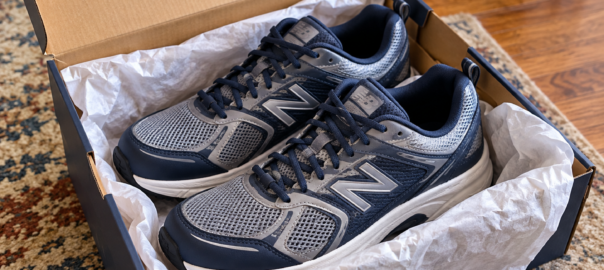
I was kneeling on the floor, surrounded by boxes of shoes. My job was to find the proper size and style from the wall of shoe boxes before us. Then, open the boxes, remove the tissue from the shoes, and present them to my dad so he could try them on. Finally, pack up the rejects and return them to the shelf. Repeat as needed until we find something that works for him.

My dad is elderly. He functions quite well, but for some tasks he needs help from one of us kids. This usually comes in the form of driving him anywhere he’s not comfortable going alone, managing his money, and arranging medical appointments. Then there are situations he doesn’t technically need help with but go more smoothly and are less stressful if someone is there to shepherd the process along. This shoe-shopping expedition fell into that category.

Ever since my mom died, dad has felt lost and isolated. I’ve done my best to keep him busy, even if it’s just to invite him to ride along while I care for my personal errands. My parents were very happily married for 63 years and devoted themselves to family and serving others. For his entire life dad ate healthy, remained physically active, was never overweight, never smoked, and took care of himself. Even now he still walks the dog daily and does yard work. At age 87, the reward for that effort is he’s in pretty damn good shape.

SERVING OTHERS
IMAGE CREATED BY ARTIFICIAL INTELLIGENCE FOR TWENTY FIRST SUMMER.
The curse of the last man standing.

But while observing dad over the last few years of my mom’s extended illness and ultimate death, a subtle reality came to me: being the “last man standing” is a lonely reward. His peer group is very small and getting smaller. He goes out for lunch with some former coworkers once or twice a month. Over fifty people used to attend; now it’s down to a dozen or so. Dad has an old car that he wrenches on himself. He’s been friends with two other “old car guys” for over twenty years. Now one of them has cancer; some days he’s too fatigued to chase hobbies. The other has a wife in a nursing home who absorbs most of his time and attention. Dad outliving my mom and both his younger brothers only closes the ring tighter.

You don’t find too many guys pushing up close to ninety years old, still in their own home, and for the most part active and living independently. It seems every few months he receives word that someone he knows has died. Those death notifications arrive a lot more often than they used to. Dad states, partly as a joke and partly as a dark acknowledgment, that everyone he knows is either in the cemetery or the nursing home.

My dad has both a sense of humor and a lot of wisdom born of experience. When he makes cracks like that, one cannot tell if he’s just joking or if he’s making a genuine life observation. He’s certainly aware he’s old and the last of his generation. And he’s often stated that he knows his time left in this life is not long. My mom used to do the same thing. As a comparatively younger person, that’s hard for me to understand.

Yesterday’s barbecue is today’s memorial.

There is a photo in my parents’ house of a Fourth of July barbecue from a generation ago. The photo was taken at my parents’ house, the same one my dad still lives in alone. There are about two dozen people, starting on the front porch, spilling down the steps and into the yard. Pretty much everyone my parents knew was invited to the party: relatives, neighbors, coworkers, friends. I’m in that picture, much younger. But as I stop in the stairway and look at it again in 2026, it’s not a great feeling to realize over half the people in that photo on that festive day are dead.

The picture has become a memorial to all those whom my dad has outlived. At this point he is the oldest person in the family. That’s a position I don’t think he ever anticipated having, and for him I don’t think it’s a point of pride. But that is the reality and dad is adept at accepting uncomfortable realities, albeit reluctantly. I think when people reach an advanced age and know they’ve lived well and contributed something meaningful to the world, something clicks on in their psyche that makes them peacefully immune to fear of their mortality.

This purchase doesn’t involve money.

Right there, kneeling on the floor in the shoe aisle, my consciousness suddenly popped into focus. Before me was a man who, in the distant past as the father of a young son, would be the one helping me select a pair of shoes. Now, to use a pun and a metaphor, the shoe is on the other foot. Assisting dad with a mundane, everyday task made me understand I was getting much more out of the situation than he. I’m not exactly a young man myself, yet my own life experience, which itself is substantial, still leaves plenty of room to learn and grow.

Serving others should not be a chore or a drudgery. That doesn’t mean it’s never hard, nor inconvenient, nor undesirable. What it does mean is that it should be approached in the spirit of goodwill, selflessness, and kindness. It’s something done even when outwardly there is nothing in it for you. But if you contemplate beyond the immediate task, you’ll discover there is quite a bit in it for you. Contributing to a greater good with no expectation of compensation other than gratitude for the opportunity to serve reveals a beautiful soul. Even something as pedestrian as shopping for shoes can achieve this result. I kept bringing dad shoes until he found a pair that he liked because the moment called on me to be a humble shoe salesman, and it was not a business transaction.

closure

The Only True Closure is Acceptance.

By Chris Warren

Seeking a clean break.

A couple breaks up; one or both of them want to meet one last time for  “closure”. There is a death; at least one survivor reaches for some act of closure beyond the usual funeral traditions. Someone quits their job. The employee agrees to an exit interview that doesn’t change any attitudes or alter the outcome; they don’t call it closure but that’s the intent. There is a deeply ingrained need for closure after any loss or disappointment. It’s part of the human experience to want a clean ending even when a clean ending is not possible. But closure cannot happen without acceptance.

The Band-Aid solution.

If one accepts the situation and only needs additional opportunity to process it, then closure is legitimate and beneficial. But for a few, it’s a vain attempt to delay acceptance. It is an artificial solution that delays or outright denies one a chance to learn and grow. I think most people, deep inside, know any orchestrated or forced act of closure is the emotional equivalent of taking an aspirin when what they really need is a shot of penicillin. They are compelled to do something even when that “something” will not resolve their concern. I don’t say this to be flippant or shun empathy. I just don’t think that closure is something one can have on their own terms and conditions.

When the closure you get is not the closure you want.

At some point in our lives every single one of us is going to experience a deep irreversible loss. It could be the loss of a job. It could be a disaster such as flood or a house burning down. Perhaps a relationship ending or the death of a loved one. We will almost certainly experience a major loss more than once.

The underlying question is: What do you want to happen? What would a satisfactory state of closure look like? Any honest adult would be unable to answer that question. The only truly satisfactory solution is to turn back time and undo the loss, and any honest adult knows that’s impossible. It’s nearly 100% certain what you get is going to be less than what you want.

Perfect vs. it will have to do.

Closure does not have to be an absolute binary state of being. In fact, it seldom is. Partial or imperfect closure is possible and can be beneficial. I hope it’s beneficial because it’s all we’re going to get. If we cannot create a fantasy world where the loss never happened, the next best —and only— option is to acclimate ourselves to the world we actually have.

Decades ago I had a close friend who one day decided to cut me off. In modern terms, he “ghosted” me. We had known each other for ten years. There was no big argument. There was no major belief or values shift, nor any life change that made us inherently incompatible. The last conversation I had with him was completely pleasant. For whatever the reason, he did not want to deal with me anymore.

In the days and weeks after that conversation I attempted to reach out to him to the extent I could without crossing into creepy stalker territory. Eventually, I accepted the situation and moved on. Now older and more insightful, I reflect on any friction between us. To me it all seemed like ordinary disagreements among friends that could have been worked out. I’ve had conflicts with other friends; we pushed past it and maintained the relationship. Unless he takes the initiative to contact me, which I would welcome, I’ll never know for sure what I did that warranted being permanently chopped out of his life. The closure I wanted was to get my friend back. The closure I got was accepting his decision even if I didn’t understand it. There was no clean ending.

Applying the past to life today.

During the intervening decades between the end of that friendship and my present day self there have been many other life disappointments and losses: A career path diverted, deaths of numerous meaningful people, health issues with no easy solutions. I don’t mean to imply my life has been hard, because when evaluated as a total arc, it hasn’t. But it would have been a lot harder had I not as a young adult unintentionally built a capacity for acceptance. What others may see as being flippant and unconcerned is, for me personally, a healthy defense mechanism.

Declining to get outwardly emotional and histrionic doesn’t mean I don’t care, nor is it performative stoicism. Life setbacks do indeed matter to me, but I accept the situation as it is, even if grudgingly, and form a positive path around it.

Acceptance is the only true closure.

I learned that only after acknowledging I was powerless to reverse personal losses could I attain any kind of closure. It’s not easy. I don’t like it. Yet even when I don’t get the result I want, it is liberating. It’s much more productive to work with what you have than to try to reclaim what you lost.

I realize that some people do not adapt so readily. That doesn’t mean they have a weak personality or a character defect. It only means their path to the ultimate destination…acceptance…may be longer and steeper. In their rumination they may not even think that acceptance is possible. Outside help may be needed to guide them along the way.

Going back to a previous question, What would a satisfactory state of closure look like? is seen in a much different light when one is developed enough to know the only real closure is acceptance. Without acceptance, one becomes a prisoner trapped in an endless vortex of wishful thinking that will never come to pass. Those who cannot accept will never be free.

fall

The Quiet Crawl of Fall.

By Chris Warren

Mother Nature’s tease.

There are just a few days left in September. Summer officially ended on either August 31 or September 22, depending on what standard one uses. Regardless of technicalities, in the Great Lakes state where I live, that means any weather that could plausibly be classified as “summer” is rapidly diminishing. We may hit an occasional hot day between now and Halloween, but that’s just a tease. Fall is a subtle spirit that quietly crawls into our lives; for those who love summer it is a part of the cycle of hope and patience.

Daylight is fading.

Fall is a mercurial season to us upper Midwesterners because it randomly flips between warm and cool, wet and dry. It’s a time of the year when one might need to use the furnace and air conditioner on the same day. The trees are still green but a few leaves begin to trickle down. Little by little, almost imperceptibly, the signs accelerate. I have to carefully monitor the weather in advance if I want to ride my motorcycle. One cannot just assume it’s going to be warm and dry.

Many of us who thrive in the heat and extra hours of daylight are foolishly rationalizing that it’s not over yet even as the sun sets a little sooner each evening, rises a little later each morning, and “shorts and T-shirt” weather turns into “jeans and hoodie” weather.

The cognitive dissonance I must inflict on myself to accept the meteorologic reality happening outside my wishful-thinking brain is breathtaking. Then one morning, any delusions I was clinging to about “we still have some summer left” are busted. The dew that used to form overnight is now frost. In less than thirty days, by the middle of October, The Quiet Crawl has ended. Fall has indisputably arrived full force and even the most optimistic summer-worshippers must concede.

The psychiatry of the seasons.

Fall is the most schizophrenic season. Constantly flipping through weather extremes, like an untreated psychiatric patient it never gets better, only worse. It’s never certain what you’ll get; summer-lovers only know every day will be lesser than the last. Spring is schizophrenic too, but in the case of Spring each day progressively improves. Yes, there will be days that feel like a step back into January, but we know the end of spring will be better than the beginning. Fall affords us no such comfort. For their part, Summer and Winter are neutral. There’s not a lot of variation and you know what to expect. But Fall is terminal decline. The weather gets colder and darker until it becomes a full-blown case of Winter.

fall
IMAGE CREATED BY ARTIFICIAL INTELLIGENCE FOR TWENTY FIRST SUMMER.
Fall plants seeds of gratitude.

Even as much as I hate to see summer pass, fall does serve an important purpose: It makes me grateful for summer. Isn’t it a natural feeling to appreciate more that which we cannot have all the time? Spring is the default season of renewal and planting, but from where I sit as one who loves summer, the real season of renewal is fall. The disappointment of fall forces me to reflect on the previous summer and plant hope that next summer will be fulfilling and positive. Although the fulfillment is delayed, it is the catalyst forcing me to better appreciate what I can’t always have.

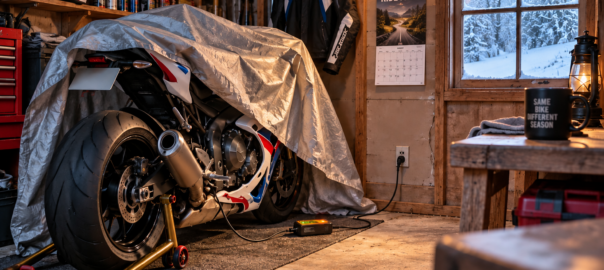
In the next week or two I will prepare my motorcycles for a long winter pause and roll them into storage; throwing a tarp over them will probably be the last I see of them until spring. I’ve been doing this ritual every year for the last forty years. That day is never a good day for me. But my hope, and what encourages me, is the converse of that day: another ritual I’ve also performed annually for forty years.

That other ritual arrives every spring, usually around mid-March. I pull the tarps off and check over my motorcycles to make sure they are mechanically good to go. Then comes the moment I’ve waited months over the winter for: Roll them out of hibernation, hit the start button and feel a rush of awesome wash over me when the engines pop to life. I slip on my helmet, which has also been lonely and idle for months. Then I disappear down the road on my two wheels of pure joy, appreciating it more because The Quiet Crawl of Fall, only temporarily, took it away from me.

artificial intelligence

Artificial Intelligence: Keep Cranking.

By Chris Warren.

If you can’t say anything nice…

Artificial intelligence, rightly, gets a bad rap. It’s true: it has displaced people from their jobs, made bad decisions that a human would not have made, created vast violations of privacy, and consumes a lot of energy and resources. It barely existed until recently, and it’s upending our lives. Even with all that, I have to admit artificial intelligence is a net benefit to society. When the good is balanced with the bad, the good wins. But my recent experiences with artificial intelligence have me questioning the “intelligence” part.

You often miss your own mistakes.

I do a lot of writing for another website. It keeps me quite busy; that’s why this website is so seldom updated. The thing is, every writer needs a copy editor. That person should not be the writer themselves. It’s human nature to overlook one’s own errors. Have you ever asked someone to proofread your paper, and they immediately spot a glaring mistake that you missed probably a dozen times? That’s why guys like me need copy editors.

Until the last year or so, I was my own copy editor. As a freelancer, this job does not accommodate hiring a human to do it for me. Against my intuition, I had no choice but to edit my own work. Applications like spell check, SEO analysis, and WordPress readability scoring help a little, but most of the heavy lifting I had to do myself. It wasn’t always easy or elegant, but time after time I managed to produce a presentable, polished product.

Enter the robot.

As a Gen X-er who is old enough to have lived before the internet and young enough to embrace it, the rise of artificial intelligence grabbed my attention. At first, I used it to pull up random facts when I was too lazy to sort through Google results and figure out what was real and what was BS.  And yeah, I sheepishly admit I use it, sparingly, to make stupid memes as a prank. You’ve certainly heard all the chatter about how data centers consume huge amounts of electricity and water. Imagine how much less that consumption would be if no one was using AI to create dancing cat videos. Doh!

Then the light bulb went on in my head. Use artificial intelligence as my copy editor! I’m certain I’m not the first guy to think of this, but for a moment it made me feel like a visionary.

Now, to be clear, everything I publish is my own original composition. But I did adopt AI to check spelling, sentence structure and grammar, logic flow, and fact verification. Most of my writing involves technical and engineering topics. In mere seconds, artificial intelligence can dig up obscure data that would take me weeks or even months to find. These are all legitimate uses of AI. It frees me to write about topics that I otherwise would not touch, or at least not address with as much depth.

Artificial intelligence can go through my text with more speed and accuracy than any human. I don’t always agree with issues it flags. I reserve my human veto power, and I often reject AI’s suggestions. But on the whole, it catches a lot of boo-boos. In some cases it declares a passage properly written but recommends a better way of stating it. I’m more reserved about approving those types of editorial changes because I don’t want AI writing “my” articles. Fidelity means everything to me. It’s a very big deal that my work actually be my work.

True colors.

Artificial intelligence creates and perpetuates a lot of boo-boos too. The deeper I got into using AI for editorial purposes, the more the gremlins came out. It would suggest a change. I would make the change. Then later in the process it would suggest I change it back. When I called out the robot on the contradiction, it would say something along the lines of, “Well, you were right the first time.” Whaaaat? The longer I worked on a project, the less detailed responses became.

I thought maybe the robot was not trying too hard because I was using the free version. This manifested itself mostly when I tried creating graphs and tables. It would give me the initial image, but if I attempted too many edits, it would halt and tell me to either upgrade or wait some period of time. Just as people only work as hard as you pay them to, I suspect it’s the same with robots. As a devoted free-market capitalist who wholeheartedly buys into the concept of exchanging money for goods and services, I forked over some money and upgraded. I use AI enough to warrant the modest monthly charge.

artificial intelligence
IMAGE CREATED BY ARTIFICIAL INTELLIGENCE FOR TWENTY FIRST SUMMER
At your service?

Not at all to my surprise, after paying my bounty to the overlord the responses became consistently detailed from beginning to end. And if there is a limit as to how many graphic/image edits I can make, I haven’t hit it yet. Money talks, and robots listen.

My frustration boiled over when I needed artificial intelligence to create a technical diagram for an article I was writing. Overall the initial image was pretty good, but had small errors that needed fixing. It would fix one error and then create another. The chatbot would reverse a correction after being told not to touch it. This was a very simple circuit. I wasn’t asking for anything weird. I even uploaded an accurate technical schematic as an example it could work from, and it fed me back garbage. It wasn’t even close! What am I doing wrong? Did I not give it enough money? I went in circles with the machine for eight hours before I finally gave up.

In passing I mentioned this drama to my brother, who has been tinkering with AI a lot longer than me. He asked if he could take a shot at it. OK, fine. Why not. I sent the hopelessly botched-up image over. To my slight embarrassment, he sent back a perfect A+ publication-ready graphic exactly as I specified. Admittedly, it took him a while. This was no five-minute wizard fix. But he did pull it off. All he said was, “You need to know how to talk to it.” I wasn’t aware I needed to speak fluent “robot English.” Gee thanks, bro?

Intelligence gathering.

So what is my takeaway from this? I think after fighting it for a full workday, I’ve proven that I don’t give up too quickly. My brother bailed me out this time, but asking him to whisper his magic whenever I need an image made is not a real option. Maybe I just need more practice and experience. That would be a painful process, but worth it if I ultimately gain the skills. In case you didn’t already suspect, yes, I absolutely did use AI to edit and proofread this article, and it took minutes not hours.

Artificial intelligence is still in its nascent stages. If it were a car, it would be a crank-start, 1920s-era Model T. Yeah, artificial intelligence is impressive and cool for what it is, but it’s going to be a while before we don’t have to crank it anymore. Until then, I’ll just have to wear my arm out getting it to obey.

legacy

Names Are Forgotten But A Legacy Is Not.

 By: Chris Warren.

King or peasant…we all have a legacy

Hardly anyone wants to talk about their own mortality. There’s no benefit in tip-toeing around the topic or assuaging ourselves with euphemisms for death. No matter if one is a king or a peasant, or how great or meaningless one’s contributions are, in the end we’re all just a pile of carbon. “Ashes to ashes, dust to dust” and all that. The most we can hope for is to leave a legacy, a spirit, for our heirs to follow. 

The concept of mortality is certainly not new to me. But like most everyone else, I don’t think about it unless I have to, and recently, I had to. Earlier this summer I contacted an attorney to have a will drawn up. Since I have no spouse, children, or direct heirs, dying intestate (ie, without a will) would create quite a legal mess for my surviving friends and family. This process coldly reminded me that it’s not a maybe. I’m going to die, someday. If I really care about the people in my circle, and I truly do, why not make it easy for them?

When no one speaks your name.

Aside from accepting our own eventual deaths, it’s even more difficult to realize that at some point our names and memory will be lost forever. Somehow, somewhere, your name will be spoken by someone for the last time. 

Names such as William Shakespeare, Jesus Christ, Napoleon, George Washington, and various monarchs are timeless. We still know and talk about historical figures who have not walked the Earth for hundreds or even thousands of years. In another thousand years, they will likely still be relevant. 

But I’m not talking about them. I’m talking about ordinary people like me, and probably you too. After my death, loved ones will likely often mention my name. But as they also die off there will be fewer and fewer people around to remember and talk about me. Eventually, there will be no one. 

When that moment comes will be different for everyone.  Due to the internet, records of our lives could linger far beyond our biological function. It’s entirely possible a curious distant descendant will look for me in obscure archived on line documents. It may take hundreds of years, but someday, my name will be spoken for the last time and at that point I will truly be forgotten. 

Every single run down, neglected, abandoned cemetery was once pristine and well tended. Loved ones regularly visited and caretakers maintained the site. Little by little the mourners stop visiting, the caretakers fall away, and nature reclaims the place. The gravestones become weathered and illegible. No one will remember the souls in the graves. This is the fate of all cemeteries; it’s a metaphor for what will become of all of us. 

Your legacy can live even if your name doesn’t.

If this sounds dark & disheartening, have hope because although our names and memories may be finite, attitude, spirit, and legacy can last forever. What you do for others will have an endless ripple effect. If you were kind to others, if you were helpful, even in a small way, that spirit will carry forward. The direct beneficiaries of your good deeds will in turn “pay it forward” and so on and so on. In that regard, you really will “live forever”. Of course, not everyone will be grateful for your kindness, and not all of your acts of charity will be perpetuated, but if you are consistent in your goodwill it will rub off on enough people to have a net-positive effect. 

Who we are and what we mean to others is not confined to words and the direct memory of others. More importantly, we should seek to leave a positive legacy for others to replicate after our names and life stories are forgotten. Goodness does not need to have a name attached to it.

northern Illinois university.

A Ghost’s Homecoming.

By: Chris Warren.

I was on vacation, rocketing west across Illinois on my motorcycle. The day’s mission was to pick up Illinois Route 2 in Rockford and take it down to Sterling. It’s a beautiful, scenic, twisty road that hugs the Rock River. I had not been that way in many years and was looking forward to revisiting a personal favorite. The weather was eighty-five degrees, sunny, no rain for three states in every direction. My motorcycle was compliant and smooth. Clipping down I-88 at at 75 miles per hour and 5800 RPM out of the engine, all systems were normal. My mood was as well tuned as the motorcycle below me.

My plans were firm until the moment I passed a sign on 88 near DeKalb, IL: “Northern Illinois University exit Annie Glidden Rd.” Successfully operating a motorcycle requires a very high awareness of one’s physical environment. A side effect of that is an awareness of oneself, a Zen-like intuition of soul & spirit you cannot get from driving a car. Whether they realize it or not, motorcyclists are also philosophers, When on a motorcycle no plan is ever “firm”. Something inside me said to take the exit. I listened to my inner voice.

Exiting north onto Annie Glidden Rd., the first thing I noticed was the road was a lot wider. There were many new businesses. The Bottle Store, a popular liquor store that was famous for displaying hundreds of confiscated fake IDs (some of which were hilariously bad), was now a CVS Pharmacy.

Mixed in with the new were familiar old sights: Dumpy student apartments, The Junction Diner, the Evans Fieldhouse. There were many new buildings, but I was startled by how much had not changed. They rearranged some of the parking lots, but 80% of the place was the same as it was back in the late 1980s. I didn’t intend to stop and walk around. I just wanted to do a quick drive-by and roll on to Rockford. Then that voice came back. I steered the motorcycle towards Reavis Hall, home base of the English Department. northern Illinois university homecoming

Original photo ©2020 twentyfirstsummer.com

It’s very difficult to park legally at Northern Illinois University without a permit. I stopped my motorcycle in front of Reavis, cut the engine, and dropped the kickstand. It was summer; school was not in session and the Covid virus was keeping most of the staff at home, so I figured it didn’t matter. I dismounted the bike, removed my helmet, and for the first time in over three decades I was standing on the NIU campus.

The place had a familiar yet creepy vibe. Familiar because it was mostly the way I remember it. Creepy because other than the occasional jogger, there were no people around. Feeling like an undergraduate again, I walked up to Reavis Hall. The door was locked. I looked through the window. Everything was the same: The wooden doors on the rooms with stenciled numbers. The dated tile floor. This was the building where I had spent hundreds of hours studying, rejoicing in successes and lamenting struggles. It’s where professors like Dr. Garrab and Dr. Van Cromphout (both deceased now) impressed me with their knowledge. n

I felt like a benevolent spirit drifting undetected through Reavis Hall.

I wondered if Reavis 214 was still the undergraduate advising office. I spent many hours in RH214 talking to Dr. James Miller, the undergrad director in my time. He was responsible for shepherding us through our degree requirements and steering us around our own screw ups. About a year after I graduated, I sent Dr. Miller a lengthy thank you letter. I don’t know if he is still alive. If he is, he’d probably be in his 90s, or very close to it. Leaning on a bench outside the building, I took a few moments to reflect. That building was the setting for an important part of my life. I was grateful. northern Illinois university homecoming

After walking the area for a while, I was surprised that a guy in a motorcycle suit roaming around peeking in windows had not attracted any attention from the police. I guess I really was alone. During my exploration, I found one of the doors to Reavis Hall was unlocked! I could not believe it! It was as if fate had left the door unlocked just for me. I nervously stepped inside.  

northern Illinois university homecoming
Reavis Hall, Northern Illinois University, floor 2. Summer 2020. Original photo ©2020 twentyfirstsummer.com

northern Illinois university homecoming

The building was like a time capsule. Except for a laser printer and some recycling bins in the hallway, everything was exactly as I remember. The only significant change was a wheelchair ramp and an elevator. Even the faculty directory, the old style kind with white plastic letters hand-placed into a black backing board, was there. I didn’t recognize a single name. The vending machines remained, upgraded over the years but in the same spot near the door. The building was well maintained. Very clean, no signs of neglect. There was an eerie quiet. I’m pretty sure I was the only person in the place. I didn’t see or hear anyone. I felt like a benevolent spirit drifting undetected through Reavis Hall.

Reavis Hall Room 214. Original photo ©2020 twentyfirstsummer.com
Reavis Hall Room 214, Northern Illinois University, Summer 2020. Original photo ©2020 twentyfirstsummer.com

I wanted to take my time and soak it all in, but keeping in mind my motorcycle was illegally parked and I was probably not supposed to be in the building, I felt hurried. I walked the entire length of the second floor until I came to Reavis 214. My question was answered. Not only is it still the undergraduate advising office, but it still had the same lettering in the window. At that point, I figured I had pushed my luck far enough and I better leave before I get into a situation that might require posting bail. northern Illinois university homecoming

I wasn’t done with my unplanned quest just yet. I pointed my motorcycle toward Grant Towers South dormitory, which was my “home” for two years. This area was desolate and empty too. Grant South gave mixed messages. It generally looked like it had not been used in a while, yet showed some signs of life such as a working vending machine and a clean but empty lobby. There were no unlocked doors but it was easy to see through the large windows. northern Illinois university homecoming

Grant Towers South entrance, Northern Illinois University, August 2020. Original photo ©2020 twentyfirstsummer.com
Grant Towers South entrance, Northern Illinois University, Summer 2020. Original photo ©2020 twentyfirstsummer.com

northern Illinois university homecoming.
Grant Towers South, Northern Illinois University, Summer 2020. Original photo ©2020 twentyfirstsummer.com

The best thing I got out of living in Grant South was my friendship with Jay. I met Jay on my very first day at NIU. We clicked immediately and have been close friends ever since. He lives in Arkansas now; I video called him so he could be a part of  this experience and see what Grant South is like now. We reminisced for quite a while about our younger lives there as I showed him as much as I could. Jay is more serious & thoughtful than he will admit. His insight was the last necessary element of my ad hoc journey of time and place. My conversation with him completed the circle. northern Illinois university homecoming 

The motorcycle pulled me down the entrance ramp to the tollway with the campus behind me no longer pulling back. As I left NIU for what will probably be the last time in my life, I felt a sense of satisfaction. I graduated in 1989 with a BA degree in English. No longer an aloof & immature student, I returned a generation later as a responsible, successful, functioning adult.

I grew and learned from my mistakes. I evolved into a better person because of my time at NIU. Perhaps unconsciously I felt I still had something to prove.  Maybe I needed to show the ghosts of NIU what had become of me? It seems now I am a something of a ghost myself. Like a wandering spirit who found a resolution I didn’t know I needed, I can finally let go and move on. This motorcycle philosopher took a thirty year detour and never made it to Rockford. northern Illinois university homecoming

greta Thunberg

A Defense* of Greta Thunberg

By: Chris Warren.

It’s easy to be sympathetic to the concerns of children. They don’t have the maturity and experience to address problems the way older people do. But what about when children are forced (or coerced) into an adult world? How much blame, if any, should we then assign to them when they find themselves in over their head? The case of teen climate activist Greta Thunberg stretches the question of who to blame to an extreme, and the fault lies in places no one is talking about.

For those who have been living in a cave for the last few months, sixteen year old Greta Thunberg became a celebrity by starting “climate strikes” at her school. These protests have spread worldwide, and Ms. Thunberg is the face of the movement…for now. I say “for now” because she is being exploited by the climate change alarmist industry. Thunberg doesn’t know it yet, but the day will come when she is no longer useful, at which time she will be kicked to the curb.

Although I hardly ever agree with liberals, this time they got it right: It is wrong to trash talk children.

I don’t intend any of the following as an insult or a put-down. I’m just stating some plain truths: Greta Thunberg is not a scientist or engineer. She has no advanced training or professional expertise in any field. She has not invented, discovered, or researched anything, nor solved any major problem. She’s an authority on nothing. On the issue of climate change, she has yet to utter even one single original thought. Everything she says has been said before, which leads any honest person to conclude that she’s just an actress, memorizing and reciting a script prepared by others. This is fitting since both her parents are in show business.

So why are the climate change disciples gushing over this literal know-nothing? Quite simply, Greta Thunberg is the latest shiny object. And that’s where I defend her. Here in the United States, the Democrats and the left are livid with the Republicans and the right for, among many things, conservatives’ verbal abuse of this child. Although I hardly ever agree with liberals, this time they got it right: It is wrong to trash talk children. Kids have enough problems with bullying in their own peer group; adults should know better.

But liberals are not the heroes in this story. Actually they’re more at fault than the conservatives. Greta Thunberg’s defenders are quick to point out that she has Aspergers Syndrome and is on the autism spectrum and is therefore deserving of special treatment. Ok, I’m on board with that. But here comes the obvious question no one is asking: Why is a person with a neurological/cognitive disability in addition the the usual immaturity and lack of judgement that goes with teenagerhood being thrust into this role in the first place? Couldn’t they find a more stable patron saint?

If Greta Thunberg is an innocent special needs child who should be protected, then her adult handlers should not be placing her in highly stressful public situations where she’s not anywhere near prepared to cope.

Conversely, if she’s a fearless visionary with a wisdom & maturity far beyond her years, then she and her followers should toughen up and learn a very adult lesson: If you put yourself out there for controversial causes, it’s expected that people are going to tear you apart. Big kids play by big kid rules, and the rules are not always fair.

She can’t have it both ways. Thunberg either needs to drop out of public life and return home to get the kind of help and attention that people like her need, or forge ahead and take the knocks as they come knowing that the real world does not cut any breaks. I do not believe she is capable of making that decision right now. That’s why there is an asterisk * in the title of this article. I’ll defend her, but it’s conditional.

While I’m not thrilled with the conservatives who are harassing her, I’m far more disgusted with the liberals who, knowing full well of her neurological issues, are exploiting her as a throwaway pawn and don’t concern themselves with how this experience will effect her long term well being. The climate change movement is guilty of a high form of child abuse.

To the left: Stop brainwashing her! To the right: Stop picking on her! To her parents: What the hell were you thinking!? Until it’s decided whether Greta Thunberg is a delicate flower or lionhearted heroine, can we just think about what’s best for her, not what’s best for our respective causes, and call a truce?

climate change

A Modest Climate Change Challenge.

By: Chris Warren.

So the climate change strikers had their big day on September 20. I’m not sure exactly what they were “striking” against, but that’s not the direction I want to go. I have come up with a plan –a plan that can be easily implemented with no government or industry involvement– that will make a real difference in reducing carbon emissions and by extension reverse climate change, assuming you believe in such things.

My climate change challenge is intended mostly for teenagers, but any climate acolyte can do this.

The challenge is is very clear & straightforward: Close all your social media accounts, and I do mean all of them. Twitter, Instagram, Snapchat, and all the rest inhale a lot of electrical power that generates carbon emissions. I do not have exact numbers, but I’ll bet Twitter alone is responsible for millions of kilowatt-hours every year. It takes a lot of juice to push those routers and servers and data centers.

Every time you click “post” a little more carbon is released into the precious world you are tying to save from climate change. If social media use goes down, so too will the demand for the resources and energy required to run them. This is not a big ask. After all, Snapchat is not oxygen. So for the love of Mother Earth, I call on all climate change strikers to close their social media accounts and promise to use them nevermore.

Of course I do not expect even one single climate striker to accept my challenge even though it is a very modest sacrifice. The climate strikers spent the entire day shrieking about how the government, industry, and everyone else must “do something” to reverse climate change, and I’ll bet very few of them ever considered what they should be personally doing themselves.

That is the cult of climate change: They “fight” for their cause without any expectation of paying even a small individual cost. I wonder how many tons of discarded protest signs and latté cups the strikers left behind. I wonder how many of them stopped for fast food before or after the protest. I wonder how many of them actually made meaningful changes in their lifestyle before demanding the rest of us change ours. My intuition says they gave up nothing, except maybe a day at school.

While hypocrisy is bad all by itself, it’s much worse when an entire belief system cannot exist without it.

Through mystical nebulous logic, climate change strikers do not call out the celebrities who live in 10,000 square foot mansions and fly around on private jets to make speeches telling me my pickup truck is the reason young people have no future. For their part, the celebrities claim absolution because they bought carbon offsets.

In woke culture, carbon offsets is the ridiculous doctrine that belching carbon doesn’t count if you pay someone to plant trees in Brazil on your behalf, or some similar penance. It’s the equivalent of throwing trash all over the neighborhood and saying it’s ok because you “offset” it by donating to the local park beautification fund.

While hypocrisy is bad all by itself, it’s much worse when an entire belief system cannot exist without it. The climate change disciples still want Starbucks and Uber rides and a house full of electronics and will go to amusing extremes to explain why they can continue to have these things while someone else is on the hook to do anything hard. They want the world to change, but not their world. Justified hypocrisy is the delusional glue that keeps the useful idiots in line. Without it, the entire cult of climate change collapses under the weight of reality.

For the record, I’ve been a vegetarian for 33 years, have solar panels on my house, and recycle. Is that enough to offset my pickup truck (a truck, by the way, that is driven less than fifty miles per week!)? If there’s a “Pope” of climate change (Al Gore?), I hereby petition him or her to grant me the indulgence.

I’ll start taking the climate change strikers seriously when they start living their lives like it’s a serious issue.