
by Chris Warren
A century ago sounds like yesterday.
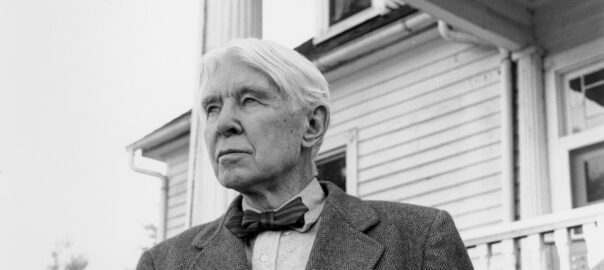
Carl Sandburg (1878–1967) is one of the best-known American poets and, at least in my day as a young Gen-Xer, was a staple in high school and college literature courses. There are good reasons for this, not the least of which is that his words often sound like they were written much more recently and still speak to ordinary people. Carl Sandburg’s poem Chicago has remained relevant for more than a century. One could read it and be excused for thinking it was composed only recently:
Chicago
Hog Butcher for the World,
Tool Maker, Stacker of Wheat,
Player with Railroads and the Nation’s Freight Handler;
Stormy, husky, brawling,
City of the Big Shoulders:They tell me you are wicked and I believe them, for I
have seen your painted women under the gas lamps
luring the farm boys.
And they tell me you are crooked and I answer: Yes, it
is true I have seen the gunman kill and go free to
kill again.
And they tell me you are brutal and my reply is: On the
faces of women and children I have seen the marks
of wanton hunger.
And having answered so I turn once more to those who
sneer at this my city, and I give them back the sneer
and say to them:
Come and show me another city with lifted head singing
so proud to be alive and coarse and strong and cunning.
Flinging magnetic curses amid the toil of piling job on
job, here is a tall bold slugger set vivid against the
little soft cities;Fierce as a dog with tongue lapping for action, cunning
as a savage pitted against the wilderness,Bareheaded,
Shoveling,
Wrecking,
Planning,
Building, breaking, rebuilding,Under the smoke, dust all over his mouth, laughing with
white teeth,
Under the terrible burden of destiny laughing as a young
man laughs,
Laughing even as an ignorant fighter laughs who has
never lost a battle,
Bragging and laughing that under his wrist is the pulse,
and under his ribs the heart of the people,Laughing!
Laughing the stormy, husky, brawling laughter of
Youth, half-naked, sweating, proud to be Hog
Butcher, Tool Maker, Stacker of Wheat, Player with
Railroads and Freight Handler to the Nation.
Then vs. now?
They don’t butcher too many hogs in Chicago these days, nor is it any longer known for making tools or stacking wheat. If “painted women” is a thinly veiled reference to prostitution, then yeah, they’ve got plenty of that, but I’m pretty sure the clientele seldom includes any actual farm boys.
But that’s beside the point. Carl Sandburg’s work is one of subtraction: Even if we discard everything that is no longer factually true about Chicago the city, Chicago the poem remains robust and touches many contemporary issues. Although descriptions can be subjective, adjectives like “wicked,” “crooked,” and “brutal” could apply to Chicago or any big city, whether a century ago or now.
What are they, them, and those?
Sandburg never clarifies what he means by “they” when the poem repeats the phrase They tell me… three times. Nor are we told to what the author is referring when he says those who sneer… and …I give them back the sneer…. It’s really not important. These pronouns are vague on purpose. They may not even refer to an actual person, but rather, to an attitude.
Sandburg presents as a regular guy who doesn’t trade in soothing words or become soft when faced with ugly realities. He’d never get elected mayor talking like that. Or perhaps he would. Perhaps the faceless masses who usually suffer the most from urban ills would appreciate the honesty and vote for Sandburg.
Whatever or whomever they, them, and those refer to, Sandburg bristles at the accusations while also acknowledging their validity. There’s no naiveté or rationalizing here. Carl Sandburg openly embraces the epithets, but as we are about to see, he does not agree that they define his city.
The barroom poet.
Sandburg continues to speak in the voice of a regular citizen. He sounds like a guy sitting in a neighborhood bar having a civil argument with someone. Immediately after affirming that the social ills are serious and legitimate, he dares his critics: …show me another city with lifted head singing so proud to be alive… and even makes a subtle dig: …the little soft cities;…
The rest of this poem really does sound like a barroom rebuttal. There’s no gratuitously elevated or overwrought language, no slippery vocabulary. To be sure, Sandburg uses numerous literary devices in Chicago. It certainly is the work of a master. But one does not need an English literature degree to understand and appreciate it.
Chicago is the kind of stuff one might hear in an everyday conversation between ordinary people. This is the zone where Carl Sandburg is most relatable.
Politicians and academics don’t talk like this. Some people, possibly for political or business reasons, are obligated to speak well of their respective cities. They’ll seldom say anything negative because, after all, they’re supposed to solve problems and act as goodwill ambassadors. When they do go off message and say something negative, it’s usually couched in gentle euphemisms. Carl Sandburg does not talk like them, nor is he talking to them.
Sandburg makes a case that could apply to any big city and is hard to refute: yes, there are a lot of troubles. But the city has many positive attributes too; the people are strong and can rise above the shortcomings. He isn’t saying the accusations are wrong; he’s saying the accusations don’t tell the full story.
The city is greater than.
Sandburg emphatically insists that the vitality of a city and its citizens is greater than the evils of crime and urban decay, and these evils do not define the city or its inhabitants. His faith in the people’s ability to overcome social problems is a blue-collar sermon: Bragging and laughing that under his wrist is the pulse, and under his ribs the heart of the people…. In Sandburg’s world, a city is defined by both the good and the bad. The bad should not get all the attention.
He’s one of us, standing firmly with regular folk and their unheard voices. The folks who make tools and stack wheat are the heroes of this story. Those Sandburg describes as Bareheaded, Shoveling, Wrecking, Planning, Building, breaking, rebuilding, still exist today. They are the ordinary people who work honest jobs and contribute to the success of a city. The strong action verbs are not carelessly chosen. They are about the everyman no matter what year it is.
Today’s problems, yesterday.
What gives Chicago its strongest resonance with contemporary society is that the same problems still exist. Prostitution still exists. Crime still exists. Hunger and poverty still exist. It’s over a hundred years later and we’re still talking about it. The pessimist will say “See? We’ve made no progress.” The optimist will say “We are stronger and better than our problems.” Or, in Carl Sandburg’s vernacular, Fierce as a dog with tongue lapping for action, cunning as a savage pitted against the wilderness….
Life in Chicago in 1914 was arguably a lot harder than it is now. Yet Sandburg remained an optimist, albeit a defiant one, even though he had ample reasons to be sour. We can and should learn something from that. Sandburg’s sentiments could be lifted straight out of that 1914 poem and dropped into 2026 and they’d fit almost perfectly.
How many of Sandburg’s observations might apply to any large city today? On some level, probably all of them. If he were sitting next to you in a bar making these statements, would you see legitimacy in his words, even if you didn’t necessarily agree? Or would you think he’s just some ranting overserved crackpot? As a “regular guy” myself, I’m going with the former.
Hometown pride.
Sandburg’s response to the accusations is classically American: defiant, proud, and resolute. Any sensible person will admit the troubles are real. Cultural and sports events, holidays, public festivals, parades, and even people simply going about their ordinary business help lift a community above social ills.
But difficult issues are not solved solely by the daily grind or having a good time. Communities often come together and confront serious problems. Whether it’s volunteers running a food bank or a church providing shelter for the night, these efforts matter because they address a real, tangible problem and are an outward sign of civic identity. Culture and social action both show the world what a city values.
It’s not that calling out negativity is unacceptable. It’s that cherry-picking negativity while deliberately overlooking the positive is unacceptable, and in Sandburg’s mind, blatantly unfair to both the people and their city. So many things, good and bad, define a community. This idea could extend to anywhere in the United States.
Chicago ends the same way it began: with a positive affirmation of strength and honor. The work ethic and character of the people at the beginning were lost in the criticism, only for them to be vindicated and rightfully recognized at the end. How many of us living today feel that same pride in our communities—fully clear-eyed about the glaring problems—yet find it difficult to be taken seriously amid the pessimism? Carl Sandburg heard the common man over a hundred years ago…and he still “gets” it.