All posts by Chris Warren

A Drought of Wisdom.

By: Chris Warren.

In California they are facing a drought the likes of which make it seem like something from a science fiction movie. Governor Jerry Brown has the thoughtful wisdom to mandate everyone cut their water consumption by 25% on top of already aggressive conservation measures. Being the regulatory labyrinth that it is, California even has a state law that prohibits restaurants from serving water unless the guest specifically asks for it.

It seems lost on the governor that this epic hot mess is caused in no small part by liberal politics and rabid environmentalism that, in deference to wildlife, spent decades successfully halting plans to build aqueducts and dams. Jerry is going to dehydrate human Californians one glass of water at a time while tens of millions of gallons of perfectly drinkable water is flushed out to sea in order to protect a two inch long fish. By the way, would someone please ask the governor how much water all those illegal aliens in California’s sanctuary cities use every day?

The day is not too far off when the completely predictable results of bizarro activism and legislation come to fruition. The drought will be most acute in southern California. On full display will be the pathos of stuffing nearly ten million people into a region that gets only 15 inches (38cm) of rain per year.

Very few of those ten million people will honestly be able to say they had no idea this was coming but they will undoubtedly act surprised and demand quick action. California politics has conditioned its population to an ethic of nanny state dependence and a belief that all problems can be solved with more laws and tax dollars.

No matter how far one may be from the California drought either in geography or personal interest, what happens out there matters to all of us. The reasons are almost too many to count: Environmental policy that treats humans as an invasive species. Urban planning that squeezes tens of millions of people into an area without enough resources to support them. And if you still don’t care, here’s the biggest reason why you should: California’s artificial irrigation-intensive farming methods.

A lot of what America eats comes from California, and it’s going to be more expensive and harder to find. Billions in tax dollars have been spent on schemes to fix these problems with almost no return on the investment.

When the well finally goes dry, the price of lettuce will be very far from the concerns of Los Angeles residents. They will face the hard truth of living in a place where the water that comes from hundreds of miles away…stops. Some will leave town; most will stick around and cling to their blue-state default group think of trusting that the government will save them. Social unrest and violence will reach every corner of a city that is a rough place even on a normal day.

It’s human nature to protect oneself from a problem by pretending it doesn’t exist. The issue is compounded because once it can no longer be ignored, it’s usually too late to do anything. If you knew your water was going to be switched off, say, on some random date in the next two years or so, what would you do right now? For Californians, and pretty much every American, the answer is obvious: Go about your normal business and be confident that the government has a drought plan B.

One of the incidental benefits of writing about preparation/survival topics is that there are so many real world examples to draw from as well as the assurance that almost everyone will shake their head yes in agreement with me but take no action to prepare themselves. Drought has been an underlying reason behind many conflicts, and always happens to someone else. That is why my message is accepted in the cognitive sense and rejected in the practical sense. To put it another way, everyone likes the idea of being prepared, but only as an idea. 

So once again, the rest of us have a golden opportunity to mitigate the effects of disaster in our own lives by paying attention to others’ poor judgement and taking the lesson to heart. It may come to your world in the form of a drought, flood, terrorism, or economic collapse. When fill-in-the-blank calamity arrives at your door, there will be other people watching from a safe distance reassuring themselves that kind of stuff happens to someone else.

(Graphic courtesy businessinsider.com)

The Diverging Paths: Heroes or Hitler?

By Chris Warren

A Twenty First Summer article from December 13, 2014 was about men who started life as ordinary citizens but when duty called they stood up to defend the United States in World War II, rightfully earning the title of “hero” and a place of high honor in history. At the other end of the scale are those who have committed ghastly war crimes and not only are they never punished, they aren’t the least bit remorseful. Two divergent paths: One ending with the pride and thanks of a grateful nation, the other ending in complete defeat of the genocidal megalomania of Adolph Hitler, a historical figure so profoundly offensive that seven decades after his death it’s still creepy to see his name in print.

Soren Kam, WW II era photo.

Soren Kam could have taken his life in a different direction; now he is one of the reasons why we should keep Hitler’s name in circulation for the higher purpose of making sure the hate he preached doesn’t spread too far. Kam, who recently died at the age of 93, was a Danish citizen who joined the Nazi party during World War II. He is suspected of helping identify Danish jews so they could be deported to concentration camps, and at the time of his death remained one of the most wanted war criminals. He was also a highly decorated SS officer who murdered an anti-Nazi newspaper editor. And, like most Nazis, it’s almost a certainty that he is guilty of many other crimes that cannot be proven back to him.

A common argument floating around is that all the escaped Nazis are now in their 90’s and there is no practical reason to go after them. In a loose way, the argument holds up: A ninety-something year old man is typically not a danger to society. Spending considerable time and money to apprehend him and place him on trial just to prove a philosophical point seems like an unfruitful use of resources. The problem with this argument is it implies that justice means less the longer someone can run away from it and it tramples on the feelings of victims and their descendants. Giving evil men a pass, just forgetting about it, letting bygones be bygones –whatever trite label one wants to stick on it– benefits no one except the guilty.

What is particularly crude about Soren Kam is that he did not deny his involvement in the Nazi party and by many accounts was even proud of it right up to his death. He escaped to Germany after the war and exploited legal loopholes to avoid extradition back to Denmark. He lived a comfortable lifestyle as a free man for many decades and was never held accountable for his crimes. Knowing this adds greatly to the burden carried by the victims. There is already little solace for the aggrieved; no one should think that the passage of time makes them whole.

Decent people will wonder how someone who was involved in one of the most monstrous crimes in recorded history could so easily and openly get away with it. One of the faults of decent people is that in our hearts we so badly want to think life is fair when in our heads we know it isn’t. This conflict is never resolved. We spend more energy than we probably should being angry at the injustices we see, not because the anger isn’t warranted, but because no purpose is served by it.

The best we can get out of the barely-human filth that was Soren Kam is that it is his thought process, not ours, that is screwed up. There is a justice system not of this Earth which always makes the right call and ultimately gives everyone exactly what they deserve. Believing some version of karma will sentence people like Kam to the punishment they did not receive during their biological lifetimes doesn’t go very far to settle the hearts of the victims’ families in the here and now, but that, along with the empathy of decent people everywhere, is as close to a fair deal as they are going to get.

The Unfinished Business of Michael Franzese.

By: Chris Warren.

The other night I was pulled in by a television biography about Michael Franzese, the son of an organized crime boss. Young Michael diverted from a promising career in medicine to work for his father in the “family business,” or cosa nostra as it is commonly called. It was a true story about a man’s life in the mafia, his repentance, and redemption. I am satisfied that Franzese’s criminal career is over; his life of redemption is an unfinished story that others should examine carefully and learn from.

Back in the 1980’s, Franzese had a conversion to Christianity and gave up his decades-long criminal career. This was quite a bit more complicated than simply cutting old ties, getting a straight job, and moving on. No one really “quits” the cosa nostra. In mafia culture, it’s a disloyalty punishable by death. It’s understandable to question Franzese’ sincerity about his new beliefs. Do these guys ever really change? That Franzese knew there was a very real chance his decision would get him killed suggests that he really meant it when he renounced the mafia and his high status in it.

Michael Franzese (photo courtesy mafiatoday.com)

Since then Michael Franzese has at least outwardly lived as an honest, law-abiding citizen, earning a legitimate paycheck as a Christian author and motivational speaker. It seems odd that a guy who made a career as a criminal now maintains a comfortable lifestyle writing books and talking about his time working in a criminal enterprise. His income, while completely legal, has a provenance in mob activity. In that regard, I guess there really is no getting away from the mob.

Michael Franzese is strange collection of conflicts: No matter how deep into sin you go, you can always repent and change your ways. Still,  given his background, it’s a stretch to take a guy like Franzese seriously. I respect him for his contrition even as I would be wary of him personally. Franzese is, after all, a convicted mobster. He’s never going to shake that, and forgiveness does not mean pretending that the wrongdoing never happened. All forgiveness means is that the aggrieved will no longer harbor anger. It is mainly for the benefit of the offended.

We who believe the Bible commands us to withhold judgement because we are all unworthy sinners find a difficult moral test in Michael Franzese: Both divine rule and human logic gives us more than enough reasons to cast him off as a wicked man; yet Christianity also says to accept a man’s remorse on the condition that going forward he obeys civil laws and lives an honorable life. The mafia is surprisingly similar to a church or religion: It’s a top-down organization that demands unequivocal devotion, has clear rules, and a penalty system for breaking the rules. Looking at it that way, it’s easy to see how Michael Franzese could easily make the jump to Christianity. Both the mafia and the Church have the same basic internal structure, but with very different end goals and means of achieving them.

As hard as it may be, I am obligated by faith to give Franzese the benefit of a doubt and show him the same respect I would give any fellow believer. It bothers me that he has probably committed crimes for which he was never punished, and the punishment he did receive for known crimes was in my opinion not harsh enough. Still, I am neither God nor the court system, so the decision of whether or not justice has been served is not mine to make. I never thought I’d be in the same “mafia” as Michael Franzese, yet here we are. There is a Power infinitely greater than any criminal organization working deals behind the scenes, transforming hearts and minds, and reminding me that I’m something of a conflict myself: No more worthy than the next guy, even when the the next guy is a wise guy.

Lunch With A Teen Lottery Prize.

By: Chris Warren

I recently had the opportunity to meet up with my buddy, James. He happened to be in my area and I don’t get to see him that often, so when the last minute invite came in, I quickly rearranged my day to make it happen. I was excited. He’s one of my most favorite people, ever.

The first thing you’ll notice about James is how outwardly unnoticeable he is. He does not call attention to himself via a ridiculous wardrobe of saggy pants with his underwear and most of his ass hanging out. He is not carpeted with tattoos and piercings, at least none visible (for the record, I don’t have a problem with tats and piercings, except when they are overdone). He does not have a wild haircut. He’s a regular jeans & t-shirt type of guy. He speaks clearly and politely, in complete sentences, without profanity. The sentences sound like they had actual, meaningful consideration put into them. Only occasionally does he slip into wishy-washy teen mumble mode. James is a high school student.smartkid1

We nibbled on the free chips & salsa while waiting for our burritos. James has been taking college and honors-level courses for a while now. He talks of his plans to study science and math when he goes to university next year. He has opinions about politics and the world. It doesn’t matter if I agree with his views or not. What matters is that he is thoughtful and has a clue. James smiled and seemed embarrassed when I complimented him on how focused and together he was. This kid is so sincerely decent, likable, and intelligent that I wonder what alignment of the planets caused him to be here in the first place.

The answer is much closer to earth than cosmic good fortune. Guys like James are carefully nurtured by parents who put heart and soul into their kids. His mom & dad demanded the best from him and would not tolerate any less than full honest effort. They knew when to carry him and when to step back and purposely allow him to struggle on his own. All males, especially the young ones, live in fear of being dressed down by another male they respect. James’ dad sets a high standard and enforces accountability to it. The kid got the hint. He did whatever it took to avoid disappointing his old man.

As much as I may discount luck, I do like to tease James’ dad and remind him that he won the “kid lottery.” Like his son, he takes compliments humbly but inside he knows how hard he worked and how deeply he loved to produce the remarkable chip-munching teen sitting in front of me. The hardest work a parent does is the work no one ever sees. I know there are lots of kids from loving homes who grew up to be bums. And I know lots of kids turn out to be stellar even though their parents, if they have any, are the bums. Some parents have a winning ticket and throw it away.

James’ biggest challenge of his short life will begin this fall when he goes off to college where his parents will not be a daily presence pushing him along. He understands hard work is expected even when no one is watching; his parents’ admonishments buzzing in the in the back of his head will  keep him on task. The little kid who used to play video games with me and randomly hug me for no reason at all is now a mentally, physically, and morally strong young adult whom I am certain will one day find a cure for some horrible disease or come up with a solution to a very big problem. He knows how much he is loved (he’s still not too cool to hug me!) and proves every day that he’s been paying attention for the last eighteen years.

Fact Checking Kindness.

By: Chris Warren.

The internet enables the average person to access more data from their smartphone than could be stored in an entire large university research library twenty years ago. Lost in the excitement of holding all civilized wisdom in one’s hand is the reality that the internet also provides a platform for dishonesty that, when mixed with just enough actual facts and spread around far enough, will sound completely plausible.

This week’s Twenty First Summer article started out as a thoughtful introspection about Glen Buratti, a six year old autistic boy who was cruelly snubbed on his birthday by his entire kindergarten class. During the process of reading up on the story and planning my article, I noticed a familiar plot shaping up: A victimized child, a mother openly wishing she could make it right, and an internet full of complete strangers coming to the rescue. Spoiler alert: It has a happy ending.

But that’s not where I’m going with this. The familiar plot was a tipoff: These stories occasionally go the wrong way. Everyone has heard of someone running to the media or the internet with a heart-tugging tale. The tale goes viral, attracting huge levels of support and attention and money, only for it to turn out later that they lied about the whole thing. I’ve grown cynical in my internet old age. Even a cute little kid doesn’t get an automatic free pass out of me. I always turn to my old friend google to cross-check everything lest I too become just another sucker who got duped into propagating an endless chain of electronic fiction.

As hard as I tried, I could not bust the Glenn Buratti story. There were some odd aspects to it that didn’t quite line up, but no big gotcha! There wasn’t even a little gotcha! Part of me felt relieved this wasn’t a scam. It is one of those feel-good stories affirming my faith that humanity doesn’t totally suck after all. I wanted it to be true. Another part of me felt like a cad for questioning Glenn’s mother’s motives in the first place. Maybe I should have no reason to feel bad because being suspicious is part of modern life, or at least it should be.

pinocchio-how-to-make-yourself-into-a-human-lie-detectorSo that’s where I’m at: Validate everything, especially if I’m going to use it as the topic of a blog article. That old fashioned sense of giving everyone the benefit of a doubt doesn’t work the way it did in days past. I’m not naive enough to think dishonesty is new concept, nor will I be guilt-tripped because I checked my facts before I put my byline on something for the whole world to see. The internet has made it easy to confirm truth, it’s also made it easy to bury a lie. President Ronald Reagan’s maxim, “trust but verify” no longer applies only to nuclear disarmament agreements.

Beyond the obvious moral lesson that kindness always trumps the mean spirited, the Glenn Buratti story  also teaches that it’s not a wise policy to accept someone at their word. There are so many scams and flim-flams out there; it poisons the well for any honest person in need who wants to be taken seriously. At the other end of the transaction are generous people who want to help but are holding back on the possibility they are being played. I still believe in compassion, empathy, and humanity toward others. Since I hold all of mankind’s knowledge in the palm of my hand, I’m going to to make sure there is enough truth to warrant my good will before I invest any heart and soul into someone else’s tears.

Lessons From A Dixie Trip.

By: Chris Warren

I’m on a layover at the Atlanta, Georgia airport (ATL), one short plane ride away from beautiful Florida where I’m headed to visit a guy I’ve been close friends with since we were teenagers. Where I’m from, the winters are long and rough. Florida is a welcome treat; I’ve been looking forward to this trip for months. I’ll be crashing at my friend’s house, so I don’t have to pay for a hotel or a rental car. Time off in a warm, comfortable place and it won’t even cost me much money…it’s as good of a deal as I’m going to get without packing up and moving there.

In addition to the excitement of seeing my friend, this trip will expose me to people different than what I’m used to at home. It’s easy to think that everyone all across the USA is mostly the same, but I’ve been to places that made me forget that I was still in my own country. There have been moments when I had to remind myself that I didn’t need a passport to get there and these people were just as American as myself. Even within my home state, there are areas a world apart from where I live.

Now in Pensacola, I am in a part of the state that is more “Southern” than “Florida” in the way outsiders imagine these things (the Alabama border is less than a twenty minute drive). This is Dixie in spirit if not geography. There is a real Civil War-era fort on the gulf shore just a few miles away. The customer lounge at Jiffy Lube has Bibles as reading material. The convenience stores sell fresh boiled peanuts. And I must, must, must, have breakfast at an ubiquitous culinary icon of the South: Waffle House (there are sixteen of them in the Pensacola area alone). If you order iced tea and and don’t specify sweet or unsweet, you out yourself as being from, well, not here. It’s ok, though. The locals will smile and gently guide you through the protocol. Southern congeniality…it’s not a stereotype when it’s actually true. These people are sincerely nice.

Travel is not something I’m very interested in. I’ll seldom go somewhere just for the fun of going and if my friend did not live in Florida, I’d probably never come here. I may not be excited by the idea of boiled peanuts and oil change evangelism, but the value of wandering and witnessing firsthand how others live is not lost on me. Aside from my jealousy of the mild weather and being left speechless over what Southerners think is “good pizza,” things around here are not shockingly different than life in my own end of this great land. USA2EDIT

The buddy I’m here to visit knows a lot about acclimating to different people and customs: He originally came from Vietnam via Indonesia, lived in Illinois for many years, then went to Seattle, Washington for a short run, and is now a US citizen firmly planted in Pensacola. My learning curve was more straightforward: I’ve been on numerous treks stretched over a decade or so to see him, and once I stopped trying so hard to understand the South, the lightbulb went on in my head. If one looks for only differences, then understanding will never come. It’s like a Venn diagram where none of the circles overlap. I first had to seek out similarities and use that as a starting point to appreciate the differences.

As soon as I ended my preoccupation with being a stranger in these parts, the differences didn’t seem like all that big of a deal. We are America, after all. There may be many different color threads, but they are all part of the same piece of cloth. That is where the Venn diagram intersects. When someone from Dixie stops by my neighborhood, I’m going to offer them a slice of real pizza and hope they will see how much they are welcome in my part of the circle.

Health Club Head Games.

By: Chris Warren.

I’m going to say it straight up: I never was much of a jock and do not enjoy going to the gym. Some people are into working out to the point that it’s a full time lifestyle. To me it’s something that needs to be done for my own good, like brushing my teeth. Not quite a drudgery, but not my idea of a great time either. And I don’t spend more time doing it than is absolutely necessary. I may not like working out, but I certainly like the results: It’s nice to be able to lug fifty pounds of cat litter up the stairs without huffing and puffing, or play basketball with my young nephew and easily keep up with him.2f9f5d0f7f07aa3f0f3212c962841122

Today I dutifully reported to the health club and stepped onto the elliptical runner for the first part of my set. With The Howard Stern Show streaming from my smartphone, I readied myself for a thirty minute uphill run. The machines are placed on an elevated platform that has a great view of rest of the facility. From there I can see most everything. Health clubs, especially one like mine that isn’t marketing itself to be trendy, tend to be gathering places for some rather odd people. For my own benign amusement, I’ve given funny names to some of the regulars: Weird Dancing Quarterback Lady, The Solar System, Cute Boy Crew, Colonel Flagg.

What is surprising –and inspiring– is the numerous older people (meaning retirement age and up) working out. They are there, day after day, and keep moving. There are a few who appear to be well into their seventies and are in amazing shape. Being around them makes me want to run faster up a steeper hill. It doesn’t make me enjoy it more, but looking at those old dudes I think to myself, “I want to be like that when I’m 70!” They motivate me without even knowing it.

There is also something to be learned from the people you don’t see. I know they are out there. They are the ghost clients who pay month after month but hardly ever make an appearance. There must be some psychology that convinces them as long as they maintain the membership and thus keep open the option of going, then they have the right to feel like they are doing something. Every single health club in the country would go out of business within a month if they were paid only when someone actually walked through the door.

Physical exercise brought on a new attitude I would not have if I spent that time doing something else. Because I had never been into sports as a kid and was not serious about staying in shape until I was well into adulthood, the feeling was a complete surprise. On the surface it doesn’t seem that running on a machine a few times a week would mess with your head (in a good way), but it does and there is quite a bit of science out there to support the concept. I leave the club refreshed and positive. I’ve never finished a set and left in a bad mood.

The attitude improvement came in many forms but the most notable was my new willingness to give the benefit of a doubt and avoid judging others. How do I know that 250 pound lady did not weigh 350 pounds a year ago? How do I know that guy struggling to stay barely above a walking pace on the treadmill didn’t just have heart surgery? It’s bad for my psyche to concern myself with these matters. I mind my own business and chuckle at Howard Stern. It’s not my place to try to figure out others’ motivations…or lack of them. We are all just a mass of sweaty souls, each at a different place on the path, but still equally on the path nonetheless.

When Energy Is Stolen, There Are No Victims.

By: Chris Warren

For over a generation green energy has been the exclusive domain of the liberal left. The reasons why could run thousands of pages, but the oversimplified explanation is that clean energy is not economically viable and suitable only in niche applications. It is not cash flow positive nor does it have mainstream practicality, and therefore depends on government subsidies and complex protective legislation. Add that to the liberal foundational doctrine that feelings matter more than actually getting something done, and clean energy becomes a natural fit for them.

That was then and this is now. Renewable energy, particularly solar, is on the cusp of becoming technically and financially competitive with traditional fuels. The left hasn’t noticed –yet– that free market libertarian ideas are pushing it over the line (note: liberal and libertarian are not the same thing). How long this ignorant bliss will continue is uncertain, and I’m not sure it matters. What is certain is that just a year or two ago, the idea of two groups who so sorely disagree on everything else setting it all aside and joining forces to make solar energy go primetime would have been found only in a Saturday Night Live comedy sketch.

A nascent movement is gaining traction down in Florida where liberals and conservatives are in an unlikely collusion to pass legislation that would allow any private citizen to install solar panels on their home or business and sell the electricity for profit on the open market. In essence, they would become a miniature power company. As the law is right now, only state registered commercial utilities can sell juice. The new rules, if passed, would let anyone in on the action.

It is encouraging to see solar energy get the boost it so rightfully deserves, and let it be noted that all of this is unfolding without government subsidies, handouts, or special legislative favors. The plan does not officially break up the power company monopoly, but is it really a monopoly if anyone can do it? To be sure, Florida’s proposal is no magic answer. There are a lot of holes in the plan, and we are long away from completely powering our society with sunbeams and happy thoughts. Still, there is almost nothing negative about this initiative.

Conservatives should further their cause by spreading the Florida example elsewhere. Finding a reason not to do something is easy. It takes thought and effort to confront problems and find a path through them. Since the beginning of the clean energy movement, the right touted a long list of reasons why green energy would not work for mainstream use, and to be fair, for most of that time they had a valid point. Now there is a foot in the door that addresses many of these concerns. Here is the conservatives’ big chance to show everyone that free market solutions really do work.

Regardless of how the Florida experiment plays out (it has not even been passed into law yet), liberals are faced with no course to steer around the reality that decades of government largesse and mandates has failed to make solar a legitimate option. And I’m certain I’m not the only free market supporter who is taking some quiet pleasure seeing progressives forced into a position where, in order to achieve their long time goal of widespread renewable energy, they will have to admit that their other long time goal of solving the renewable energy “problem” with more government spending and regulation is a total failure.

The way I read this, two causes liberals covet (green energy and big government) have been turned against each other. Well played, tea party! Well played! Not only are conservatives stealing a worthwhile but horribly mismanaged liberal issue and making it work with capitalist policy, the liberals are cheerfully going along as if they were helping  load their own stuff into a burglar’s getaway car. In this case the thief is doing the victim, and everyone else, a huge favor.

Career Objective: Make It To Retirement With A Smile On My Face.

By: Chris Warren

I consider myself  to be among the lucky few who has a cool job that is engaging and interesting. A large majority of the time I like what I do, with occasional screw this! moments sprinkled in to remind me that it may be cool but it’s hardly paradise. I think I must have won some cosmic occupational lottery because for my whole life I’ve always seemed to land in nifty jobs as if by accident. Even through high school and college I managed to earn a buck without getting involved with the drudgery of fast food or retail.

51NKZtwI2FL._SY445_Now I’m in that strange zone where I’m certainly not a kid but also not nearly old enough to seriously consider retiring. I’m left wondering what’s next. Or if there even is a “next.”  I would not mind doing something else, but since I’m content where I am I see no point in changing just for the sake of change. I’ve asked the self-analyzing question: If I looked into a crystal ball and saw myself retiring from the job I’m doing now, would the vision be depressing or comforting? Am I ok with this for the rest of my career?

The short answer is yes, I’m ok with it. I still wonder though, is there anything better out there? Is this as good as it gets? I’ve decided not to beat the hell out of myself trying to resolve a question of circular logic. In theory, there is always something better, somewhere. It’s more worthwhile to focus on what’s right and positive about the job I already have.

It’s important to explain that being happy with where I am and being complacent and unmotivated to move forward are not the same thing. There was a period in my distant past where I was in a job that was respectable but well beneath my potential. I stayed there way too long, bullshitting myself that it was good enough. I managed to get out of that trap relatively unharmed and took a lesson with me: Be grateful for what you have but don’t ever assume it’s the end of the line.

Being surrounded by family and friends who are in jobs that are soulless and devoid of any feeling of a higher purpose, on top of paying barely enough to make it worth showing up every day, gives contrast to my own life and blunts the effects of my screw this! days. The workplace headaches I deal with are mild by comparison, and at least at the end of it all I receive a decent paycheck for my hassles. There may be something better, somewhere, but there is also something worse. Being far from the bottom is more important than being close to the top.

I used to have a coworker who was technically competent but by a very large margin had absolutely the worst attitude of anyone I’ve ever worked with. He could not go five minutes without prattling about how unfairly he was treated, had a lame excuse for everything, constantly argued with the boss, thought the whole company was plotting against him, blah, blah, blah. I spent a year trying to be his buddy: Reaching out, having man-to-man talks, pushing him towards a better path. It was a complete waste of my effort. He was officially fired for absenteeism, but the real deal was that management and pretty much everyone else, including me, was far beyond fed up with the pouting crybaby. Your approach to your job has more influence over your career path than everything else combined. Skills can be learned but attitude can only come from within.

No one should allow their career success to be defined solely by how many promotions and raises they can collect before they retire. It’s more meaningful and less stressful to show up every morning believing that every day is a good day, but some days will not be as good as others. I am, on the whole, a happy employee. I flatly refuse to let myself become the guy who bitches about everything. When I reach a point where I don’t feel I can go any further in the job I have, the time to move on will become self-evident.

SPECIAL EDITION: A Winter Storm.

By: Chris Warren.

As I discussed in my last article, being ready for emergencies is not just for whackos. The other half of the equation is that a “disaster” does not have to come in the form of an epic 300 foot tidal wave or alien invasion.

Overnight, my territory in the upper Midwest USA got clobbered by about ten inches (25 cm) of snow, with about another 4-8 inches (10-20 cm) still to come before it’s over. The temperature, which is actually above freezing right now, is expected to drop to 5F (-15c) before sundown, then the high winds will kick in.

By local standards, this storm is not a particularly big deal. Yet there are people who will face serious weather-related problems that could have been entirely avoided with even a little planning. Already, I’ve had to give some gas to a guy up the road because he ran out and needed to fill the tank on his snowblower. This storm was predicted three or four days ago. Why didn’t he fuel up when he had the chance? I just don’t get it. There will be fatalities because of this storm.

The following is a pictorial account of my life during a snow storm. I took all the photos myself.


IMG_1042This photo was taken from my kitchen window. It looks very pretty and serene. But beyond the backyard things get rough.

IMG_1023

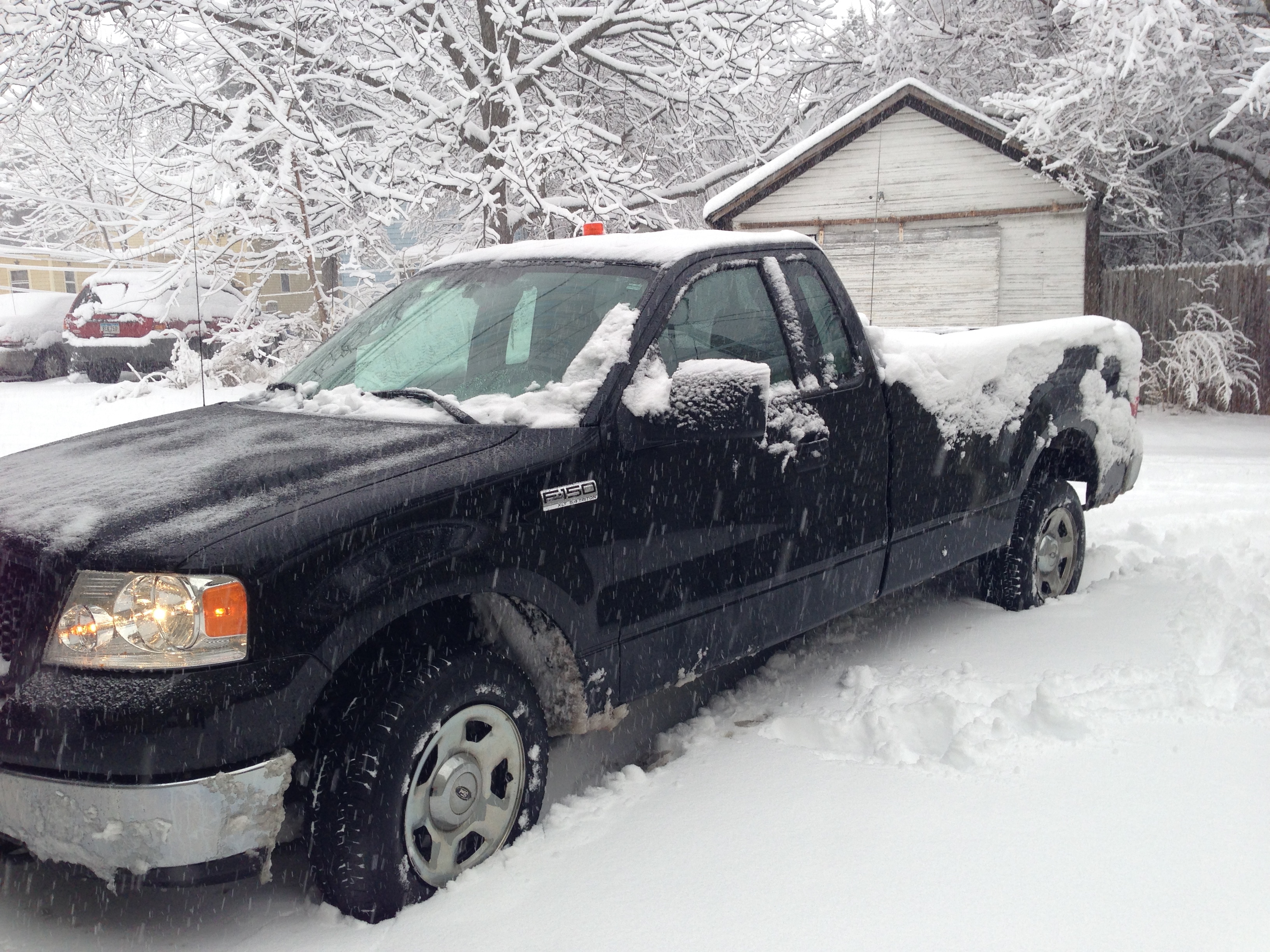
IMG_1021This is as about as “plowed” as it’s going to get for a while. I saw very few cars on the road, only 4×4’s. Everyone else is stuck at home. Even in my big truck, it was a challenge getting around.

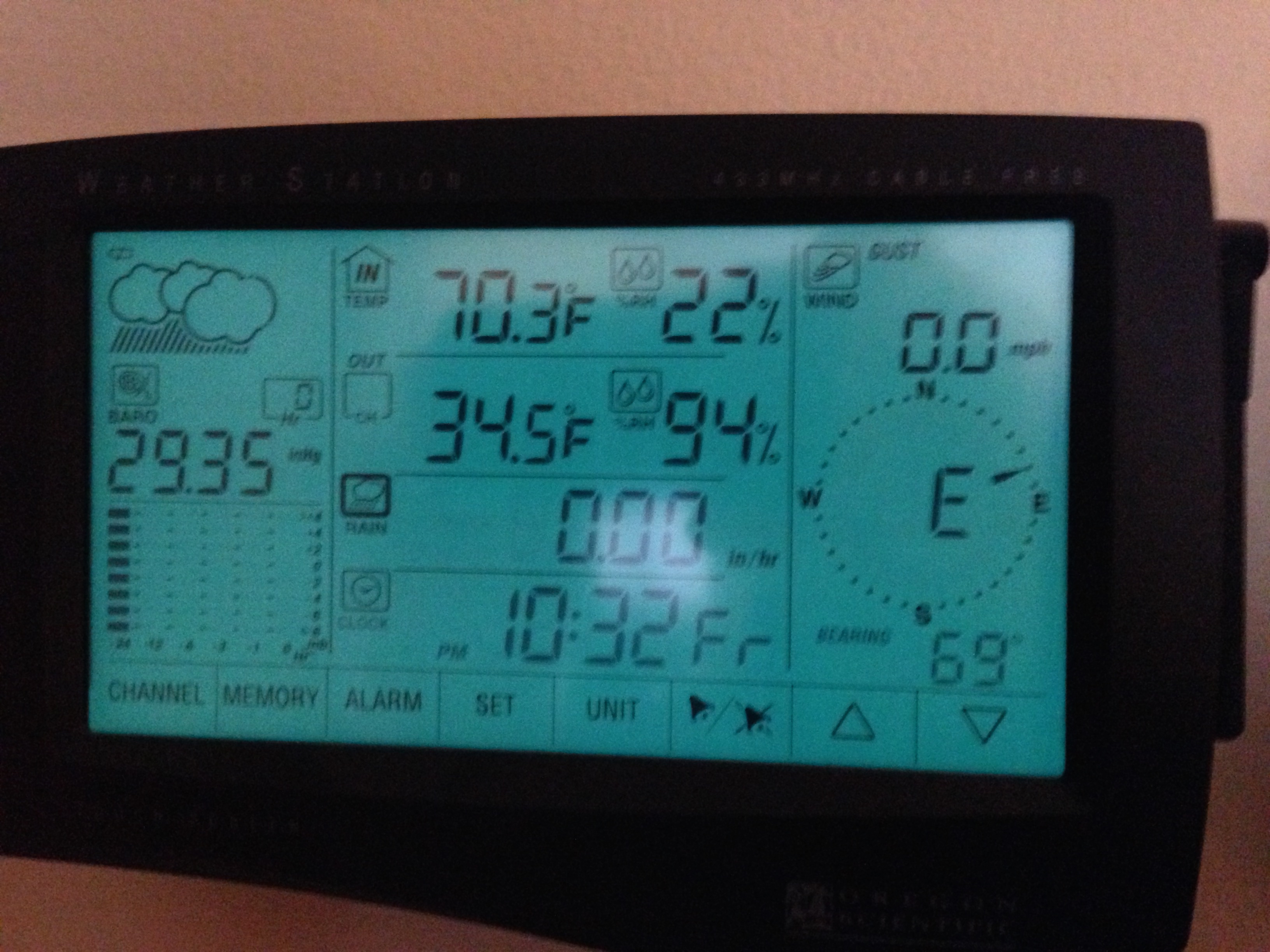
IMG_1041The temperature has dropped from almost 35F (1.6C) when this photo was taken about an hour ago to 31 (-0.5C) now. It also went from no wind to a modest breeze. I can’t get a wind speed because the weather instruments are frozen.  Strong winds are expected later today.

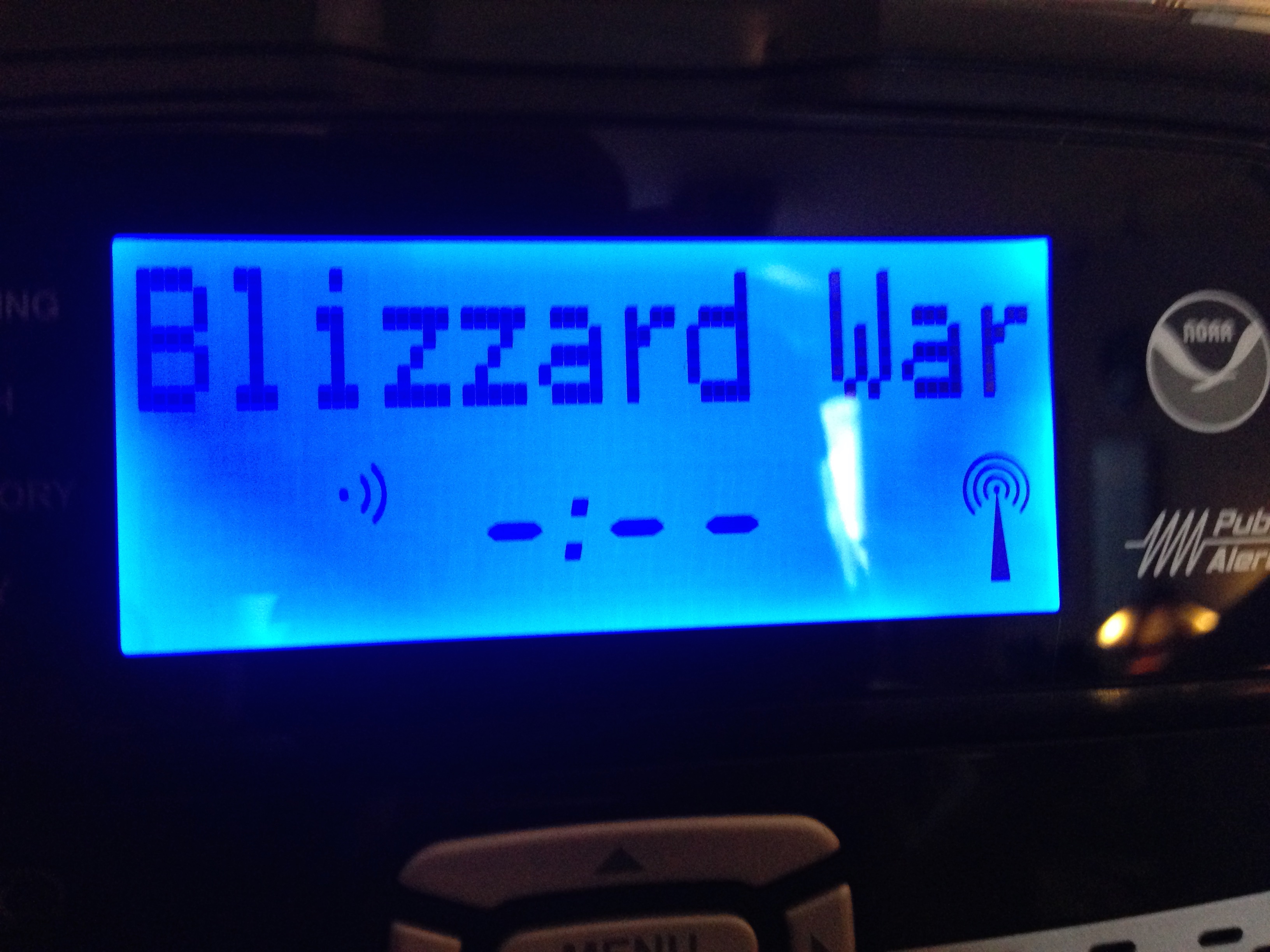
IMG_1040The weather alarm does not lie. It’s going to get worse before it gets better. As much as I trash on the government in this blog, I have to be fair and say NOAA and their network of radio stations is a very valuable and worthwhile public service.

IMG_1033

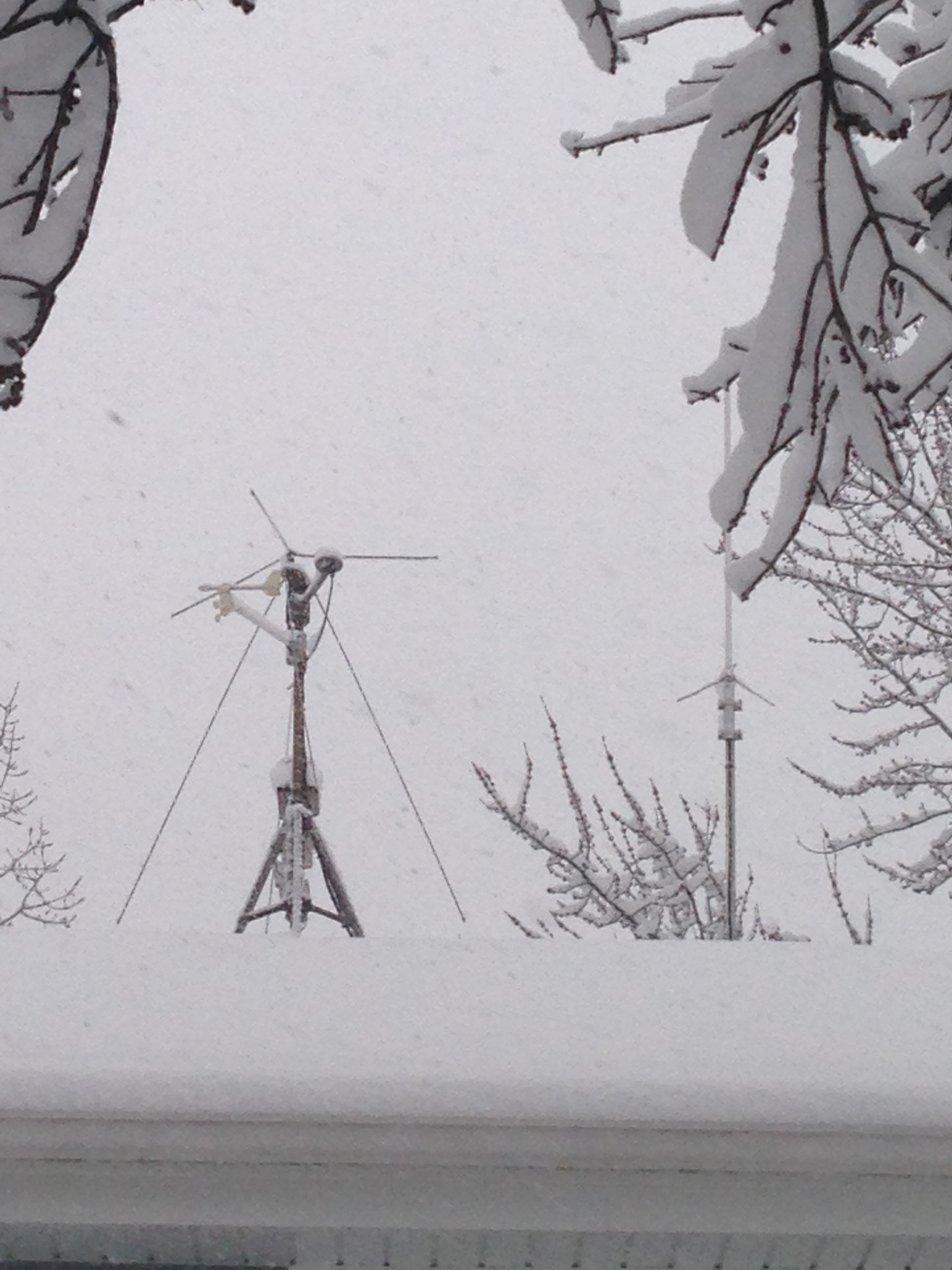
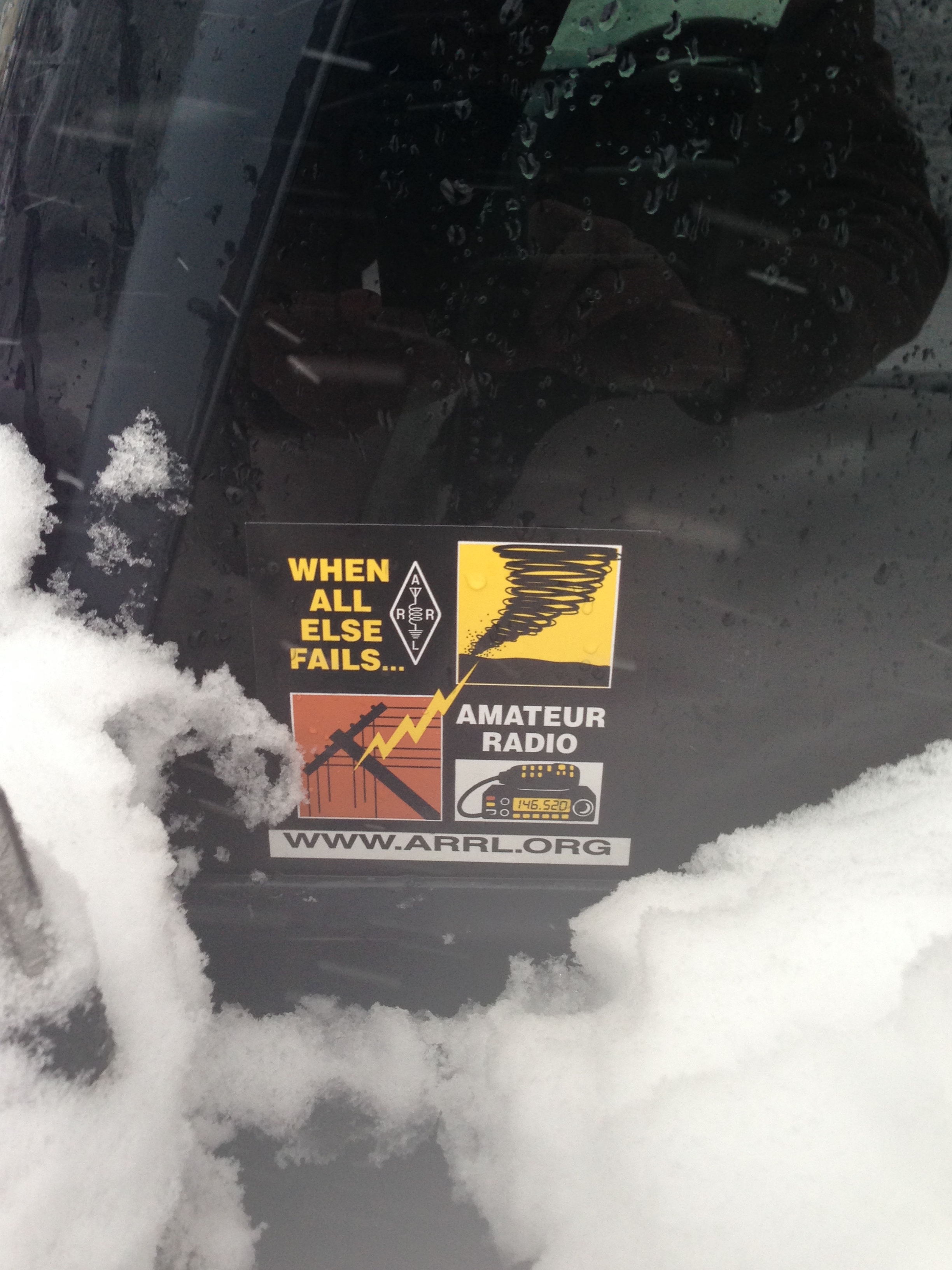
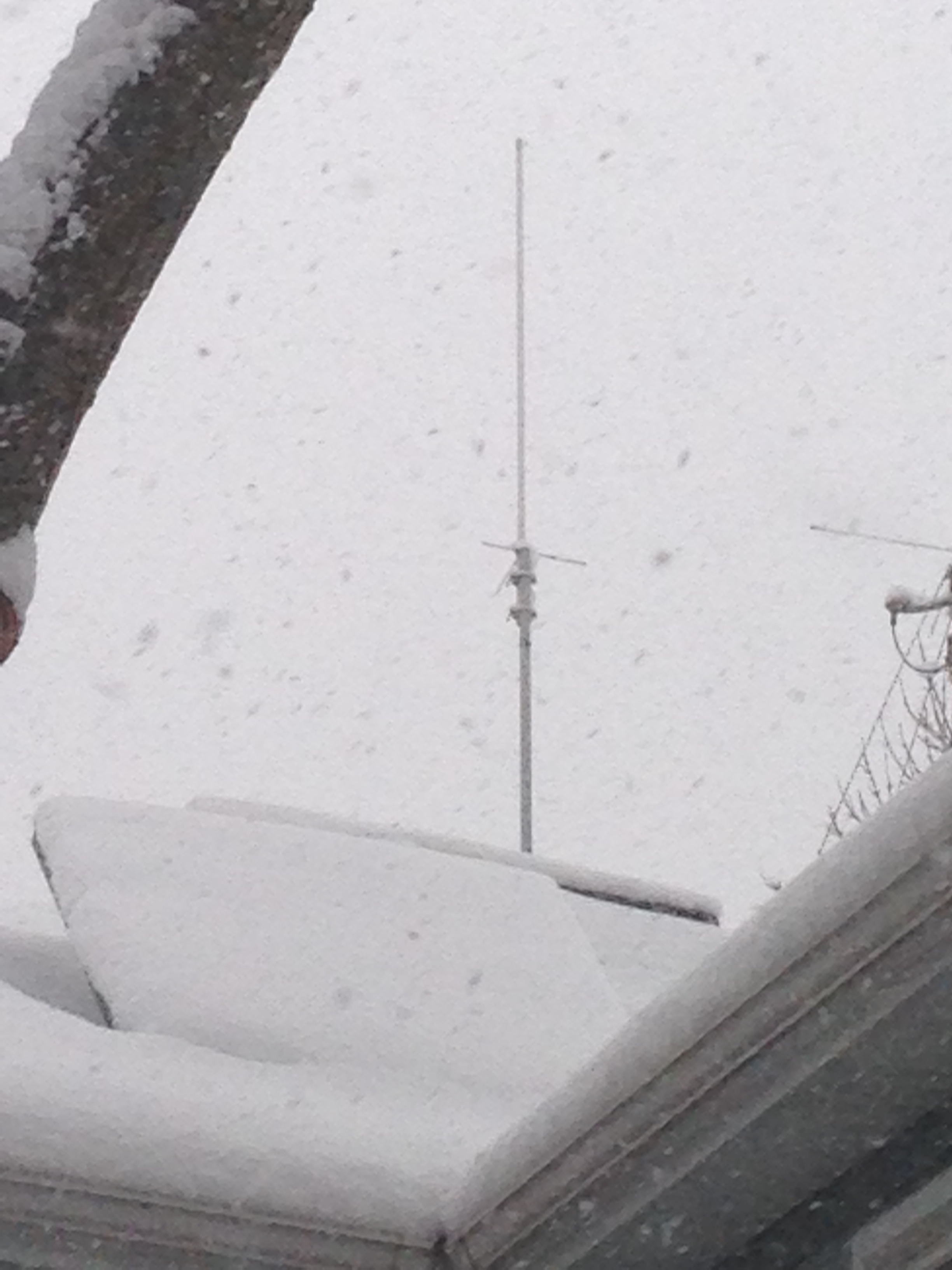
IMG_1037IMG_1032It is not possible to overstate the importance of amateur radio in times of mayhem. It requires almost no special infrastructure and can be run on backup power. There are hundreds of thousands of amateur radio operators in the Unites States alone. None of them are paid for their services and nearly all supply their own equipment. When there are no cell towers, internet, or landline phones, ham radio is there. Always. It’s the ultimate  “mesh network” that is almost impossible to to take down. The top photo of UHF & VHF antennas is just a portion of my rooftop communications complex. The center photo is my HF (shortwave) radio capable of worldwide communications and a 75 watt 2-meter VHF radio, with a range of about 25-30 miles (40-48 km). The VHF is especially valuable when the public communications system goes down.  All of this equipment is powered by off-grid solar energy.

IMG_1034

IMG_1046The snow covered angled items on the roof in the top photo are a few of my solar panels. The bottom photo is the charge controller for the solar power. The photo was taken during daylight but due to all the snow on the solar panels, the system thinks it it night time and shut itself down. The 12.8 volts on the battery means I have a good charge and should be ok…for now. We are not expected to have any real sun for a few days, so at some point I’ll probably have to change my batteries off the generator.

IMG_1048Sometimes life here can be a real pain in the ass, but it is a great feeling to be in a nation where I can make my own choices and fly or fall on my own. For my readers outside the USA, it is customary for Americans to display a flag on their homes. Flags are most often seen on patriotic holidays or in times of war, but at my house, the flag is out 24 hours a day, every day. It is the symbol of a land and people who are not easily beaten down.