Category Archives: COMMENTARY

Lessons From A Dixie Trip.

By: Chris Warren

I’m on a layover at the Atlanta, Georgia airport (ATL), one short plane ride away from beautiful Florida where I’m headed to visit a guy I’ve been close friends with since we were teenagers. Where I’m from, the winters are long and rough. Florida is a welcome treat; I’ve been looking forward to this trip for months. I’ll be crashing at my friend’s house, so I don’t have to pay for a hotel or a rental car. Time off in a warm, comfortable place and it won’t even cost me much money…it’s as good of a deal as I’m going to get without packing up and moving there.

In addition to the excitement of seeing my friend, this trip will expose me to people different than what I’m used to at home. It’s easy to think that everyone all across the USA is mostly the same, but I’ve been to places that made me forget that I was still in my own country. There have been moments when I had to remind myself that I didn’t need a passport to get there and these people were just as American as myself. Even within my home state, there are areas a world apart from where I live.

Now in Pensacola, I am in a part of the state that is more “Southern” than “Florida” in the way outsiders imagine these things (the Alabama border is less than a twenty minute drive). This is Dixie in spirit if not geography. There is a real Civil War-era fort on the gulf shore just a few miles away. The customer lounge at Jiffy Lube has Bibles as reading material. The convenience stores sell fresh boiled peanuts. And I must, must, must, have breakfast at an ubiquitous culinary icon of the South: Waffle House (there are sixteen of them in the Pensacola area alone). If you order iced tea and and don’t specify sweet or unsweet, you out yourself as being from, well, not here. It’s ok, though. The locals will smile and gently guide you through the protocol. Southern congeniality…it’s not a stereotype when it’s actually true. These people are sincerely nice.

Travel is not something I’m very interested in. I’ll seldom go somewhere just for the fun of going and if my friend did not live in Florida, I’d probably never come here. I may not be excited by the idea of boiled peanuts and oil change evangelism, but the value of wandering and witnessing firsthand how others live is not lost on me. Aside from my jealousy of the mild weather and being left speechless over what Southerners think is “good pizza,” things around here are not shockingly different than life in my own end of this great land. USA2EDIT

The buddy I’m here to visit knows a lot about acclimating to different people and customs: He originally came from Vietnam via Indonesia, lived in Illinois for many years, then went to Seattle, Washington for a short run, and is now a US citizen firmly planted in Pensacola. My learning curve was more straightforward: I’ve been on numerous treks stretched over a decade or so to see him, and once I stopped trying so hard to understand the South, the lightbulb went on in my head. If one looks for only differences, then understanding will never come. It’s like a Venn diagram where none of the circles overlap. I first had to seek out similarities and use that as a starting point to appreciate the differences.

As soon as I ended my preoccupation with being a stranger in these parts, the differences didn’t seem like all that big of a deal. We are America, after all. There may be many different color threads, but they are all part of the same piece of cloth. That is where the Venn diagram intersects. When someone from Dixie stops by my neighborhood, I’m going to offer them a slice of real pizza and hope they will see how much they are welcome in my part of the circle.

Health Club Head Games.

By: Chris Warren.

I’m going to say it straight up: I never was much of a jock and do not enjoy going to the gym. Some people are into working out to the point that it’s a full time lifestyle. To me it’s something that needs to be done for my own good, like brushing my teeth. Not quite a drudgery, but not my idea of a great time either. And I don’t spend more time doing it than is absolutely necessary. I may not like working out, but I certainly like the results: It’s nice to be able to lug fifty pounds of cat litter up the stairs without huffing and puffing, or play basketball with my young nephew and easily keep up with him.2f9f5d0f7f07aa3f0f3212c962841122

Today I dutifully reported to the health club and stepped onto the elliptical runner for the first part of my set. With The Howard Stern Show streaming from my smartphone, I readied myself for a thirty minute uphill run. The machines are placed on an elevated platform that has a great view of rest of the facility. From there I can see most everything. Health clubs, especially one like mine that isn’t marketing itself to be trendy, tend to be gathering places for some rather odd people. For my own benign amusement, I’ve given funny names to some of the regulars: Weird Dancing Quarterback Lady, The Solar System, Cute Boy Crew, Colonel Flagg.

What is surprising –and inspiring– is the numerous older people (meaning retirement age and up) working out. They are there, day after day, and keep moving. There are a few who appear to be well into their seventies and are in amazing shape. Being around them makes me want to run faster up a steeper hill. It doesn’t make me enjoy it more, but looking at those old dudes I think to myself, “I want to be like that when I’m 70!” They motivate me without even knowing it.

There is also something to be learned from the people you don’t see. I know they are out there. They are the ghost clients who pay month after month but hardly ever make an appearance. There must be some psychology that convinces them as long as they maintain the membership and thus keep open the option of going, then they have the right to feel like they are doing something. Every single health club in the country would go out of business within a month if they were paid only when someone actually walked through the door.

Physical exercise brought on a new attitude I would not have if I spent that time doing something else. Because I had never been into sports as a kid and was not serious about staying in shape until I was well into adulthood, the feeling was a complete surprise. On the surface it doesn’t seem that running on a machine a few times a week would mess with your head (in a good way), but it does and there is quite a bit of science out there to support the concept. I leave the club refreshed and positive. I’ve never finished a set and left in a bad mood.

The attitude improvement came in many forms but the most notable was my new willingness to give the benefit of a doubt and avoid judging others. How do I know that 250 pound lady did not weigh 350 pounds a year ago? How do I know that guy struggling to stay barely above a walking pace on the treadmill didn’t just have heart surgery? It’s bad for my psyche to concern myself with these matters. I mind my own business and chuckle at Howard Stern. It’s not my place to try to figure out others’ motivations…or lack of them. We are all just a mass of sweaty souls, each at a different place on the path, but still equally on the path nonetheless.

When Energy Is Stolen, There Are No Victims.

By: Chris Warren

For over a generation green energy has been the exclusive domain of the liberal left. The reasons why could run thousands of pages, but the oversimplified explanation is that clean energy is not economically viable and suitable only in niche applications. It is not cash flow positive nor does it have mainstream practicality, and therefore depends on government subsidies and complex protective legislation. Add that to the liberal foundational doctrine that feelings matter more than actually getting something done, and clean energy becomes a natural fit for them.

That was then and this is now. Renewable energy, particularly solar, is on the cusp of becoming technically and financially competitive with traditional fuels. The left hasn’t noticed –yet– that free market libertarian ideas are pushing it over the line (note: liberal and libertarian are not the same thing). How long this ignorant bliss will continue is uncertain, and I’m not sure it matters. What is certain is that just a year or two ago, the idea of two groups who so sorely disagree on everything else setting it all aside and joining forces to make solar energy go primetime would have been found only in a Saturday Night Live comedy sketch.

A nascent movement is gaining traction down in Florida where liberals and conservatives are in an unlikely collusion to pass legislation that would allow any private citizen to install solar panels on their home or business and sell the electricity for profit on the open market. In essence, they would become a miniature power company. As the law is right now, only state registered commercial utilities can sell juice. The new rules, if passed, would let anyone in on the action.

It is encouraging to see solar energy get the boost it so rightfully deserves, and let it be noted that all of this is unfolding without government subsidies, handouts, or special legislative favors. The plan does not officially break up the power company monopoly, but is it really a monopoly if anyone can do it? To be sure, Florida’s proposal is no magic answer. There are a lot of holes in the plan, and we are long away from completely powering our society with sunbeams and happy thoughts. Still, there is almost nothing negative about this initiative.

Conservatives should further their cause by spreading the Florida example elsewhere. Finding a reason not to do something is easy. It takes thought and effort to confront problems and find a path through them. Since the beginning of the clean energy movement, the right touted a long list of reasons why green energy would not work for mainstream use, and to be fair, for most of that time they had a valid point. Now there is a foot in the door that addresses many of these concerns. Here is the conservatives’ big chance to show everyone that free market solutions really do work.

Regardless of how the Florida experiment plays out (it has not even been passed into law yet), liberals are faced with no course to steer around the reality that decades of government largesse and mandates has failed to make solar a legitimate option. And I’m certain I’m not the only free market supporter who is taking some quiet pleasure seeing progressives forced into a position where, in order to achieve their long time goal of widespread renewable energy, they will have to admit that their other long time goal of solving the renewable energy “problem” with more government spending and regulation is a total failure.

The way I read this, two causes liberals covet (green energy and big government) have been turned against each other. Well played, tea party! Well played! Not only are conservatives stealing a worthwhile but horribly mismanaged liberal issue and making it work with capitalist policy, the liberals are cheerfully going along as if they were helping  load their own stuff into a burglar’s getaway car. In this case the thief is doing the victim, and everyone else, a huge favor.

Career Objective: Make It To Retirement With A Smile On My Face.

By: Chris Warren

I consider myself  to be among the lucky few who has a cool job that is engaging and interesting. A large majority of the time I like what I do, with occasional screw this! moments sprinkled in to remind me that it may be cool but it’s hardly paradise. I think I must have won some cosmic occupational lottery because for my whole life I’ve always seemed to land in nifty jobs as if by accident. Even through high school and college I managed to earn a buck without getting involved with the drudgery of fast food or retail.

51NKZtwI2FL._SY445_Now I’m in that strange zone where I’m certainly not a kid but also not nearly old enough to seriously consider retiring. I’m left wondering what’s next. Or if there even is a “next.”  I would not mind doing something else, but since I’m content where I am I see no point in changing just for the sake of change. I’ve asked the self-analyzing question: If I looked into a crystal ball and saw myself retiring from the job I’m doing now, would the vision be depressing or comforting? Am I ok with this for the rest of my career?

The short answer is yes, I’m ok with it. I still wonder though, is there anything better out there? Is this as good as it gets? I’ve decided not to beat the hell out of myself trying to resolve a question of circular logic. In theory, there is always something better, somewhere. It’s more worthwhile to focus on what’s right and positive about the job I already have.

It’s important to explain that being happy with where I am and being complacent and unmotivated to move forward are not the same thing. There was a period in my distant past where I was in a job that was respectable but well beneath my potential. I stayed there way too long, bullshitting myself that it was good enough. I managed to get out of that trap relatively unharmed and took a lesson with me: Be grateful for what you have but don’t ever assume it’s the end of the line.

Being surrounded by family and friends who are in jobs that are soulless and devoid of any feeling of a higher purpose, on top of paying barely enough to make it worth showing up every day, gives contrast to my own life and blunts the effects of my screw this! days. The workplace headaches I deal with are mild by comparison, and at least at the end of it all I receive a decent paycheck for my hassles. There may be something better, somewhere, but there is also something worse. Being far from the bottom is more important than being close to the top.

I used to have a coworker who was technically competent but by a very large margin had absolutely the worst attitude of anyone I’ve ever worked with. He could not go five minutes without prattling about how unfairly he was treated, had a lame excuse for everything, constantly argued with the boss, thought the whole company was plotting against him, blah, blah, blah. I spent a year trying to be his buddy: Reaching out, having man-to-man talks, pushing him towards a better path. It was a complete waste of my effort. He was officially fired for absenteeism, but the real deal was that management and pretty much everyone else, including me, was far beyond fed up with the pouting crybaby. Your approach to your job has more influence over your career path than everything else combined. Skills can be learned but attitude can only come from within.

No one should allow their career success to be defined solely by how many promotions and raises they can collect before they retire. It’s more meaningful and less stressful to show up every morning believing that every day is a good day, but some days will not be as good as others. I am, on the whole, a happy employee. I flatly refuse to let myself become the guy who bitches about everything. When I reach a point where I don’t feel I can go any further in the job I have, the time to move on will become self-evident.

SPECIAL EDITION: A Winter Storm.

By: Chris Warren.

As I discussed in my last article, being ready for emergencies is not just for whackos. The other half of the equation is that a “disaster” does not have to come in the form of an epic 300 foot tidal wave or alien invasion.

Overnight, my territory in the upper Midwest USA got clobbered by about ten inches (25 cm) of snow, with about another 4-8 inches (10-20 cm) still to come before it’s over. The temperature, which is actually above freezing right now, is expected to drop to 5F (-15c) before sundown, then the high winds will kick in.

By local standards, this storm is not a particularly big deal. Yet there are people who will face serious weather-related problems that could have been entirely avoided with even a little planning. Already, I’ve had to give some gas to a guy up the road because he ran out and needed to fill the tank on his snowblower. This storm was predicted three or four days ago. Why didn’t he fuel up when he had the chance? I just don’t get it. There will be fatalities because of this storm.

The following is a pictorial account of my life during a snow storm. I took all the photos myself.


IMG_1042This photo was taken from my kitchen window. It looks very pretty and serene. But beyond the backyard things get rough.

IMG_1023

IMG_1021This is as about as “plowed” as it’s going to get for a while. I saw very few cars on the road, only 4×4’s. Everyone else is stuck at home. Even in my big truck, it was a challenge getting around.

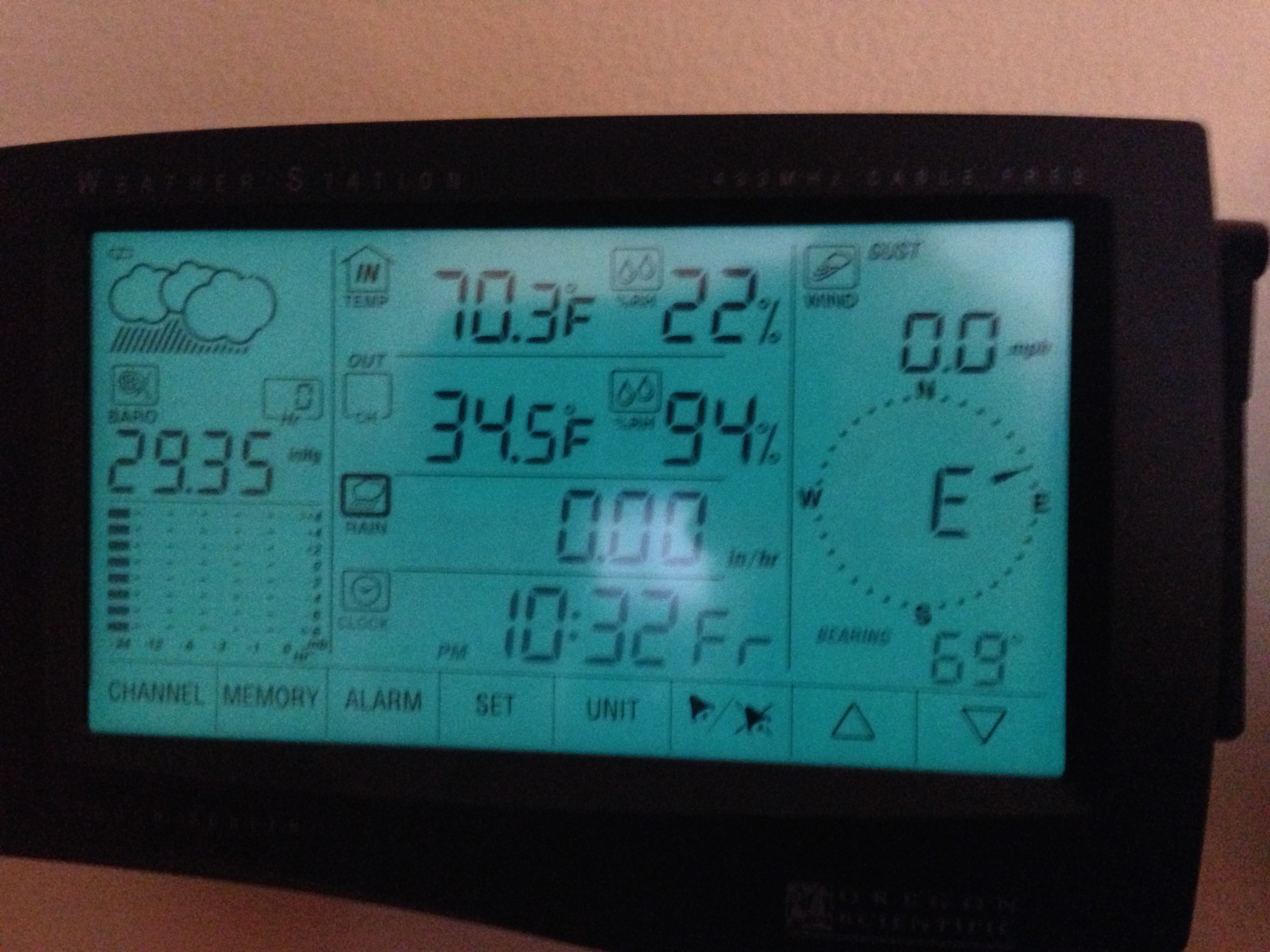
IMG_1041The temperature has dropped from almost 35F (1.6C) when this photo was taken about an hour ago to 31 (-0.5C) now. It also went from no wind to a modest breeze. I can’t get a wind speed because the weather instruments are frozen.  Strong winds are expected later today.

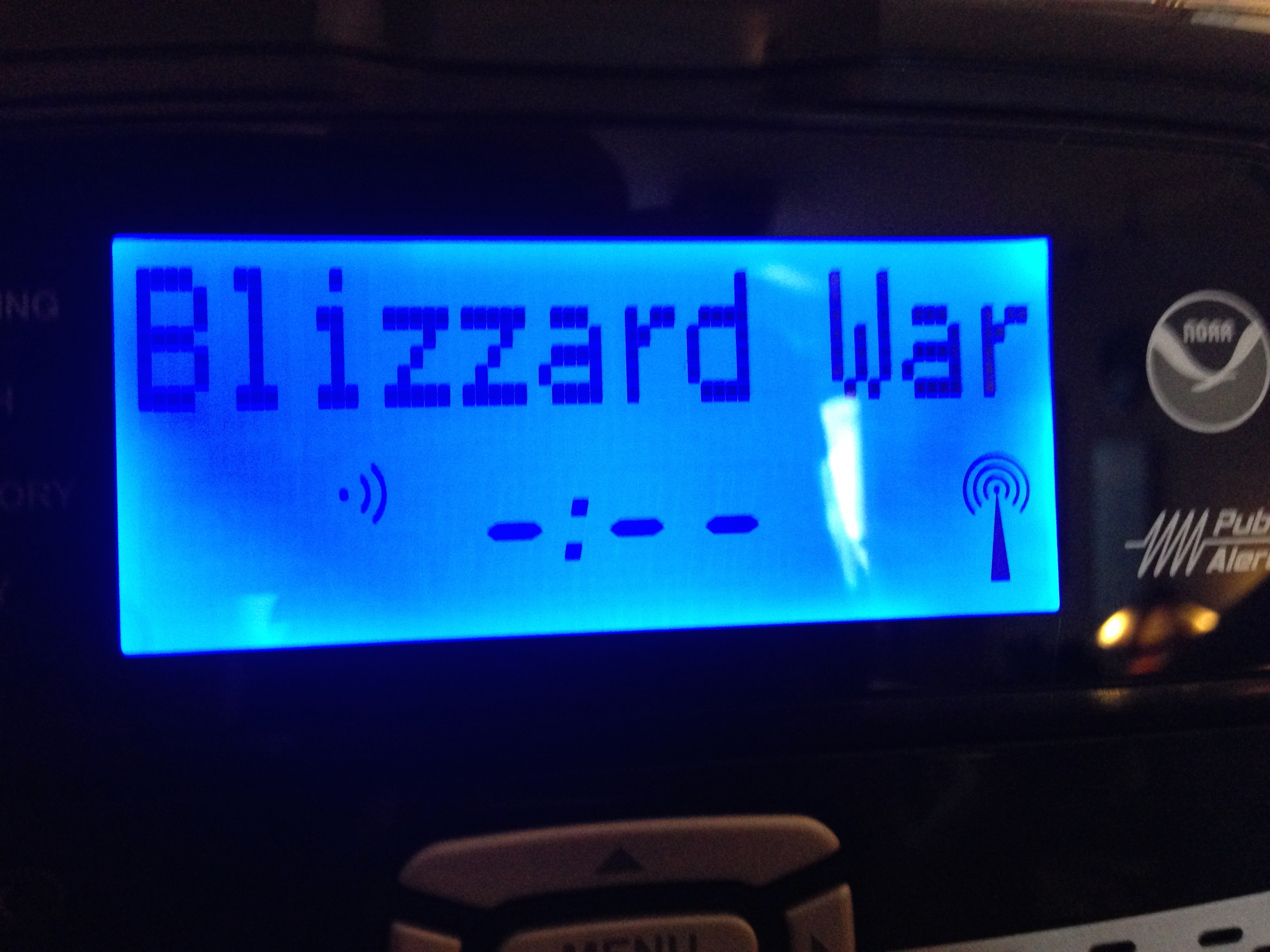
IMG_1040The weather alarm does not lie. It’s going to get worse before it gets better. As much as I trash on the government in this blog, I have to be fair and say NOAA and their network of radio stations is a very valuable and worthwhile public service.

IMG_1033

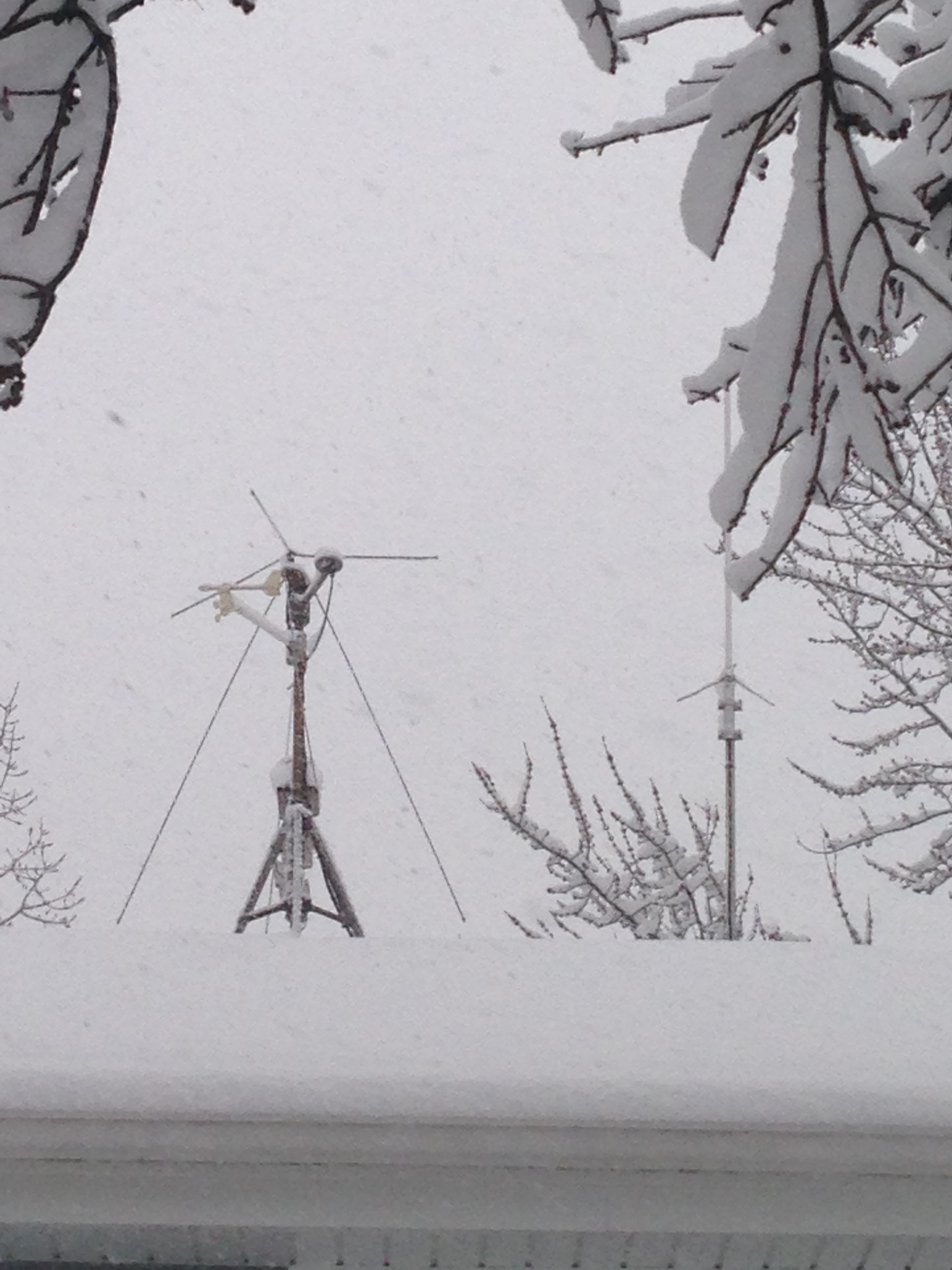
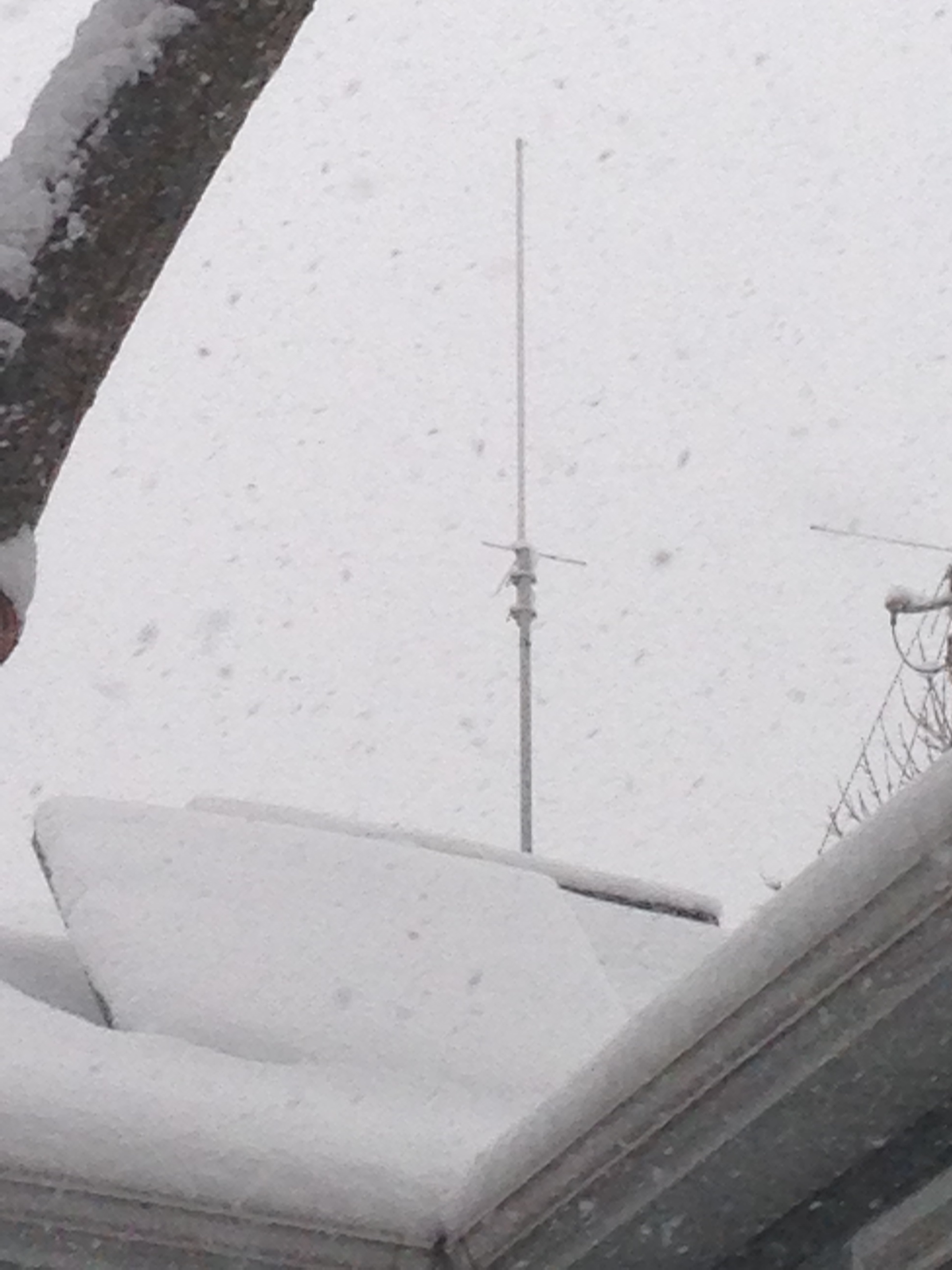
IMG_1037IMG_1032It is not possible to overstate the importance of amateur radio in times of mayhem. It requires almost no special infrastructure and can be run on backup power. There are hundreds of thousands of amateur radio operators in the Unites States alone. None of them are paid for their services and nearly all supply their own equipment. When there are no cell towers, internet, or landline phones, ham radio is there. Always. It’s the ultimate  “mesh network” that is almost impossible to to take down. The top photo of UHF & VHF antennas is just a portion of my rooftop communications complex. The center photo is my HF (shortwave) radio capable of worldwide communications and a 75 watt 2-meter VHF radio, with a range of about 25-30 miles (40-48 km). The VHF is especially valuable when the public communications system goes down.  All of this equipment is powered by off-grid solar energy.

IMG_1034

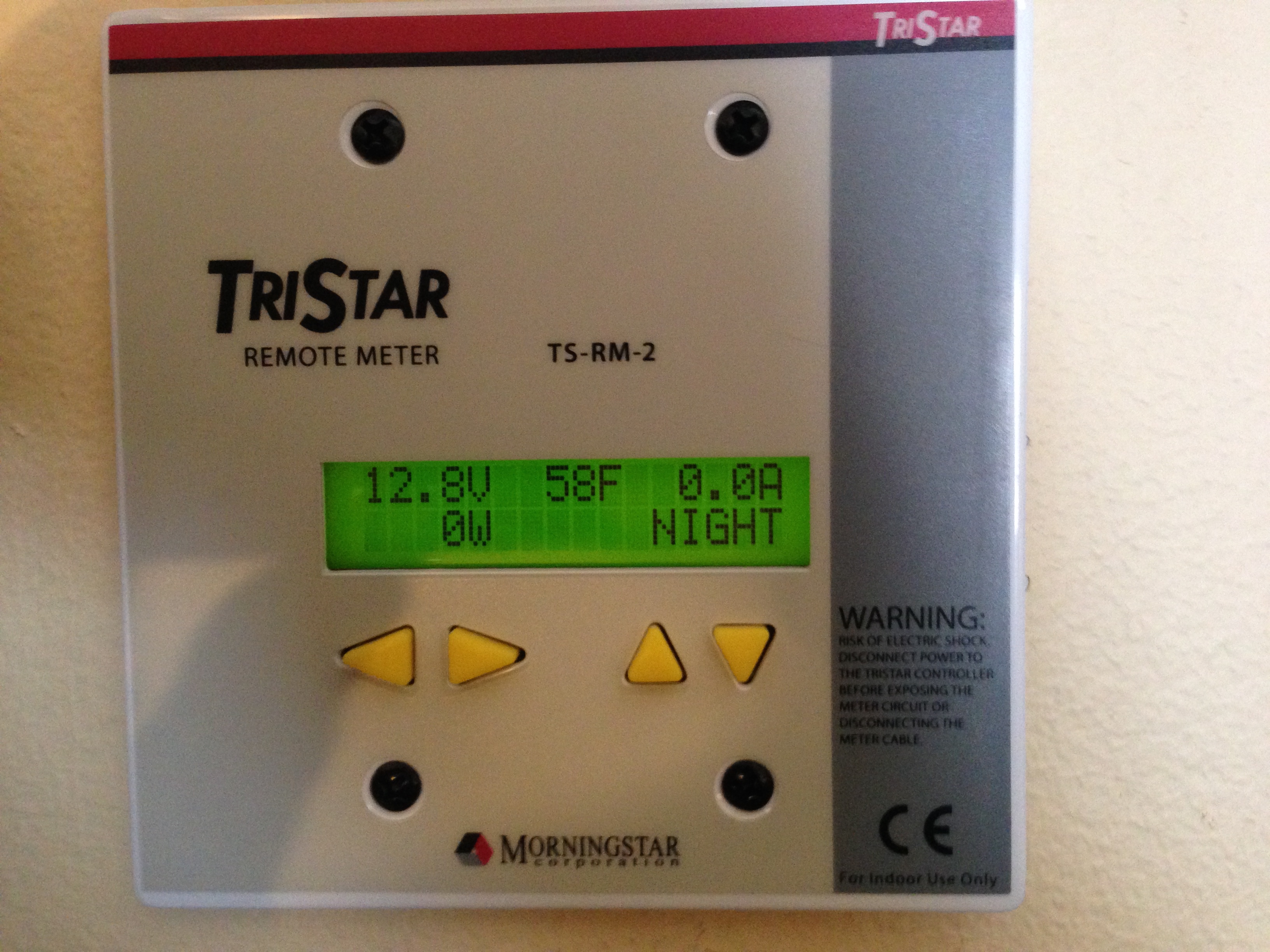
IMG_1046The snow covered angled items on the roof in the top photo are a few of my solar panels. The bottom photo is the charge controller for the solar power. The photo was taken during daylight but due to all the snow on the solar panels, the system thinks it it night time and shut itself down. The 12.8 volts on the battery means I have a good charge and should be ok…for now. We are not expected to have any real sun for a few days, so at some point I’ll probably have to change my batteries off the generator.

IMG_1048Sometimes life here can be a real pain in the ass, but it is a great feeling to be in a nation where I can make my own choices and fly or fall on my own. For my readers outside the USA, it is customary for Americans to display a flag on their homes. Flags are most often seen on patriotic holidays or in times of war, but at my house, the flag is out 24 hours a day, every day. It is the symbol of a land and people who are not easily beaten down.


When Your Daily Bread Is Down To Crumbs.

By: Chris Warren.

Yeah, it’s a hassle to shovel snow and be stuck at home, but most people make the best of “snow days.” Snowstorms are seldom serious disasters. We come out of the mess unharmed if not relaxed from the unplanned day off. The kids especially love it because they don’t realize they’ll have to make up the missed school day another time.

These small pleasures are unknown to people whose jobs don’t get snow days. Public safety and medical professionals come to mind first, but there is also the unseen ones who keep the lights on and the water flowing and the internet up. There’s no yippee I get a day off! moment for them. After all, we can live without pizza delivery and Starbucks for a while, but no one likes to think about what they would do if the infrastructure that makes modern life so comfortable suddenly wasn’t there.

Seeing this is as only about snow misses the point. The bigger picture is that high profile calamities both natural and man made never fail to beat the hell out of us year after year. Twenty First Summer has before attempted to stress how sensible personal disaster planning does not mean a last-minute run to the store to grab up all the milk and bread one can carry. Still, hardly anyone gets it.

dt.common.streams.StreamServer.cls

There is a well tested theory that society is “nine meals from anarchy.” What it teaches is that the average person has only three days’ worth of food & water in their house, after which time they will turn to violence to meet their needs, or become the victim of violence themselves. Government relief efforts may extend this period somewhat, but if the crisis is not resolved fairly quickly, the only endgame is chaos. I’m not making this up or exaggerating. There are dozens if not hundreds of real-world examples.

I’ve been called a kook and worse because I refuse to accept that “shit hits the fan” won’t happen, and even if it does we can all sit quietly and wait for the government to save us. What my detractors can’t see (or don’t want to see) is that the people who do the saving have their own lives and priorities to think about. There is not a single doctor, firefighter, or soldier anywhere who is going to leave his or her own loved ones vulnerable to go help a stranger. I don’t say that to be disrespectful or question their sense of duty; it’s just a simple acknowledgement that sense of duty weakens the farther one gets from their own front door. If relief workers have to make a choice between everyone else or their families, we’ll all be kicked to the curb. Can anyone blame them? I am that stranger. So are you.

The obvious choice is not to be the guy running through the store grabbing up bread as the world outside becomes unglued. Or the guy standing in a blocks-long line to get a jug of drinking water. There is a very real possibility that a crisis will last longer than the help is willing to hang around, or be so severe that help never arrives in the first place. To those who think being prepared beyond a flashlight & first aid kit is the province of paranoid nuts with a basement full of freeze dried food and more guns than a South American dictator, let me put it in terms you can relate to: Rescuers and first responders are not going to care about you more than you care about yourself, and they certainly are not going to care about you more than their own families. Plan for the unthinkable as if you were the only one who cares, because when shit gets real, you’re the only one who will.


Requiem For Radio Shack.

By: Chris Warren.

As this blog has discussed in the past, many classic American businesses are disappearing in an economy that is supposed to be jumping back to life. The losses are sad for nostalgia but also bring hope because times change and for every business that goes extinct a newer version takes its place and gets a shot at becoming a legend. In theory, it’s a zero-sum game.

Radio-Shack-logo2

That Radio Shack is soon going to be on the register of lost legends truly bothers me. First, because it was a key player in my choosing to go into electronics professionally, and second, because it has no replacement. It is the only one of its breed; there is no fresh contender coming up behind it. For now Radio Shack is still open for business as usual but no one is fooled by corporate prophecies of a big comeback. Depending on which financial analyst you want to believe, Radio Shack has between one and ten months’ worth of operating capital and no viable course to profitability. We are in death watch mode. Founded in 1921, yet another thread in the colorful fabric of America will almost certainly go the way of the vacuum tube and Betamax tapes.

Radio Shack was once a wonderland of electronic components, parts, tools, batteries, kits, how-to books, wire, connectors, and everything else. As a young person I would stop at “the Shack” at least once a week, oftentimes more, eager to drop my paltry teenage income on electronic goodies. If not for the readily available supply of raw materials for my hobby I might have ended up being an insurance salesman. It was the only place in the world where I could get a PNP transistor at 3:00 on Sunday afternoon. And I often needed one, among other things. I’ve built transmitters and power supplies and countless experiments entirely from parts purchased off the shelf at Radio Shack. They sold me the very first test instrument I bought with my own money–an analog multimeter. Long before I ever saw the inside of a college engineering lab I had a strong electronics education from “Radio Shack Tech.”VintageRadioShack_Storefront

The sad reality is that the quirky retailer that helped me turn a boyhood fascination with electronics into a lucrative career as an adult has been on a slow slide down for years. The world moved on and Radio Shack didn’t keep up the pace. They’ve tried reinventing themselves as a computer shop, a consumer electronics repair vendor, a high end audio dealer, a cellphone emporium, and most recently, on-site smartphone & tablet computer repair. None of it stuck. The Best Buys and Amazons of the world rolled right over them. The last time I shopped at Radio Shack was half a decade ago to buy a specialty electrical connector. What used to be hundreds of square feet of cool geek stuff had been shaved down to one tiny little section in the back. It wasn’t fun anymore. The exciting vibe I knew and loved was gone.

I hate to admit it, but I’m part of the reason Radio Shack is on the way out. Better & cheaper sources for supplies came along and I took the bait (hellooo, internet!). No one makes money selling single diodes and capacitors anymore, much less from a store in a mall. Did I let an old friend down, or did the old friend let me down? It’s a trick question: Old friends sometimes drift apart and it’s not really anyone’s “fault.” I’m not sure if anything could have saved Radio Shack. They served their market well since they early days of electronics and there is nowhere for them to go. Maybe in that way it’s not even their fault they are in terminal decline. It’s just the natural cycle of things. Before my old friend passes on, I want it to know generations of geeks are grateful for the fun and the education, and in an unknown number of cases, supplying the seeds for what would grow into a fulfilling career.

The Didactic Silence of Sir Nicholas Winton.

By Chris Warren.

Rare is the man who does something great and keeps it to himself. In a time of instant gratification and “likes” and ever escalating public self affirmations, simply doing the right thing only because it’s the right thing and not for recognition seems like an anachronism. A lot of people perform good deeds —which is awesome— and then go and brag about it, usually on the internet. It’s almost as if they are really doing it for themselves and the benefit to others is merely a pleasant side effect.

In late 1939 Nicholas Winton was a young English stockbroker looking forward to a leisurely ski trip in Switzerland when at the last moment he changed his plans and went to Prague, Czechoslovakia instead to help a friend with humanitarian work. Hitler was marching across Europe and there were a lot of innocent bystanders, particularly children. On a whim and with no resources, experience, or diplomatic contacts, Winton remained in Prague for months and singlehandedly arranged safe passage to England for 669 Jewish children who would have otherwise been murdered by the Nazis.

For fifty years, Winton never told anyone about what he did. In the late 1980s, his wife found a scrap book with detailed evidence of her husband’s pre-war rescue effort. Only then did the rest of the world find out about Nicholas Winton’s amazing act of altruism. On a BBC television program he was reunited with some of the kids he saved, who by then were senior citizens with children and grandchildren of their own. Until that time none of them knew the backstory of how they ended up in England or who was responsible for whisking them to safety before the Nazis came.

Since then, Winton was knighted by the Queen of England and has been given so many other awards and honors it’s hard to list them all. There are statues memorializing his work; a school in Czechoslovakia and an asteroid in outer space are named after him. Through all this, Sir Nicholas Winton has kept his composure and acknowledges his selfless deed only when asked about it. He comes from an era when there was no internet or social media, but I think even if it were an option in 1939, Winton would not have been on Facebook congratulating himself and fishing for “likes”.  After all, he kept it to himself for half a century and reluctantly talked about it only after someone else outed him.

“When you give to the needy, sound no trumpet before you, as the hypocrites do in the synagogues and in the streets, that they may be praised by others. Truly, I say to you, they have received their reward.” (Matthew 6:2)

Winton is not known to be a religious person but those of devout faith can learn a lot from his attitude. He had no ulterior motives and did what he did solely because it was right and good. I believe there are others like Winton out there today; you will seldom hear about them because they are looking beyond their own presumptuous egos and don’t concern themselves with being noticed. Christianity teaches that those who boast about their good deeds will receive no Heavenly reward beyond their own bragging. If that’s true, and I believe it is, then Sir Nicholas Winton’s humble and understated life says more about him than any self indulgent internet platitudes could ever approach.


The Play Was Over, But The Plot Kept Going.

By: Chris Warren.

We who have been out of high school longer than high schoolers have been alive don’t often consciously associate the experiences of our younger years to how we think today. Other than an occasional nice (or not) thought and attending (or not) a reunion, high school is a time long past blurred by the advancing calendar. But for some of us, certain aspects of that four year block of time has a very strong connection to the here and now.

I was barely a week into my freshman year at Naperville North when the morning announcements included an invite for anyone who wanted to be on the theater lights & sound crew to attend a meeting after school. It sounded pretty cool even though I wasn’t exactly sure what it involved. I was shy; I walked past the room twice trying to get a read on who might be there. I almost blew it off before taking a breath and pushing myself through the door where I found the sponsoring teacher and five or six offbeat looking students. I was the only new guy. There were no lengthy introductions or chatter. Within minutes we were in the auditorium organizing equipment and getting ready for the fall play. I was officially on the lights & sound crew.

My parents seemed genuinely pleased that on my own I had found an extracurricular activity that I was good at and really liked. It fit well with my interest in electronics and was a good alternative to athletics. Rehearsals started after school and would sometimes run until after 10:00pm. It was kind of funny how the jocks would make fun of us “theater geeks,” yet we were there long after the lights went out in the gym. We were as dedicated and serious as any athlete. We all wanted to stay until we got it right, and it showed when the curtain went up. For the first time in my young life I was part of a team. Theater companies inherently tend to have a very high proportion of prima donnas, but everyone seemed to understand they were involved with something that was bigger than the sum of its parts. There was a sincere group cohesion.

One night during a rehearsal break, an actor who was also a piano wizard sat down at the house piano and started playing Billy Joel tunes. A crowd slowly gathered around him. About 15 or 20 kids –performers, technical staff, even the makeup artists– formed an         ad hoc sing-along. We were all smiling and hanging on each other. It was a terrific feeling. I had friends. I was wanted. I can’t remember a single detail of what else happened that night but the sense of belonging still makes me smile.

There was a custom that the seniors were supposed to write a farewell letter and tape it to the backstage door on the closing night of our very last production. We gathered again like we did at the sing along but this time the girls were crying and the boys were bummed. After being on the lights & sound crew all four years and absolutely loving every moment of it, the reality of finality was right in front of me. I taped my letter to the door, hugged a few people, and the curtain went down on my run. I never set foot in that theater again. The meeting I attended on a lark and almost skipped as a freshman led to an amazing experience that to this day is one of my life’s brightest lights.

An Old Yankee Fades Away.

By : Chris Warren.

Energy policy is the strange convergence of politics, science, and business. It’s deep and wonkish and is the kind of topic very few people understand or follow even though it effects every moment of their life. Most of these effects blend into the background. When it does come home, it hits hard. Suddenly, everyone is paying attention. It can even get a little emotional.

After over forty years of providing New England with electricity, the Vermont Yankee nuclear power station in Vernon, Vermont was disconnected from public electric grid on Monday, December 29, 2014. Yankee’s closure means 300 of the approximately 600 plant employees will be immediately laid off or retire. Most of the leftover staff will be cut in 2016. From there, a small support crew will remain to oversee a lengthy and expensive decommissioning process. The physical structure is going to be around almost long enough to become a historic landmark: It will need to sit fallow for a minimum of thirty years before the radiation in the reactor decays to a level safe enough to tear it down. It will not be completely dismantled until at least 2045, possibly longer. The price tag for the full shut down and removal is estimated at $1.25 billion, and that’s in 2014 dollars.

Vermont Yankee nuclear power station.

The Yankee closure means different things to different people. For anti-nuclear activists, it’s a sense of accomplishment after a decades-long fight even though the closure was caused by economics & policy, not protests. For the plant owner, it’s the symbol of a horribly bad investment. For the residents of Vernon, Vermont, it’s the end of an era that for better or worse permanently altered the community. Seldom heard mixed into the discussion is the story of ordinary Americans whose upended lives were powered by the economic engine that was Yankee. Employee spending at local businesses will stop, contractors who serviced the facility will have to find other revenue sources, and the primary tax base for Vernon has been, literally, unplugged.

Losing a major employer and many hundreds of jobs is devastating to a town of only a few thousand people. Beyond tangible dollars and cents is the unquantifiable loss of relationships that will be broken as people move on with their new lives. It’s hard to say goodbye to your gang of lunchroom buddies. Or the family across the street you traded favors with for years. Or the waitress at the corner diner who always knew what your order was without asking. When a town fixture fades away, so too do many routines and habits that made the place comfortable and familiar. Many of these deeply meaningful personal interactions revolved around one constant: The nuclear generating plant. And now it’s over.

I understand difficult business decisions need to be made, and I doubt even the residents of Vernon expect the plant owners should keep the place open just for nostalgia’s sake. Barely noticed in the mix of the larger energy policy universe are everyday folks who have to live with the judgements of those who don’t concern themselves with the sentiments of one small town. Going strictly on the facts, it’s not difficult to see why it was time for Vermont Yankee to go, but respect and sympathy is owed both to those who must go with it and the small town that lost its most prolific citizen.