Category Archives: COMMENTARY

Beating The Higher Education Hustle.

By: Chris Warren.

The last decade has slapped us with a bucking stock market, bouncing gas prices, and the crash and sort-of rebound of the real estate market. Well under the economic radar and seldom mentioned in the media is the bubbling student loan meltdown. Unfortunately, all of the proposed solutions are reactive. They address cleaning up a disaster that was predictable and avoidable in the first place.

Those who think this problem doesn’t concern them because they or their kids are not in college (or are wealthy enough to pay for it out of pocket) will change their mind when they find out that student loan debt in the United States is at 1.20 trillion dollars and climbing. The problem shows up in our tax bills, the cost of everything we buy, as well as in the skills (or lack of them) in the workforce. Everyone owns a piece of this mess, whether they want it or not.

The exact origins of the student loan chaos are indistinct. In 1993 President Bill Clinton pushed for and won reforms that made it easier and cheaper to get financial aid; the program was expanded by President George W. Bush and still exists today. The intent of the policy was inherently solid, but it did come with unintended consequences: Seeing a big payday, schools started admitting students who did not have the maturity, the discipline, or the academic strength to do college level work. Many of them barely made it out of high school. These borderline students drop out after a year or so, still on the hook for thousands of dollars of debt without completing their degrees. It’s true that they disproportionately have socioeconomic class disadvantages not of their own making but that is not a good enough reason to hand over a pile of money for them to fill space in a classroom in a misguided quest for “fairness”.

Unknown numbers of young people are getting triple-screwed by well intentioned adults pushing them into an academic environment they can’t handle, by colleges willing to bend admissions rules for dollars and “diversity,” and by banks who are eager to underwrite (usually) government-backed loans. College is a worthwhile endeavor…I get that. It’s not lost on anyone that having only a high school diploma severely limits lifetime earning potential, but who is better off: The debt-free kid who went from high school directly to a crappy low wage job, or the kid in the crappy low wage job with thousands of dollars of outstanding student loans from the degree he never finished?Graduation-cap-and-diploma-1

It’s important to point out that not everybody with five or even six-figure education loans on their backs are the innocent victims the media and  politicians want everyone to think they are. Students knew or should have known the terms of their loans and that some degrees have almost no market value. I sincerely respect anyone who pursues a gender studies or anthropology major solely for the love of scholarship, but spare us the “poor me!” crybaby act when you can’t land a decent job and the student loan bill comes due. You’re not a victim.

Community college is the obvious but often overlooked partial solution to the student loan meltdown. Two year schools are the diamonds of higher education, but no one ever gives them credit for it. Typically costing less than half of four year schools, they deliver a huge bang for the buck. The biggest reason Community colleges are not considered: They don’t offer the cool “college experience” that is such a big deal to today’s iPad-toting kids.

Back when I attended College of DuPage, it was derided as the “high school with ash trays.” By 3:00 pm every Friday the place became a ghost town. Nobody was there to be trendy, including me. I was earning college credits on the cheap. When I eventually transferred to a university and graduated, there was no disclaimer on my diploma stating that half of it came from dorky, uncool C.O.D. Like any young person I would have loved to get four full years of exciting big university campus vibe, but there were certain realities I simply had to accept. I graduated owing a lot less cash than my trend-seeking peers.

It bothers me that junior colleges get such a bad rap because without them I along with many others would not have made it to graduation. Yes, College of DuPage made that profound of a difference to me. COD classes were not easier than they at a big name four year institution, but I was able to study without the usual distractions or worry about how I was going to pay for my education. I was neither wealthy nor a stellar student; COD was a place where I had breathing room to make decisions and focus on my coursework without being demoralized by it. A lot of high school seniors who go directly into a four year undergraduate program and subsequently drop out for academic or financial reasons would have succeeded had they attended community college first. What a sad, life-altering, missed opportunity.

I’m under no illusion that the trillion dollar-plus student loan mess is going to be solved by junior colleges alone, but it’s obvious that a big part of the problem is too many students are in way over their heads and their wallets at four year schools. Aspiring to earn a degree is not justification enough and a lot of college loan debt is really the debt of vanity. College is not a party or an “experience” to be had at any price, nor is it (for most of us) a place to pursue highly idealized fields of study with no real-world application. If would-be undergraduates gave their education the same due diligence that they give to any big-ticket investment, there would be a lot more success stories and a lot less balances to pay off.

Mothers’ Smothering Meets The Rule of No Rescue.

By: Chris Warren.

It’s not very often two totally opposing yet in many ways related ideas come along that make me wonder if the world is becoming totally unglued or if there may be some hope of sanity after all. The latest example of “is this for real?” to pop up in my daily reads involves groups of people who typically agree with each other most of the time and have nearly identical priorities. However, for this one aspect of their lives, they are probably as far apart as they can get without leaving earth’s orbit.

First up is is the growing fad of mothers opening social media accounts for their young children, in some cases before the kids are even born. Yeah, it’s for real. Mothers (and dads too) have reached a level of self-absorption and “helicopter parenting” that they need to create an exclusive venue to display the kids’ every potty triumph and jelly-smeared face until the adorable little ones become teens who without any maternal prompting will jump on line and cheerfully mouth off all the essential details of their lives, keeping in mind how a teenager defines “essential”.

helicopter-parentThe most common reason given for pushing Junior into the social media jungle before he’s had his first diaper change, and I’m totally not making this up, is because the moms want an on line life of their own separate from the kids’ and don’t want to clog their news feeds with constant kid pictures and updates. Of course, in order to make themselves feel good they wrap their narcissism in the soft cuddly ubiquitous cloak of doing it “for the children.” It never occurs to them that the easiest solution is not to post a bazillion pictures in the first place. So instead of leaving it alone until the kids are old enough to make these decisions, parents are giving their offspring a head start. How important is it that a toddler have an “on line identity” anyway?

Years from now I’ll have a ready-made blog topic when all these babies hit middle school and realize mommy has spent the last decade or so building an on line individuality for them. They may be mortified and not want their friends to find out, but take heart future teenagers: There are very good odds that many of your peers also had a carefully engineered internet presence since before they were old enough to cut their own food, so at least it will be a zero-sum game. You can be equally embarrassed together attending group therapy to figure out why your mommies didn’t let you be you and give you the same options they insisted on for themselves. Heck, there is enough of this going around to form an official school club.

Back here on firm reality, the “No-Rescue” parenting movement very slowly gets some traction. The theory is exactly as the name implies: Mom and Dad are not going to bail the kids out of every little screw up. Forgot your lunch? Didn’t bring your math textbook home? Oh well. Bet you’ll remember next time. As gratifying as it is to hear about someone not raising their children to be overindulged prima donnas, the idea of holding kids responsible for living with the results of their own negligence is not exactly groundbreaking.8bc53f96bcc3a9c3ca2f61639e52f90e

Parents who think they’re being innovative by letting their children fall down and learn from the experience would be very disappointed to find out this is how it was done in generations past; there’s a bit of amusement in seeing young parents stick a trendy name on an old idea and then act like they’ve discovered fire or something. What’s next? Making teenagers do household chores and holding them accountable for completing the required tasks? Wow, how novel!

I’m not going to razz No Rescue parents too much because in spite of their complete lack of originality, they are absolutely on the right course. Yeah, I know it hurts to see a young person struggle with situations mom or dad could very easily resolve, but the character lesson of letting children fly solo when dealing with forgotten homework assignments and interpersonal conflicts will last far longer than a parent’s discomfort of blowing off a kid’s plea to do the dirty work for them.

It says something about our times when individual responsibility is held up as an uncommon virtue. If we were to gather these two groups of parents together and pick their brains, I am confident they would agree on most things regarding their kids: A good education, stable home life, safe neighborhoods, etc. So how is it that one group involves themselves to the point of micromanaging kids’ on line profiles before the kids are even old enough to know what they are, and the other purposely refuses to intervene and blunt the effect of every little (and sometimes big) whoopsie?

What is most unsettling about too-young kids being set up with social media accounts is that it’s not done for their benefit and minimal thought is given to what it could mean to them years down the road. It’s impossible for me to to see how giving your newborn his own Instagram has long term benefits for him. The converse to this is parents who flatly refuse to throw their kids a lifeline and “save” them from any and all of life’s stumbles. I have no doubt that both groups love their children and want the best for them; some are smart enough to see that by doing less now the kids will have more later.

The Empowerment Tree Has No Fruit.

By: Chris Warren.

About 8:00 this morning a crew of five guys with two trucks and a wood chipper showed up at the building I work in and began cutting down several dead trees that had rotted to the point that they had become serious safety hazards. After a few near-misses with falling branches and over two years of nagging management to do something, I felt like I finally won a small but long-fought victory. My employer’s primary concern is the bottom line and since the only occupants of the building are myself and the 10,000 or so square feet of electronic communications equipment that I maintain, my repeated complaints were not taken seriously until the trees became a legal liability.

I want to think my situation was a one-off, a slip through the crack, a bureaucratic oversight…whatever you want to call it. I’ve been in the workforce long enough to know that not only was is it not a mistake, it’s not even unique to my industry. Consciously blowing off small stuff until it becomes big stuff is common practice at pretty much every big company.

I have a close friend who owns a successful small business. It’s not a franchise, it’s not an established operation that he took over, and he did not get started via some millionaire investor gushing over him with fat checks. He is an average everyday person of modest means who built the business from an empty storefront by himself with his own money. Nothing gets past this guy. He is there every single day and knows what happens within those walls down to the tiniest detail. If the building needs repair, or supplies are running low, or a customer has a complaint about their experience, he makes things happen. No problem goes unresolved for very long.

The difference between my friends’ situation and mine is the length of the chain between the executives and the average workers. My employer is an international behemoth with hundreds of departments and layers of management. They are far removed from me and my problems…problems they largely created. In a way I sort of understand where they are coming from. When you are near the top of a huge worldwide corporation, you can’t get personally involved with every dead tree or missing box of supplies. That stuff is usually delegated to empowered underlings, which would be fine if the underlings actually had the authority to take action.

“Empowerment” is a nauseating buzzword that should have been retired with the fax machine, yet this zombie just…won’t…die. What irritates me so much is that the word comes standard with a heavy dose of condescension and insincerity. The person using it always sounds like the love child of a campaigning politician and a greasy-haired TV evangelist. If everyone is empowered, then why can’t anyone get anything done unless someone else signs off on it? Why does someone who is “empowered” have to beg for two years to get a tree cut down? Most of the time my boss agrees with me and would let me have my way if people above her would allow it. Telling subordinates that they are independent thinkers and can autonomously solve their own problems is one of the biggest lines of crap ever spoken by any manager.

Dilbert ©Universal Uclick

One of the reasons my friend’s business is so successful is because the buck really does stop with him. He is the top of the pyramid. Every screw-up is solely his burden and there aren’t any credible ways he can claim he didn’t know. The smaller the pyramid is, the fewer paths there are for management to insulate themselves from what happens below them. In a big corporation, high level managers can to a degree play the ignorance card and blame disasters on subordinates or let their legal team deal with it. In that regard, executives at large companies don’t want to know too much detail about daily operations. Maintaining an element of plausible deniability has its advantages even if it does cost money and create big hassles for others.

A favorite joke in my organization is that if the place were competently managed, half of us would not be needed there. It’s one of those “be careful what you wish for” reality checks. Every cursed moment I have to take out of my day to fuss with a clumsy computer system, or hunt for tools & supplies that should have already been given to me, or deal with a dangerously rotten tree, is time I’m not dedicating to what I was hired for and genuinely enjoy doing: keeping the big-buck electronic communications equipment on line. At the same time, I know that as an hourly rate employee, all those cursed moments ultimately end up on my paycheck and extend out the deadline for legitimate tasks, thus perpetuating the need to keep me around.

Sloppy management helps create jobs where they might not otherwise exist, but there is a tipping point at which the cost of incompetence threatens the effectiveness of the entire organization. As much as we may not want to admit it, low level workers like me benefit from goofy business methods, with the caveat that the scheme works only if the stockholders don’t notice. It becomes a daily conflict where we resent the aggravation of working within a system of insanity while secretly hoping it never goes away.

To use another clichéd buzzword, the “takeaway” is that we best get used to it. There is not going to be any great enlightenment that causes management to admit the little people were right the whole time. There is not going to be any executives’ humble repentance followed by the sweeping changes we’ve all dreamed of. A sad reality of the modern workplace is that most big corporations make money by accident. The only thing I hate more than the hapless corporate decisions I have to put up with is admitting that without them, it’s very possible a lot fewer of us would be working there.

How Norway Won Olympic Gold Without Even Playing.

By: Chris Warren.

What if you wanted a mortgage for a brand new, lavishly over-the-top house. Then you  told the bank construction would not be completed for eight to ten years, but you could accurately calculate what the projected costs will be and insisted your figures were a valid basis for approving the loan? And let’s assume you don’t want to live in the house long term. You just want it for a few weeks to throw a huge party. When it’s over, you’re sort of pretty sure but not certain that possibly the place can be recycled into something that might be useful. Do you think the bank would back your plan?

If you think no one with half a working brain cell would ask for nor agree to such a ridiculous deal, you’re wrong. It happens every four years in the form of a city “winning” the right to host the Olympics. For decades the International Olympic Committee was always able to hustle several nations into competing with each other for the privilege of bankrolling the IOC’s multi-billion dollar, two week party.

This time around, the IOC’s big-buck ride is hitting a lot of bumps. Many of the cities that were initially interested in hosting the 2022 Winter games have dropped out because the huge amounts of money needed to pull off an Olympics can no longer be camouflaged with glowing promises and slippery accounting tricks. Ordinary citizens (correctly) smell a huge scam and are asking questions that bid committees don’t have acceptable answers for.

Poland, Sweden, Germany, and Switzerland bailed early. All would have been very qualified and culturally relevant hosts. When Oslo, Norway recently withdrew their application, the IOC made no effort to hide their near-disgust in a press release that reads a lot like the desperate last resort patter of a time share condo salesman when his fed up client is walking out:

“For a country of such means, full of so many successful athletes and so many fanatical winter sports fans, it is a pity that Oslo will miss out on this great opportunity to invest in its future and show the world what it has to offer.”

Aside from the veiled insult that Oslo needs the Olympics to prove it is a world-class city, what the IOC is too politically correct to say openly, and why they are having a hissy fit, is that Oslo was the only decent option left. The short list of remaining candidates is not very impressive and none have democratically elected governments. The Committee is very aware of the public image mine field of oppressive governments sponsoring the Olympics. The IOC’s pouting is a de facto admission that the Olympics need Oslo more than Oslo needs the Olympics. That’s a marathon run away from the days when the IOC played kingmaker by having cities aggressively bid against each other.

For this article, I spent some time researching to find out if previous years’ games ever delivered a long term payoff. A conclusive answer is almost impossible to determine because of varying definitions of “payoff”. What I did learn is that defenders of the Olympics will go through painfully circuitous and sometimes unintentionally funny explanations of why hosting the games was a good business decision. Only a former (and in many ways, still) communist state like Russia will say with complete sincerity that the $51 billion (US) they spent for Sochi 2014 was totally worth it while the place lays largely abandoned and falling apart. 

I learned early in life that the longer and more complex an explanation is, the greater the odds are that what I am being told is complete bullshit. The freshest example of this is a sixty-seven page (and that’s just a summary!) analysis on the London 2012 games: The original estimated cost in 2005 when London won the bid was around £4 billion British pounds. The ending price tag in 2012 was about £9 billion. So even after spending more than double what they intended (which did not include the cost of converting the venues for public use when the games concluded), Great Britain has no shortage of people including Prime Minister David Cameron himself using far more words than a credible man should need to make the case that Britons got a bargain, never mind that the math behind the claims looks like it came out of a Monty Python comedy sketch.

Apologists’ heaviest selling point is that Olympic facilities can be used for civic purposes once the games are over. There are very few successful real-world examples, and even when it does work out, it’s only after a curious allocation of resources. The swimming & diving arena from the 2008 Beijing Olympics is now a kids’ water park and aquatic center. That’s very nice, but isn’t hundreds of millions of dollars kind of a lot to pay for a kiddie pool?

Beijing 2008 Olympic aquatic arena, then and now.

The fatal flaw in the post-Olympics “civic good” argument is that the leftover infrastructure either A: solves problems that do not exist (unless lack of a community access luge run is considered a legitimate problem); or B: where needs do exist, could have been solved more economically without the games. If a city decides it wants new roads or athletic facilities or public transit, they do not need the Olympics as a premise to build them. All these things can be accomplished for a lot less than what it takes to appease the IOC cartel.

With the price tag of throwing a quadrennial two-week sports festival now running into the many tens of billions and climbing, future Olympic host city proponents are going to be under intense pressure to come up with a sales pitch to the citizenry that goes far beyond patriotism and sparkling new tennis courts. For its part, the IOC will have to lower their regal expectations or risk being forced to do business with the likes of North Korea.

The Olympics has gone from a celebration of international goodwill to an escalating competition of one-upmanship to see which nation can best prostrate themselves before the IOC throne and pay the highest dowry. Brazil (2016), South Korea (2018) and Tokyo (2020) are already in the trap, but Oslo, Norway sees this great-honor-turned-farce for what it is, and they are not foolishly taking the bait. By refusing to play, they have already won.

American Farmers: Invisible Guests At The World’s Table

By: Chris Warren

I stopped by the grocery store early Sunday morning when it was quiet and the place had more employees than customers. It’s nice to park near the door and get in before the post-church/pre-football game shopping madness sets in. As if it were a scene from a Hollywood movie, the automatic doors opening before me revealed an awe-inspiring, far reaching display of fresh fruits, vegetables, cheese, and baked goods. For a few moments I had to stop and take in the wonder of the amazing bounty laid out before me.

To encourage sales and impress customers, retailers purposely set their stores up to create that “oh, wow!” feeling when walking in the door. I had shopped at this particular store for many years and entered through that same door probably over a thousand times but for some reason never noticed the carefully staged displays. This time, maybe because no one was in the place, it hit me: There was more food in this building than there is in some entire third world cities. I am blessed to live in a time and place of plenty.

I love to ride my motorcycle out in the country. The twisty roads, the fresh smell in the air. The free feeling of the open sky above and the pavement slipping beneath me is a rush like no other. I open up my BMW’s 1200 cubic centimeter in-line four cylinder engine and the world of crazy melts away and I get a feeling of relaxation that happens only when I’m rolling through nature.

Very few people give much thought to where their food really comes from. They just go to the store and everything is magically there. I might not be very aware either had I not seen for myself the hundreds of miles farms and fields going past my motorcycle. I can leave my home and ride for literally days acres several states and see nothing but crops growing. In my birth state of Illinois, 80% of the land is farms. Most Illinois citizens are surprised to hear this, probably because over half of them are squished into Chicago and five suburban “collar counties”. If they bothered to drift out of the strip mall-and-Starbucks district, they too would be amazed at how much food is produced less than half a day’s drive away.

Graphic courtesy Illinois Dept. of Agriculture ©

The United States has 1.44 million square miles of farmland; that’s over a third of the entire land mass of Europe. Without American farmers, the world goes hungry. Farmers are almost invisible because there are so few of them and they live and work far from where what they grow will be consumed. They toil in anonymity, never really knowing exactly who is at the other end of the chain or the global reach of their work.

Farming is one of the few, and perhaps only, professions you literally have to be born into. No one decides at age 35 to switch careers and become a serious first time farmer. If you did not grow up around farms or have an elder teach you from an early age, you’ll probably never pick it up later in life. Some universities offer a major in farming, but most students who pursue a degree in agriculture already have a decade or more of practical experience on their resume well before their college years and are unequivocal about what they want to do with their lives. The work is famously grinding and low paying; those not raised in the culture and acclimated to it will not understand the reward has nothing to do with money or a comfortable lifestyle.

I am envious of farmers. They live a quiet, honest country life that I wish for myself. I know that the reality is much different than the wish. The plight of the farmer has not changed much over many generations. There are good years and bad years. The good years don’t come easy, and there are just enough of them to stay ahead. Technology has made farming safer and more efficient, but no matter how far technology advances, it will always be  about the land.

Assumption, Illinois. Photo courtesy Illinois Farm Bureau, Ken Kashian
Assumption, Illinois. Photo courtesy Illinois Farm Bureau, Ken Kashian ©

I had a professor in college who was also a farmer. I don’t know how he found time to teach a class and run a farm, but somehow he pulled it off. He had a manner about him that was more country gentleman than professor. He injected his easygoing style into a seriously boring course (Tests and Measures for Education). He wore jeans and flannel shirts to class. Every lesson included some comparison to farming, and it was usually funny. To this day I can hear him admonishing us, “Farmers work in the soil! Dirt is what is in your vacuum cleaner bag. Do not ever refer to soil as dirt!” Farmers revere the land and hold it sacred in a Zen-like way only they understand.  What I respected most about him was that he busted the stereotype that farmers were simple-minded hicks. This guy was intelligent and deep and I don’t believe he was the exception.

Later on the same day as my grocery store epiphany, I had to make a return trip for items I forgot. So much for getting in early and avoiding the crowds. The place was jammed, carts piled high with food going out the front door as fast as the trucks could deliver it in the back. Through the madness I took another moment to wonder if those stalks of corn on the display were the same ones I whizzed past on my motorcycle earlier in the summer. The bread, potatoes, strawberries, pretty much everything in the place began its life buried in humble soil tended by someone whose sole mission in life is to feed the world. The world in turn should have an appreciation for how it all comes together on their dinner plates. Whether it’s a lavish sit down holiday feast or simply chomping a donut in the car on the way to work, we should pause and give thanks to the unseen guests of honor at every meal.

The Climate Change Circus Comes to Town.

By: Chris Warren.

My seven year old nephew is quite a showman. He doesn’t take things too seriously and can come up with some very clever one-liners, just like his uncle. What’s best about his style is that he is funny when he does not intend to be. This trait is common in children and sometimes adults, except when adults do it, it’s seldom cute and charming. Few things are more pitiful than adults who want to be taken seriously then go about playing a fool in a way that makes you wish, really wish, they are not doing it on purpose. They ought to consider getting a job in the circus  so they can at least be paid for acting like clowns.

On Sunday, September 21, 2014, New York City was host to the “People’s Climate March.” Yes, they had an impressive crowd. Yes, they have a legitimate cause, sort of. Yet, they are closer to being like my nutty young nephew than they’d like to admit.

It didn’t matter that the marchers left behind tons and tons of garbage and litter; left wing media outlets have gone through gyrations worthy of a side show contortionist to explain the mess away. It did not matter that two of their headline acts, actor Leonardo DiCaprio and internet inventor/ex-vice president Al Gore, live lifestyles that puke more carbon than most entire American neighborhoods (did they at least share a private jet to NYC?). It did not even matter that the New York transit system added a whole lot of extra energy-gulping busses and trains to accommodate the party.ByFj0axCQAAuKfq

As I have observed in this blog before here and here, liberals are weirdly obsessed with feelings and appearances over actual results. To them, hundreds of thousands of people walking around with signs is more desirable than the same number of people cleaning local parks, planting gardens, or calling their congressman. Why? Because cleaning, planting, and calling do not make a worldwide media event. The march was timed to coincide with a United Nations summit on climate change, which itself was a ridiculous circus that accomplished absolutely zero, unless agreeing to meet again next year counts as an “accomplishment”. U.N. press releases not unexpectedly omitted the detail that many of the biggest polluter countries did not think the summit was important enough to send representatives to. Think of it as a Big Top where the  trapeze act, lion tamers, and elephants are taking the day off.

Huge crowds of Climate Marchers walking up the street did not even succeed in the superficial goal of making a lasting impression. Within twenty four hours it was a news cycle has-been. They walked around, chanted, made a few speeches, dumped their plastic water bottles and signs on the street for someone else to clean up, then left, secure in the self-indulgent belief that they are pioneering activists who made a real difference. A small minority of faithful will continue to work on environmental issues, but they were already doing that anyway. The other 97% were just there to party, feel good, and spread the smug on Facebook. Marchers: You won over no new soldiers to your cause, not even yourselves. A month from now almost no one will care about or remember the People’s Climate March.ByEn5-DIcAA359Y

Meanwhile in emerging countries around the globe, millions are living hand to mouth in abject poverty. They cook on open fires, assuming they can find something to cook, and get around on smoking, barely-running motor scooters. The climate movement, the one that claims a desire to lift up the poor, wants to take this away from them. Here in the United States, the average poor man barely scraping up enough cash to eat is being lectured that he’s better off paying more –much more, actually– for an organic, non-genetically modified version of his daily bread. The environmental movement is perfectly happy to restrict resources to those who have very little to begin with because the environmental movement’s acolytes are disproportionately wealthy and either either don’t realize or don’t care that the five bucks they blow on a pound of organic tomatoes is more than some people have to spend on food for an entire week.

On the day of the Climate March, other ordinary citizens all across America calmly went about their business recycling aluminum cans, tending their gardens, collecting rainwater, and doing meaningful volunteer work. Farmers went out to their fields and busted their asses to put food on all our tables just as they have every single day since the beginning of civilized man. For my part, I did some fine tuning on my solar panels. We had no party, no sanctimonious speeches, no manufactured “hey look at me!” moment. Any one of us did more good that day than all the efforts of the entire march. If anyone noticed us, it was by accident, and that’s the way we like it. True environmentalists are about doing, and walking through downtown Manhattan with a sign in one hand and a Starbuck’s cup in the other is not “doing” anything. Environmental problems will never be solved by people who have absolutely no intention of putting any effort into the cause beyond showing up for one  event.  The true agents of change were nowhere near Manhattan that day.

Almost every kid has given at least a passing thought to running away and joining the circus. All they know is that the circus is music, crazy acts, stunts, fun. They don’t see the hours of rehearsal and tending to animals that happens before and after every show. When the show is over, the spectators get to leave. That’s why for most of the marchers, the environmental movement will never be more than a form of entertainment. Everyone wants to be in the circus; no one wants to help put up the tent. My cute little nephew may get away with being a goof because of his age, but the march participants have to rise above second grade antics  If they expect to see any progress on keeping the planet green. The People’s Climate March is proof that the environmental movement needs fewer clowns and more dung shovelers.


Why Your Career Should Be Like A Ford F-150 Truck.

By: Chris Warren

One of the hardest parts of running any business is knowing the sweet spot between leaving a good thing alone and changing to keep up with the times. No company can succeed by completely ignoring one or the other. The danger is that tradition vs. change is a business minefield. History is loaded with both good and bad examples of how this concept was handled. Most of them are bad. A few are remarkable in that they were even proposed at all. That is the position the Ford Motor Company places itself in with the 2015 F-150 pickup truck.

To fully appreciate the magnitude of this grand experiment, one must first understand the importance of the F-150 to Ford. In a word, it’s everything. It’s been not only the best selling truck for over four decades, but also the best selling vehicle of any class for almost as long. You heard that right: The best selling car in the United States, is a truck.

What Ford is planning is a complete changeover for the F-150 to use a lot of aluminum, rivets and high tech glue to hold parts together, and a fleet of brand new engine designs. The end goal is to improve fuel economy while keeping the “Built Ford Tough” image. There is a huge risk that so many changes so quickly will result in a lot of reliability problems and rejection by customers. High gas milage is nice, but trucks must above all be able to work hard, haul heavy things, push snow, and pull trailers. Their owners tend to beat the hell out of them. Light and dainty is for hybrids.

Photo courtesy Ford Motor Company ©2014


About 40% of the entire North American truck market is claimed by this one single model. There is an old joke in automotive circles that Ford is a truck company that occasionally cranks out a few cars just for kicks. In continuous production since 1948, the Ford F-series pedigree transcends generations. By any measure it’s an American legend. Why mess with a legend?

The problem with legends is that they tend to get complacent. This happens a lot not just with products but also with entertainers, athletes, and people who are very successful in business and feel their place is secure. That is, until someone comes along and one-ups them. They might have become jaded, tired, or lazy. They may have quit trying. The exact reason doesn’t matter. The end result is always the same: They became irrelevant. Irrelevance is what kills a legend. No matter good you are, no matter how great your ideas or depth of your knowledge, none if it matters if no one cares. Hanging one’s hat on past successes and making no effort to build on them will almost assure irrelevance.

Ford was not motivated solely by a daring spirit when they made such a huge leap with their legendary flagship vehicle. New fuel milage standards are coming by 2020, and eventually all trucks will have to go on a diet. What makes Ford’s move so gutsy is they could have come up with a new, limited market truck to test the changes on first, or they could have waited for another manufacturer to do it and copied them. Instead, Ford took the one product that has largest, most loyal following and made all the changes at once. There is a life lesson buried in the next chapter of the Ford F-150 story.

My first full time job was as a call center service rep at the phone company. It paid well, had good benefits, and a stable schedule. My coworkers were pleasant; the boss was reasonable. It was not a mindless task. We had to know billing and order procedures in two separate and complex computer systems and were expected to do what was needed to shepherd every issue through to the end while acting professionally towards difficult and sometimes abusive customers. It required both technical and people skills. I got good at it; I was soon helping train new representatives and was often consulted to solve difficult problems. It felt good to be respected and valuable.

Logo ™ © Ford Motor Company

Things began incrementally changing. Management took away our autonomy and authority to resolve customer issues; we had to follow an exactly prescribed procedure and there was not much tolerance for drifting off the plan even when the plan was not the best path to resolution for the customer. We went from being a true service-focused group to an inbound sales force that dealt with customer service issues as an afterthought. A lot of the people I started with in the company moved on to other positions. One day it hit me: I had gone from respected team member to cube farm drone. By then I had been doing the same job for seven and half years. I looked around and wondered how dumb could I be not to have seen the place going downhill right in front of me? Why did I put up with it for so long?

Unlike the automotive industry, there is no team of engineers and marketing spin doctors making sure I am the trendy thing everyone wants. I have to be my own legendary product. Had I adopted an “F-150 attitude” I would not have just sat there in my cube bullshitting myself into thinking my past successes were enough to insulate me from the changes that made my job untenable. I should have been positioning myself as the one every else is trying to keep up with. Instead, I went in panic mode, scrambling to escape from an unfulfilling job that was only going to get worse. The whole situation was totally avoidable and totally my fault.

I eventually found my way to another, better job in the company. This time I was not going to let myself become irrelevant. Less than two years into it I was actively looking to move on. I ended up with something far better than what I expected, and it came at a perfect time: Not long after I left, my old workgroup was also transformed from a cheerful crew of thoughtful problem solvers to scatterbrained checklist followers. They were ultimately absorbed back into the very call center I was running from in the first place. The mess had come full circle, but this time I was paying attention and dodged a huge bullet.

Of course you can play it safe, keep doing what you’re doing with no changes, nervously hoping  your sanity stays intact and the boss still wants you five or ten or more years from now. Or you can wait for someone else to take the big leap, wait to see how it goes and then make your move. Or you can be the one who goes first. The connection between the Ford F-150 and how we should be managing our careers is as huge and imposing as the truck itself. Take a hint from the Ford Motor Company: No one will care who did it second.

Please Check Out The New Site Features.

By: Chris Warren

On the upper bar menu you’ll see two new options I hope will add value to your experience on Twenty First Summer.

Links and Resources will have links to external websites that I have personally checked out and vetted. I fully support the causes and topics these websites represent and think they deserve your attention. The list will be edited & updated as needed. If you know of a website that might fit in, send a tip via my contact page.  I’ll look into it and add it to the list  if it checks out. I will not link to anything I do not sincerely believe in.

Product Reviews are exactly as the name implies: Honest, unbiased opinions of products and services I have actually used myself. Right now there is only one entry but more reviews will be added as time allows.

Also, if you are a member of any online forums, social media pages, or groups that might like the content on Twenty First Summer, please ask them to link here and/or follow my blog. It would really mean a lot to me!

In the almost ten months since Twenty First Summer launched, there has been slow but encouraging site traffic and audience growth. Thank you very much to everyone who has supported me and given me a reason to keep doing this. I’m trying to do something meaningful here and am heartened by the response.

Keep it Thoughtful, Positive, and Relevant!


From Podcast to Outcast.

Editor’s note: The lawsuit of Misraje v. Carolla was settled after today’s blog article was prepared. I’m going to run the article in its original form anyway because the issues it discusses regarding personal relationships and money are still valid. Details about the conclusion of the case are available here. 

By: Chris Warren.

In my early years me and my brother and our friends would come up with all kinds of crazy schemes to make money. Some were remarkably clever. Genius even. Most were beyond ridiculous. None ever got farther than the “wouldn’t it be cool if we…” stage, which, thinking back, may have kept us out of the back of a police car. It was a blast staying up far past midnight eating cheap Little Ceasar’s pizza and slugging down soda, colluding together on our get rich hustles and talking big of how everyone else is an idiot and we’re going to haul in gobs of their money. My brother had the most twisted mind of all of us and came up with the best way-out there rackets. We were adolescent male minds in their highest form of creative buffoonery. Still today, our young adventures will occasionally come up in conversation. All I have to do is mention “Magic Fountain Scam” to my brother and three-plus decades out he still knows exactly what I’m talking about and starts cracking up.

Had one of our dopey ideas actually taken off, I’m not sure what would have become of us. It’s nice to think that hey, we’re all friends and the pie is big enough for everyone. That’s a pleasant sentiment until someone thinks they are entitled to your slice. Countless friendships, families, and marriages have been permanently ruined because someone made it to the big time and, rightfully or not, others felt entitled to a taste of the pie. When it’s all over, the lawyers end up rich and everyone else is left to wonder if being right was really worth it.

Hardly anyone recognizes the name Donny Misraje, but he will be a lot more well known after the court case he’s involved in circulates through the media. Misraje is suing a name almost everyone knows, legendary comedy superstar Adam Carolla in a scenario that is a nearly exact copy of the kind of nonsense me and my brother and our friends used to dream up, except unlike our birdbrained ideas the Misraje-Carolla venture actually did become a huge success and made a mountain of money. As it’s so easy to predict, two once-close friends are now letting their lawyers do all the talking.

The personal disagreement that turned into a big-dollar court case involves a podcast. Today, even top of the pyramid names like Howard Stern and Rush Limbaugh earn millions from on line programming. But not long ago podcasting was the exclusive realm of wannabes and pretenders who took advantage of the low barrier to entry and either didn’t have enough talent to make a career in the broadcast industry or whose choice of obscure topics could not attract much of an audience. The nuts and weirdos are still out there, but thanks in no small part to Carolla, the medium is all grown up now and there is a huge field of well produced, very worthwhile programming out there.

old-radioThe short version of the lawsuit story is that back in 2009 Misraje quit his $230,000 a year job as a video editor to help Carolla produce a podcast. Because a non-compete clause from Carolla’s previous radio contract was in effect, the new venture could not sell advertising or otherwise accept money. For all intents and purposes, everyone connected to the project including Adam Carolla himself, worked as an unpaid volunteer for nearly a year. According to court documents, there was a verbal agreement that Misraje would become a 30% owner in the business once the old contract expired and the operation could generate revenue.

By the expiration of the contract, the podcast was an enormous success and started bringing in oh-my-god amounts of money. What happened next should not come as a big surprise to anyone, but here goes: Carolla and Misraje had different recollections as to what was owed to whom, and since nothing was written down the whole mess ended up in court with all the makings of a celebrity smackdown. The paparazzi and Hollywood gossip shows are going to eat this up.

I have friends who I’ve been hanging around with since I was a college kid. We’re not “Christmas card” or “Facebook” friends. We talk on the phone often and regularly visit in person like real friends do, and have kept it up through many years and major life changes. I would be reluctant to get involved in a business deal with any of them for the reasons Misraje & Carolla so sadly illustrate, but if I were talked into it, I’d want something in writing. I trust my friends to keep their word, but money has a way of making people forget what they agreed to.

Reflecting on my own friends and their importance to me, I conclude that the issue is not deciding under what conditions it’s ok to dump a friend over money. It’s an issue of not mixing money and friendship in the first place. It always starts with the most honest of intentions but hardly ever ends so nobly. It’s sad that we live in a time where handshake deals are an anachronism and almost no business gets done without a lawyer being involved. Even marriages have become quantified in the form of prenuptial agreements.

I’m just an honest, average American working guy with no special legal knowledge. From my perspective I believe that anyone who quits a six-figure salary job to help a buddy get a new business off the ground, then labors for free for almost a year with no promise of a payoff, deserves something for his loyalty once the money starts rolling in. Written contract or not, this seems like basic fairness. Heck, I won’t even ask a friend to help me for an afternoon without at least buying them some pizza.

It’s lost on me why Carolla thinks that he owes Misraje absolutely nothing. Carolla is either not the decent, relatable regular guy I thought he was, or there is more to this story than can be gleaned from the media. I truly want to believe it’s the latter. Carolla must have been fully aware that cutting Misraje out of the deal was going to end the decades-long friendship. I doubt I’ll ever be faced with an analogous defining moment , but if the crazy Magic Fountain Scam starts pumping out dollars, I hope that everyone involved knows right from wrong even if it’s not written down.


When Working Hard Doesn’t Work.

By: Chris Warren.

Labor Day is the unofficial end of summer and a ready excuse to fire up the barbeque grill, invite everyone over, and fill up with icy cold beer. There’s parades, street festivals, old car shows, and all sorts of celebrations. I spent the three day weekend on my childhood turf of Naperville, Illinois, a big town with a cheerful small town vibe where my parents still live in the same house I grew up in. Naper (rhymes with paper) ville  is also the host city for the Last Fling, the appropriately-named finale of the summer where thousands turn out every Labor Day weekend for one last huge summer blast. Next stop: Thanksgiving.

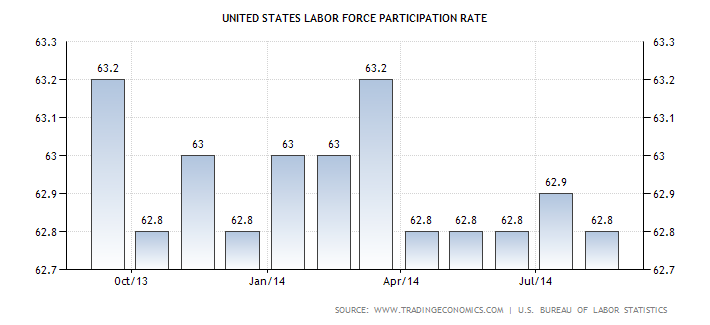
Anyone who is even sort-of paying attention to the world around them is aware that for a whole lot of people, Labor Day weekend was seventy two hours of living with the depressing irony of being unemployed on a holiday that honors working men and women. Beyond them are many others who have jobs but are just barely squeaking by and having great difficulty meeting the bills every month. Those who are solidly employed and living comfortably still have family and friends they care about in one of the former categories. It seems no one is left untouched by weak job market.

Graphic courtesy tradingeconomics.com

Two people very close to me work as customer service reps at different companies. Talking to them would make you think they sit next to each other. The mismanagement, low pay, unattainable objectives that are constantly changing and no one fully understands, abusive customers, and rigid schedule expectations all cumulate into a sense of demoralization. It’s a bit of a joke between us that the only thing worse than working in a call center is working fast food, and even that’s debatable since at least fast food workers score a free burger once in a while. Both of these people are hard working, intelligent, and overqualified for their positions. They both want out very badly. Unfortunately there aren’t many options for them to get out.

How do you climb the ladder when the ladder is a step stool? The psychology is like a shark eating its own tail: A common belief among the un- and under- employed is that there is something wrong with them…being stuck in an unfulfilling low pay job is somehow their fault. They will notice when someone else is doing well and let that amplify their own failures, real or perceived. It’s hard for them to see that there are millions of others just like them, and very few are unmotivated slackers complacent with a dead end job.

My service-rep friends call me at least once a week and the conversation always turns to their jobs and their worry about the future. I get the sense that they don’t want to annoy me with their venting, but it’s ok. Really. Yapping with me for a few minutes seems to benefit them and if it helps them pull through another day of dread on the “cube farm,” then it’s not a big deal for me to indulge them.

I’m one of the lucky few who has a job that is enjoyable, stable, and pays well. It’s not the end of the rainbow. I still have my workplace gripes. Yet every morning when I walk through the door, I thank God for giving me such a sweet deal. The only way I can show my gratitude is to give the boss an honest eight and do what I can to help those who are not as blessed as me. Because to a degree I am insulated from the mental and financial stress of being trapped in a crappy low wage job, I am in a unique position to help others. Mostly they just want to talk. Sometimes I’ll buy them lunch or put a few gallons of gas in their car. I’m not powerful or well connected enough to set them up with something better, so it’s the least, and the most, I can do.

I do not believe any of the chatter about how things are improving. Most of the positive numbers are either cherry picked to cover up the bad news or outright fabrications. Back home in Naperville, my childhood town, there are entire malls that are nearly empty, upscale shops replaced by dollar stores, numerous vacant car dealerships, cash for gold swindlers, payday loan hucksters, and a noticeable increase of homeless people. Naperville is still a great community with uncountable positive attributes, yet it is unsettling to see  so many red flags in a city that never had them before. Even in a relatively poverty-free town signs of the real economy are slowly creeping in.

What seems lost in the charts and statistics and political gesturing is the everyday people who are struggling with no visible path out of their situations. It’s a sad statement on the world when a motivated, well-qualified almost-fifty year old accepts a $12/hour job because it’s the only deal they can find. Or when a person who should be well into retirement is working a fast food drive through at nine o’clock on a Sunday night. How far does society have to crack before the system resets itself and opportunity makes a comeback? For many, Labor Day is like the anniversary of a loved one’s death, a reminder of something missing from their lives. These hurting souls find a way to do the best they can with what they have. The rest of us cannot restore their lost income, but we can and should help them keep their dignity.

Editor’s Note: Please check out my other blog articles related to this topic:  

Play Fair, Unless You’re an Adult  and   If You Love Something, Let It Freeze