Category Archives: COMMENTARY

medical supplements

Medical Supplements Are Heirs To An Ageless Schtick.

By: Chris Warren.

The traveling patent medicine peddler who would go from town to town selling “miracle cure” potions and pills that presumably would work on just about any malady was a stock character in old western movies. Today, there is a modern version of the patent medicine scam known as the herbal and medical supplements industry.

In the movies, the sales pitch would be boosted by a paid shill in the crowd who would testify that he used the product and it cured everything that was wrong with him, from baldness to ingrown toenails. The end of the movie subplot was always the same: The concoctions were medically worthless if not outright dangerous, but by time anyone figured it out the quack doctor had long folded up his show and skipped town with everyone’s money.

These dramas have a basis in truth. In times past there really were salesmen tramping from town to town hawking fake medicine and draining wallets as they went. Today’s version of the patent medicine flimflam does not involve a smooth talking transient in a horse drawn wagon. Thanks to modern communications, they don’t have to leave the house or even be in the USA to rip people off with their medical supplements.

It’s impossible to avoid the hustlers of medical supplements because they are all over cable television and the internet. Pills that “melt fat”. Pills that bulk up muscle. Pills that make you more mentally alert. Pills that unclog your arteries. Pills to soothe your aching joints. And of course, for the gentlemen, pills that make your guy parts much more useful. Whatever your problem is, someone has a remedy for it. There are even pills for problems you don’t know you have. And we can’t overlook creams and ointments to melt fat (again!), remove wrinkles, and keep your joints from hurting (again!).

In addition to medical supplements is an equally robust industry selling devices that can help you with…do we really need to run down the list again? Perhaps the most ubiquitous device on TV in the USA is the Willow Curve. The cheesy gizmo looks like a prop from a science fiction movie and the manufacturer makes a lot of far-out claims about what this product will do; independent research shows thats it’s basically a $599 heating pad with some pretty blinking lights on it.

medical supplements

The whole point of this monologue is to observe that in a contemporary age when everyone is supposed to be sophisticated enough to know better, the quack medicine shows are alive and more popular than any 19th century roadside barker could possibly conceive. The bogus goods have been rebranded as “medical supplements” and come with the small print caveat “These statements have not been evaluated by the Food and Drug Administration. This product is not intended to diagnose, treat, cure or prevent any disease.” But the basic schtick is the same: Make amazing promises, collect the cash. And millions of people spend billions of dollars falling for it.

As much as I disrespect the scammers and their medical supplements, I do not think they should be run out of business. As long as the product is not obviously toxic, leave them alone and let them keep raking in the cash. If consumers give in to their vanity, or lack of due diligence, or sincerely held faith that any of that crap actually works in spite of an ocean of legitimate science that indicates otherwise, then they are complicit in the draining of their wallets and should accept whatever happens afterward.

Maybe the uncomplicated folk portrayed in the the old movies are not as fictional as we’d like to think. Like so many other things in this world, sensible judgement has difficulty standing firm against the allure of fast and easy solutions. Going by the number of medical supplements being pushed in the media, the descendants of the patent medicine swindlers of yesteryear are proudly carrying on their forefathers’ profession and have no trouble at all finding dupes willing to open their wallets.

buffet

The Food Buffet Serves Up What Is Wrong In America.

By: Chris Warren.

Regular readers know that Twenty First Summer is a libertarian, heavily pro-American platform. That doesn’t mean I don’t think the USA has any problems, but I typically keep my criticisms about the United States out of this blog. This time I just can’t let it slide. I’ve concluded that the food buffet of all places is a microcosm of what is wrong in the United States, and it embarrasses me not only as an American, but also as someone who believes in basic human decency.

As we entered the buffet, the wealth of food stretched before us gave us that “oh, wow!” breathless moment. This was not like the pre made frozen-then-reheated vats of soulless generic grub found on steam tables at inexpensive chain establishments and truck stops. This was an upscale experience of fresh seafood, cooked to order steaks, fresh soups, and beautifully made desserts from an in-house pastry chef. We were going high class that night.

The problem with this otherwise elegant buffet became immediately apparent. It wasn’t the food or the service. It was the other customers. We sat and politely ate our modest portions like civilized human beings while most, not all, but most, of the other buffet patrons proceeded to act like gluttonous slobs.

Buffet diners, many with a plate in each hand, lined up at the seafood station and piled on enough fish to nourish a pregnant sea lion for a week. Others were sitting at tables with three or four plates of mounded food in front of them. Another table had two large stacks of dirty dishes waiting to be carried away. The unfortunate buffet wait staff literally could not clear the table as fast as those two overstuffed pigs shoveled food in their mouths. By the way, I did not see anyone besides us leave a tip.

So what does a food buffet have to do with patriotism and being critical of Americans? Quite a bit. For beginners, the friend I was with is not originally from the United States. Even though he is a now a US citizen and fully acclimated into American culture, I was still embarrassed for him to see the spectacle. The frenzy of overindulgence and hedonism was unsettling. This is not the United States I want others to see.

The buffet customers, who are my fellow Americans, completely disgusted me. I’m confident that these are the same types who travel to other countries, act like they do here, and then wonder why Americans are resented. The pathos of the buffet slobs carries over to the attitudes of society in general:

  • People will take advantage of the system and grab up everything they can, even if it’s more than they need, or something they don’t need at all. They believe one of the goals of going to a buffet is to eat (or waste) more food than you paid for. They apply this ethic to every facet of their lives
  • There is no concern for those perceived as being of a lower social standing (in this case, wait staff). Servants’ needs and feelings are not relevant to those they serve.
  • Related to the last point, people will think that because they are paying for something (and even if they are not), they have the right to act superior and create gratuitous burdens on others. They believe their status as a client or customer absolves them of nearly any sociopathic behavior.
  • The attitude of entitlement is not more prevalent in any particular demographic. It occurs across all income, gender, and racial/ethnic groups.

How the citizens of a nation treat each other and humble themselves before the bounty they have been blessed with says something about that nation’s collective values, and the way I see it, the food buffet is a merely a symptom of the disrespect and lack of gratitude that exists everywhere.  For a guy who thinks the United States is the greatest place that has ever been or will be, it’s a difficult admission for me to make. But blind devotion is a false emotion; this one went far beyond mere table manners and must be called out for what it is. We The People can’t become better as a country if we think we are already superior as individuals.

Home Improvements Help Us Remodel Our Selves.

By: Chris Warren

Homeowners who hire a contractor for every little job cannot understand the pride and satisfaction of completing a do it yourself project that will make a house more enjoyable or increase resale value. Some of us take on a lot of home improvements that we probably could afford to contract out but choose to do ourselves anyway because there is a certain “it factor” that makes these tasks an attractive challenge.

Most jobs are very simple in regards to the mechanics of the work required. Like all things though, the real world experience is often much different. I recently installed some exterior lighting on my house. The basic procedure is easy: Run some wire. Screw light to side of house. Connect wires at both ends. Done. It all looks so easy in theory!

The headaches come in when you have to run the wires through walls or other not so easy to reach places, or when the hardware that came with the light is not compatible with your application, or when you are trying to make something both functional and not look like sloppy crap nailed to the side of the house.

home improvements

My dad has been doing his own home improvements longer than I’ve been alive, and he’s really good at it. He holds himself to a very high standard of craftsmanship, and after he completes a job, he will scrutinize every little detail and find something he would have done differently. It’s a learning process that I’ve adopted myself with very good results. Wise men never think they know it all.

In my circle of friends I’m known as the guy who always has a tool in his hand and hardly ever pays others to do things for me. Doing my own home improvements has the unexpected benefit of teaching me patience and discipline. All jobs look easy in concept. In reality, none go exactly as planned with no setbacks. The principle transfers to other areas of life. Having a plan is great, but there must be enough built in flexibility to address the inconvenient reality that life events seldom fit exactly into our preconceived plans.

Once someone is programmed for achievement, it is very difficult for them to set boundaries of when they will give their best effort and when they will not.

Home improvements are a perfect metaphor for how the real world works: I had the knowledge and tools needed to install an exterior light. I had a visualized plan of how I wanted to attain the goal. Once I began the task, I ran into unplanned setbacks. Some of these delays were due to my own oversight (drilling two holes when I only needed one). Others were out of my control (bad weather, incompatible hardware). Nothing gets done by getting angry at myself or cursing the weather. Keep moving, solve problems, find a way to get to the end.

One reason why athletes who are successful in their sport also tend to be successful in other areas is because they redirect the drive and motivation from the playing arena into their entire life. The same could be said for military people. Once someone is programmed for achievement, it is very difficult for them to set boundaries of when they will give their best effort and when they will not. A properly trained athlete or soldier is in “on mode” all the time, even years after they are no longer active in sports or the military.

Home improvements such as hanging a light do not rank high on the glorious achievement scale, but the commitment to complete them with skill and pride is very meaningful to those who spend countless weekends and vacation days toiling on their homes instead of paying a contractor.

Deeper than money saved is standing back and admiring one’s own finished project and the feeling of independence and empowerment from not having to rely on paid help. Every time I walk past that light I’ll know how it got there: Not from farming the work out to others and handing them a check when it’s done, but from my own determination, sweat and ingenuity. I’ll need all the can-do positive energy I can get when it comes time to replace my hot water heater, which I suspect will be soon.


culture

Lessons From A Dixie Trip, Part II

By: Chris Warren

In an article last February I talked about traveling to the southern United States and returning with a deeper understanding and appreciation for the area and its people. The United States is hardly a homogenous nation. Every region is different in culture and thinking, sometimes vastly different, but still united by the red, white, and blue. Now I find myself traversing a different area of the South and, unsurprisingly, I’ve learned even more about the culture of the only country I’ve ever known and presumed I had completely understood.

This time I took a road trip to Arkansas in the Ozark Mountain (which technically is a plateau, not a mountain) and lesser known Boston Mountain area. As the aircraft taxied up to the gate at tiny Fort Smith airport, I was already getting warm, welcoming feeling that you don’t get at, say huge O’hare Airport. A culture of cordiality is universal in the South.

Fort Smith, Arkansas was the last stop on the Trail of Tears for American Indians as they were “relocated” from the eastern USA to what is now present day Oklahoma. The injustices the American Indians endured, their loss of land and language and culture, cannot be overstated. The displays at Fort Smith National Historic Site respectfully acknowledge this. It is one of the few instances I’ve personally seen where the U.S. Government didn’t make excuses for itself. There was no political correctness or painting over that the Indians were treated like complete crap.

There is barely a place in northwest Arkansas where you cannot see a towering mountain or lush, wide valley. In the deep South of New Orleans, Louisiana; Mobile, Alabama; and Pensacola, Florida, the locals would tend to talk in more personal terms about their families, regional foods, and churches. In Arkansas, they make a lot of references to geographical features and history. When I would mention to a store clerk or waiter that I was a visitor, they would always suggest a historic landmark or natural area to go see.

On a whim, we went to scout out some rural investment property. Drifting out of cellphone territory into an area where you can drive for miles and see more livestock than people, we found the address we were looking for, I think. It’s hard to guess boundaries and there were NO TRESPASSING signs everywhere; we had no way to be sure if what we were looking at was what we were looking for. We never actually saw anyone, but we had a sense that we were being watched. People in these parts are heavily armed and live a culture of independence. Random outsiders are treated with suspicion, so we stayed on the main road and made it clear that we were respecting private property.

The big takeaway from this Dixie trip is that Arkansans are proud of their land and mindful of their Southern culture. The place is absolutely breathtaking, and history is everywhere. The crest of every hill reveals a view grander than the last. As we motored through the countryside I felt a bit envious that what was a travel adventure for me was an everyday experience for them. They got a real nice thing going on down there. I had a terrific time! When I go back, which will be soon, I’ll bring a greater understanding of a culture and people that are rightly proud of what they have.

materialism

A Shopping Mall Buddha And The Materialism Of Now.

By: Chris Warren.

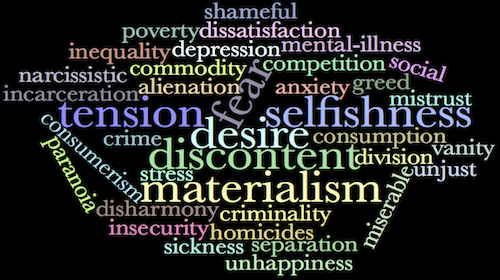
I have fifty two items on my Amazon “wish list”. I don’t know how that compares with the average shopper, but I’m going to guess that I am a lightweight by Amazon standards. My wish list is just that..things that would be nice to have but are not particularly a priority. Some of the items have been on my list for years. The older I get, the easier it is to want stuff less. And the stuff I do want has a higher, long term purpose. Materialism for materialism’s sake is the source of a lot of the world’s problems.

During a recent weekend road trip I found myself hanging out in a very huge, very famous, and very upscale shopping mall. I’m not much of a mall person, but I do like to people watch and enjoy the experience of being around the energetic liveliness. As we strolled past the $1000 Coach purses and $600 North Face jackets, I noticed that pretty much everything that is sold in this mall is not necessary for daily life. I could not spot a single item that was truly needed and did not have a more reasonably priced alternative. I’m sure all those people in the North Face store were not there to provision themselves for an ascent of Mount Everest.

No one chooses to be poor, but materialism is a deliberate, conscious decision.

I don’t understand what motivates anyone to be sucked into the vortex of materialism. I try hard not to be judgmental, but it sure isn’t easy. Ultimately, I understand that how others spend their money is none of my business. At the same time though I don’t feel too sorry for all the people who are up to their eyeballs in debt from impressing themselves and everyone with their trendy, premium brand stuff. No one chooses to be poor, but materialism is a deliberate, conscious decision.

Reaching a stage in life where it’s pretty certain that I am not destined to be rich is in a way, liberating. It does not bother me that I can’t (or more accurately, shouldn’t) buy the North Face jacket. It does not bother me that some of my neighbors have spent more money on cars than I have spent on a house. It’s not that I’m poor, it’s that my priorities go beyond the materialism of now. My focus is on things that matter, like securing my retirement and making room in my future plans for friends and family members who are not as well situated as me.

materialism

The Buddhist religion teaches that desire is the source of evil. If we remove desire from our hearts, then evil would by default not exist. I admit the previous synopsis oversimplifies one of the world’s great religions, but it does call attention to a valid point of Buddhism: Desire (from which materialism is derived) is a driving force behind pretty much everything bad.

I think we’d be in a better place if people desired less stuff. Unfortunately, we live in a society that celebrates materialism, and social media is eager to feed the pig. For months, one of my “friends” filled the internet with weekly photo updates of their new house construction; it read like an over the top real estate listing. The news feed was briefly interrupted only to announce their new boat and ski trip to Aspen. This person is not an outlier. Facebook is brimming with photos of new cars, exotic vacations, and expensive dinners. It seems no one can resist running to their computers to show off their bling.

Maybe I was a Buddhist in a previous life. Maybe I’m just simpleminded. For sure I’m not the kind of customer a mall operator loves to have around. They might get me for a $6 slice of pizza or sell me on an occasional good deal, but most of the time it’s easy for me to keep my wallet in my pocket and walk on by. Buddha has been dead for about 2400 years and his message is still relevant. There is great personal peace in being happy with what I’ve already got and feeling no intense pull to have more. Removing oneself from the materialism of now settles and warms a soul like no six hundred dollar North Face jacket could ever approach.

cb-radio

CB Radio Still Transmits Good Vibes.

By: Chris Warren

I was twelve years old and the Citizen’s Band (CB) radio craze in the United States had already been going for a while. After successfully nagging my parents into letting me get a CB, which included mounting a large antenna on their house, I had a hot signal all over town. All my friends were doing CB, too. It was like the Twitter of its time. I did not know that the ghost of CB radio would still be sending out good vibes so many decades later.

The fad took off around 1975. It had its own quirky vocabulary. There were magazines and organized clubs devoted solely to CB radio. CB radio became a major theme in contemporary movies, TV shows, and gave birth to an entire genre of amazingly lame songs. No one used their real name on the air. Colorful “handles” (a made up name) were used instead. In our area we had The Lamplighter, Dream Weaver, Handy Andy, The Bookkeeper, Pizza Man, Old Grey Mare, Four String, Beholder, and dozens of others.

These people were not just voices in a box. They were friends and neighbors.

Most towns had an unofficial CB radio “home channel” where the locals would hang out and chatter away, often late into the night. In Naperville, it was channel 15. It was a cheerful place; even us kids were welcomed. CB has a practical range of about five miles (8.04 km); it was the perfect medium for an electronic town square where everyone can gather.

Every Saturday morning CBers would flock to Grandma Sally’s Pancake House for an “eyeball” (that’s CB lingo for a face to face meeting). On some weekends over twenty people would show up. If any of the regulars were not heard on the radio in a while, someone would go check up on them. These people were not just voices in a box. They were friends and neighbors.

As with all fads, CB radio fever quickly flamed out. Pop culture jumped to the next big thing and by 1980, the airwaves went dead as we kids got older and found other things to do while the adults likewise lost interest and fell away. No one even thinks about CB radio anymore: Smart phones and all the goodies that come with them have eliminated the advantages of analog CB radio, albeit with less personality and camaraderie. My run on CB lasted less than three years. But wow, what a great run it was!

https://www.youtube.com/watch?v=xN4XpIbEY-Y

Today, the CB channels are now mostly a wasteland of static and pirate operators running illegal amplifiers. About all that’s left of any significance is long haul truckers exchanging travel information and scattered hotspots of legitimate users such as farmers and outdoorsmen. No one uses CB radio just for socializing. High end CB radio sets that used to cost hundreds of dollars (in 1978 money!) can now be found at flea markets in working condition for about twenty five bucks or less.

At the time I didn’t know my Realistic Navaho TR-431 CB would turn into an obsession with amateur (ham) radio, which to this day I am still deeply involved with, and ultimately into a fulfilling career as an electronic technician keeping transmission equipment on line for a large telecomm company. Not many people do as adults what they dreamed of doing as kids, but I’m one of the lucky ones. The pedigree of my entire professional life can be traced back to that one CB radio.

The short lived glory days of the citizens’ band are indeed never coming back, yet CB radio has earned immortality in American culture and in many individuals’ lives. As anyone who has ever heard the Red Sovine song Teddy Bear can attest, CB had a lowbrow, tacky aura to it, kind of like a circus sideshow. Beneath the cheesy sentimentality, it also had a genuine homespun touch of class. The CB radio signals have faded forever but the happy vibe is still being received loud & clear.


american indians

American Indians: Many Participants, No Bystanders.

By: Chris Warren.

As I described in this article from February 2014, a majority of my closest friends are of a different race, ethnicity, or religion as me. I never consciously singled out dissimilar folks to be friends with, it just sort of happened that way. When I had an opportunity to go to an American Indian festival & powwow last weekend, I was just as naturally drawn to it. What began as a fun afternoon outing ended as new insight about American Indians that had somehow slipped past me in all my multicultural experiences.

The first thing I noticed was that American Indians are devoted to their culture more than any other group I’ve ever been exposed to. We modern day caucasians think of “culture” as movies and art and music and whatever is trending on Twitter. There is nothing particularly wrong with this, but they are things made or done by others while an audience watches (for example, a symphony performance). We have no personal connection. There are many witnesses and very few participants.

American Indians are the exact opposite. Their cultural identity is based almost exclusively on the idea of personal contributions. As we walked around the festival, there were craftsmen making blankets, jewelry, clothes, carvings, and tools. All of the items had a special meaning beyond their practical purpose and nearly all were made from natural, straight-from-the-earth materials such as stone and animal skins. No Indian was sitting around watching. Everyone was doing something according to their unique skills.

Ask an American Indian about their culture and and they will likely show you something they made themselves that you can touch. It is not for entertainment or art for art’s sake. American Indians do not build famous buildings or erect great monuments. They make statements with small, everyday objects and consider rivers and mountains their “monuments”. When a culture reveres the Earth, it only follows that they do not believe they can build anything greater.american indians


I also noticed another unusual trait of American Indian culture: While everyone makes individual contributions, no one person calls attention to themselves or tries to elevate himself above the others. There are no “celebrity Indians”. Their humility is stunning. It’s almost as if no one wants to take too much credit for what they do out of a concern for appearing ostentatious. Each person is proud of the skills they bring to the tribe, but they see themselves as merely an equal among many. One piece of a jigsaw puzzle is no more meaningful than any other…yet if even one piece is missing, the entire puzzle fails. It is a community that is greater than the sum of its parts.

At one point of the event, they had a dance that everyone was expected to participate in. The Chief started things off and little by little the crowd joined in. By the end, it was just a big group moving in a continuous circle. No one person was in “front”. Even in dance, American Indians embrace community.

The most memorable insight I gained from my afternoon with the American Indians is that they have a very strong sense of who they are. The young kids understand that the stories their elders tell are not just stories. They are an oral, living history of times past that has something to offer the present and give a vision for the future. The elders understand that the young kids are the key to keeping the culture alive.

American Indians are very much aware of time. They feel a deep continuity between generations and go to great efforts to maintain it. I’m very confident that a hundred or more years from now, there will still be American Indian craftspeople hand making articles of their culture and telling real life stories of a people who would not let themselves forget who they are.


pope francis

Pope Francis Crosses The Line With Class And Grace.

By: Chris Warren.

This is a big week for American Roman Catholics as Pope Francis is making his first ever visit to the USA. The media acts like he is some sort of visionary, but that only shows how little the media knows about the history of the papacy. It’s not unprecedented for a pontiff to dabble in politics and social issues; Pope Francis is doing it with an amazing level of class and grace. Popes have been inserting themselves into secular matters for centuries, and in many cases it went far beyond mere “dabbling”.

Pope Francis’ position on climate change or gay marriage or whatever provides material for endless chatter on the cable news channels. Had electronic media existed in times past, it would have been overloading the circuits with news of how popes were, literally, kingmakers. Pope Julius II (b. 1443, d. 1513) was known as the “warrior pope”. He raised armies and conquered territory, acquired vast art collections, and tore down then rebuilt what is now the present day St. Peter’s Basilica. Julius II was also the guy who hired Michelangelo to paint the ceiling in the Sistine Chapel. One can barely imagine the media attention that would ensue if Francis attempted anything close to what Julius II did.

It is somewhat amusing that the media thinks Pope Francis made some huge splash when he gave a few sermons and wrote what is basically the Vatican equivalent of a college term paper on climate change. It’s barely an effort compared to his predecessors. Pope Paul V (b. 1552, d. 1621) put Galileo on trial for daring to suggest that the Earth revolved around the sun. Galileo was found “guilty”, given a light sentence, then was later tried by the Church a second time as a repeat offender. He lived the last few years of his life under house arrest.

Although the Catholic Church no longer places anyone on trial for scientific heresy, that of course does not stop the Church from having an opinion. It’s a fair argument that religion should concern itself only with spiritual matters, but since society by default is also a statement about collective values and beliefs, the line between religion and politics is quite fuzzy.

Pope Francis has been criticized for stepping out on the ledge, so to speak, and making bold statements about secular affairs. If he did not, then what is the point of having a Church? One of the primary purposes of any church is to glorify God by doing good works for others. Is Pope Francis supposed to sit in a chapel and quietly pray the Rosary all day?

One thing that always bothered me about secular people is that they wrap themselves in a veneer of separation of church and state, thinking they have a monopoly on social change. If it were not for organized religion, a lot of problems would go unsolved. I don’t see any atheists building hospitals in Africa or running homeless shelters in inner city America. They aren’t willing to admit it, but secularists do indeed have a de facto church –the government– to which they petition for help and guidance. It takes a lot of nerve for people who think the church should be separate from the state to treat the state as if it were a church.

pope francis

I don’t completely agree with everything Pope Francis says on political and social topics, but I do agree with his selfless message of God’s love. If his words makes people of any (or no) faith look a little more kindly upon their fellow man, then that’s a net plus. Pope Francis is in a position to reach people who otherwise would not have any interest at all in words of faith. He is not a political figure and thankfully is not bound by any political customs. Pope Francis teaches that politics may not belong in religion, but religion most certainly has a place in politics.

refugees

Refugees Are Unwitting Economics Teachers For A Self Indulgent Europe.

By: Chris Warren

A little less than a year ago I wrote an article about African and middle eastern war refugees escaping to Europe and the difficult and often deadly journey they risked. At the time, I knew a positive outcome would be difficult; I also knew that the Europeans have a hard time accepting that there is a practical limit to generosity, even for refugees in life and death situations. I did not predict that it would become so obvious so soon.

To truly understand this issue one first has to rewind back three generations. That’s roughly how long Europe has overindulged itself in a cradle-to-grave nanny state where nearly everything is a government entitlement. For most of this time it was all paid for, sort of. By “sort of” I mean that the system was financially solvent on paper but only because of massive taxation, fuzzy accounting protocols, and constant debt deferment and restructuring. Financial doomsday has already hit Greece and is seeping out across the continent like The Plague of the 1340s-1350s. It’s the macroeconomic equivalent of transferring balances between maxed out credit cards.

When hundreds of thousands of middle eastern war refugees started arriving at the borders of Europe, Europe’s initial reaction was to accommodate them. There were grand pronouncements of generosity from government officials and a wave of social media love. Everyone, it seems, was gushing with refugee support.

Europeans will be all about doing whatever it takes to help the refugees until a collective epiphany (which has already begun here and here) makes them see that “it” is going to impact them individually. I wonder how many British or German or Greek citizens will still be Tweeting #refugeeswelcome when their kids’ school class sizes increase or the wait times for their rationed state healthcare systems becomes longer because of all the middle eastern castaways they so altruistically took in.

In what could be Europe’s very first ever introduction to economic reality, entire nations that less then a month ago were preaching humanitarianism across the internet are suddenly reconsidering after realizing that they will have to give up a sizable chunk of their money and standard of living to provide for the glut of hundreds of thousands of people who will take far more out of the government entitlement systems than they put into them. Wow, what a difference a few weeks makes.

The liberal left here in the United States, who think moral obligation never has a spending limit and all problems would be solved if only everyone gave more money to the government, has long envied European socialism. Yet, no one on the American left is speaking in support of their European cousins’ sudden change of heart. To do so would be to imply that their cherished entitlement system isn’t working.

The subtext of the very real and very sad plight of the refugees is the failure of big government liberalism and its two-faced supporters who embrace the the idea of helping refugees, but only if at the expense and inconvenience of others. As Twenty First Summer has discussed before, the political left was, is, and always will be grounded in two related basic tenets: Appearances and feelings are just as good as actual results, and a good cause is made better when the expense can be pushed off on others.

That is why Europeans continue to embrace collectivism. That is why they think they can hashtag their way to a better world. That is why after three generations of lavishing themselves in an egalitarian culture of “free” stuff, there are, as former US Presidential candidate Mitt Romney once famously quipped, too many people riding the cart and not enough people pulling it. And that was before the refugees showed up at the gate. The refugees have unwittingly exposed European socialism for the crock of sanctimonious shit that it is: Everything is free, until the bill comes due.


lake shore drive

Mitch Aliotta 1944-2015. The Most Famous Song You’ve Never Heard.

By: Chris Warren.

There “aint no road just like it, anywhere I’ve found,” and there aint no song just like anywhere I’ve found. Mitch Aliotta, one third of the Chicago local legend trio Aliotta, Haynes, & Jeremiah died in Las Vegas July 27. I was notified of his passing just recently.

Their single, Lake Shore Drive, was released in 1971 and is still ubiquitous on Chicago radio, at sports stadiums, and public events. Aliotta, Haynes & Jeremiah were never a huge commercial success, but anyone who has lived in the area in the last 44 years has heard the song and probably knows the words to it. It’s the most classic of classic Chicago songs, even more so than Frank Sinatra’s Chicago, That Toddlin’ Town. It’s not possible to overstate Lake Shore Drive’s place in Chicago lore. The song will never, ever die.

Anyone who has never lived in the Chicago area has probably never heard Lake Shore Drive. It’s one of north east  Illinois’ best kept secrets.

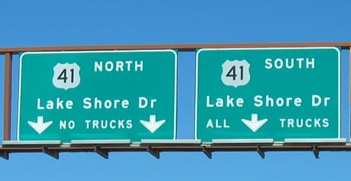
I’ve had Lake Shore Drive on my ipod for years and it’s one of my top ten most played songs. It reminds me of a time and place that always makes me smile even though I’m far away. I’ve ridden my motorcycle down Lake Shore Drive (colloquially referred to as LSD by the locals) many times, with “water on the drivin’ side” and it is an experience that never leaves me.

If you ever see a vinyl copy of an AHJ album at a garage sale, grab it because it is a rare collectible. Even more rare is a song that is loved across a generation and is so famous within a city and virtually unknown outside that city.

I’m inspired to take a few days off,  gear up the motorcycle and head to Chicago for another run down LSD before it gets too cold. I haven’t been that way in a long time and it seems like a good idea. Of course, I’m bringing the iPod. I know every single word to that song.

Thanks for riding along, Mitch.

LSD-sign-crop